





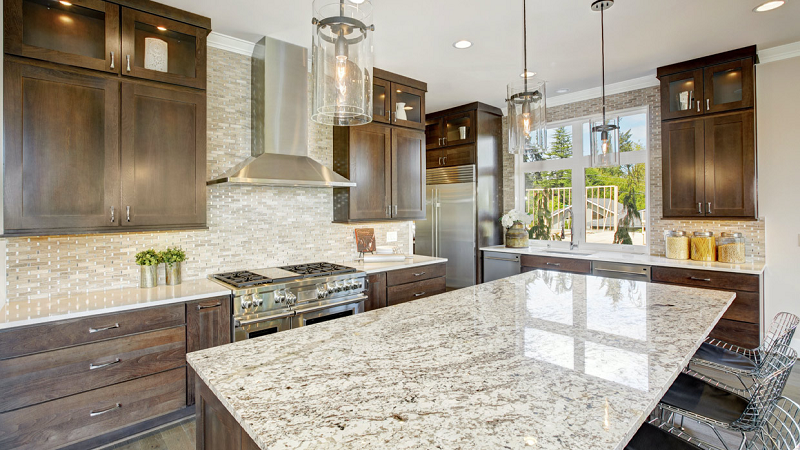
“Granite or quartz?” is probably the single most common question we field at the start of any kitchen consultation. Both are excellent, both are genuinely durable, and both will outlive most of the appliances around them, so the honest answer usually comes down to how you live in your kitchen, not which material is objectively “better.”
Granite countertops remain the benchmark that every engineered surface gets measured against, and it’s worth understanding exactly why before you compare quotes.
What Sets Granite Countertops Apart?
Granite is 100% natural stone, quarried in enormous blocks and cut into slabs. That single fact explains almost everything about how it behaves. Because it’s a genuine mineral formation, granite countertops handle heat exceptionally well; you can, within reason, set a hot pan straight onto granite without the scorch marks you’d risk on quartz. Every slab is also completely unique, with mineral flecks, movement and colour variation that no factory process can replicate.
Granite is porous, though less so than marble, which means it does need periodic sealing to stay stain-resistant, typically once every one to two years depending on the specific stone and how the kitchen is used.
What Sets Engineered Stone Apart?
Engineered stone (quartz, and increasingly ultra-compact surfaces like Dekton) is manufactured rather than quarried. Because it’s roughly 90-95% crushed quartz bound with resin, it’s non-porous straight out of the factory. No sealing, ever. It resists staining and bacterial growth better than any natural stone, and because it’s manufactured to a formula, colour and pattern are perfectly consistent across an entire kitchen, however many slabs the job requires.
The trade-off is heat and repair. Engineered stone’s resin content means it’s more vulnerable to thermal shock from a pan straight off the hob, and a chip or crack typically needs a professional colour-matched repair rather than a simple re-polish.
The Numbers That Actually Matter
This is where a lot of assumptions fall apart. On average, UK kitchen worktops run around £375 per m² for quartz and £435 per m² for granite, which puts granite marginally ahead in cost at the mid-range. At the entry level, though, the picture flips: basic granite varieties like Star Galaxy or Black Pearl can come in around £180 per m² supplied and fitted, while plain quartz colours typically start closer to £250-£280 per m²</cite>. At the premium end, the two materials converge, and price becomes more about the specific slab than the material category itself.
When you weigh up granite’s ongoing sealing costs against quartz’s essentially zero-maintenance profile, quartz often works out better long-term value, even where the upfront cost is similar.
Which Wins on Durability?
Neither, really; they win at different things. Granite is tougher against heat and, for many stones, against scratching from knives used directly on the surface (though a chopping board is still recommended for both materials).
Engineered stone wins comprehensively on staining and porosity, and it wins on consistency if you’re trying to match a large island to a long run of worktop without visible seams in the pattern.
The White Granite Countertop Question
One area where granite still holds a real edge is texture and depth in lighter colourways. A genuine white or near- granite countertop white, flecked with quartz, mica and feldspar crystals, has a shimmer and depth that manufactured white quartz can approach but rarely fully matches under direct light a detail worth seeing in a physical slab rather than a photograph before deciding.
Making the Right Call for Your Kitchen
If you cook seriously and want a natural material that handles heat and shrugs off decades of use with the occasional reseal, granite countertops are hard to beat. If you want a completely maintenance-free surface with consistent colour and pattern across your whole kitchen, engineered stone is the more sensible everyday choice.
At KML Worktops, we always encourage clients to view both materials as full slabs in natural daylight before deciding; photographs on a screen genuinely don’t do either material justice, and the decision often changes once people see the depth of a real granite slab in person against a quartz sample. Whichever direction you land on, get a proper on-site template rather than a desktop quote; layout, cut-outs and edge profiles affect the final price more than the headline material cost ever will.
There’s no universally “correct” answer in the granite versus engineered stone debate; only the right answer for your kitchen, your cooking habits, and how much maintenance you’re genuinely willing to keep up with over the next fifteen years.
About The Author