




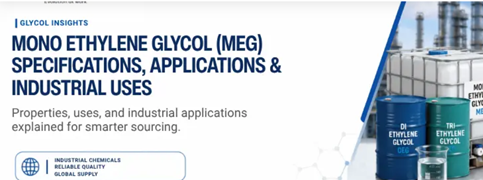
Ethylene glycol products play an important role in a wide range of industrial and chemical applications. Among the most commonly used glycol compounds are Mono Ethylene Glycol (MEG), Diethylene Glycol (DEG), and Triethylene Glycol (TEG). Although these chemicals belong to the glycol family, each has different physical properties and is selected for specific industrial processes. Understanding the differences between MEG, DEG, and TEG can help manufacturers, distributors, and industrial buyers choose the right product for their operational requirements.
The selection of the appropriate glycol depends on factors such as chemical properties, moisture absorption, boiling point, viscosity, application requirements, and compatibility with the manufacturing process. This guide explores the major applications and selection criteria for MEG, DEG, and TEG.
MEG Applications
Mono Ethylene Glycol (MEG) is one of the most widely used products in the ethylene glycol family. It is a clear, colorless liquid known for its excellent heat-transfer properties and ability to mix easily with water.
One of the primary applications of MEG is in the production of automotive antifreeze and engine coolants. When mixed with water, MEG helps lower the freezing point and improve heat transfer, making it suitable for vehicle cooling systems and industrial temperature-control applications.
MEG is also an important raw material in the production of polyester fibers and polyethylene terephthalate (PET). PET is widely used for manufacturing bottles, packaging materials, films, and other plastic products. The textile industry also depends on MEG for the production of polyester-based fibers.
Common MEG applications include:
- Automotive antifreeze and coolants
- Polyester fiber production
- PET resin manufacturing
- Industrial heat-transfer fluids
- Chemical processing
- Deicing and cooling applications
- Plastic and polymer manufacturing
Because of its broad industrial demand, MEG is commonly supplied to manufacturers and bulk buyers across international markets.
DEG Applications
Diethylene Glycol (DEG) is another important industrial glycol with different characteristics from MEG. It has a higher boiling point and is commonly used in applications requiring moisture absorption, chemical processing, and specific solvent properties.
DEG is widely used as a chemical intermediate in the manufacturing of resins, plasticizers, and other chemical products. Its properties make it useful in industrial formulations where controlled viscosity and solubility are important.
Another application of DEG is in the production of certain unsaturated polyester resins and chemical formulations. It can also be used as a processing aid and solvent in selected industrial operations.
Common DEG applications include:
- Chemical intermediates
- Unsaturated polyester resins
- Plasticizers
- Industrial solvents
- Textile processing
- Paper and packaging applications
- Chemical manufacturing processes
Industrial buyers should carefully review product specifications and ensure that the selected DEG grade is suitable for their intended manufacturing application.
TEG Applications
Triethylene Glycol (TEG) is widely recognized for its strong hygroscopic properties, meaning it can effectively absorb moisture. This characteristic makes TEG particularly valuable in natural gas dehydration and industrial drying applications.
One of the most significant uses of TEG is the removal of water vapor from natural gas streams. In gas processing operations, controlling moisture is important for improving process efficiency and reducing potential operational issues related to water content.
TEG is also used in industrial dehumidification systems and air-conditioning applications where moisture control is required. Its high boiling point and stability make it suitable for processes operating at elevated temperatures.
Common TEG applications include:
- Natural gas dehydration
- Industrial dehumidification
- Air and gas drying
- Chemical processing
- Heat-transfer applications
- Moisture-control systems
- Industrial manufacturing
Due to its moisture absorption capability, TEG is often selected when water removal and humidity control are primary requirements.
Technical Comparison
While MEG, DEG, and TEG belong to the same chemical family, their molecular structures and physical characteristics differ. These differences influence their suitability for industrial applications.
MEG generally has a lower molecular weight and is widely selected for applications involving heat transfer, antifreeze formulations, polyester production, and PET manufacturing.
DEG has a higher molecular weight and boiling point than MEG. It is commonly used as a chemical intermediate and in industrial applications involving resins, solvents, and processing formulations.
TEG has a higher molecular weight and boiling point compared with both MEG and DEG. Its strong ability to absorb moisture makes it particularly suitable for gas dehydration and industrial drying processes.
The choice between these products should not be based only on price. Industrial buyers should compare technical specifications, purity requirements, application compatibility, and process conditions before making a purchasing decision.
Selection Criteria
Selecting the right glycol begins with understanding the specific requirements of the application. For example, manufacturers producing automotive coolants or polyester products may require MEG, while chemical manufacturers working with resins or industrial formulations may consider DEG.
For moisture removal and gas dehydration, TEG is often preferred because of its hygroscopic properties. However, every industrial process has unique operating conditions, so buyers should always review the technical requirements before finalizing a product.
Important selection factors include:
- Required purity and product grade
- Application and process compatibility
- Boiling point requirements
- Moisture absorption properties
- Heat-transfer performance
- Viscosity requirements
- Storage and handling conditions
- Packaging requirements
- Bulk supply capability
- Export documentation and logistics support
Businesses sourcing ethylene glycol products should also consider supplier reliability and the ability to maintain consistent quality across repeated shipments. Requesting documents such as a Certificate of Analysis (COA), Technical Data Sheet (TDS), and Safety Data Sheet (SDS) can help buyers evaluate whether the material meets their operational requirements.
MEG, DEG, and TEG each serve distinct purposes across modern industries. MEG is widely associated with coolants, polyester, and PET production, while DEG supports chemical manufacturing and resin applications. TEG is particularly important for moisture control and natural gas dehydration.
Choosing the right glycol requires a careful assessment of technical specifications and end-use requirements. Working with a reliable industrial supplier can help ensure consistent product quality, appropriate packaging, and dependable international supply. To learn more about industrial glycol solutions, click here for additional information or visit website to explore available products and supply options.
About The Author