





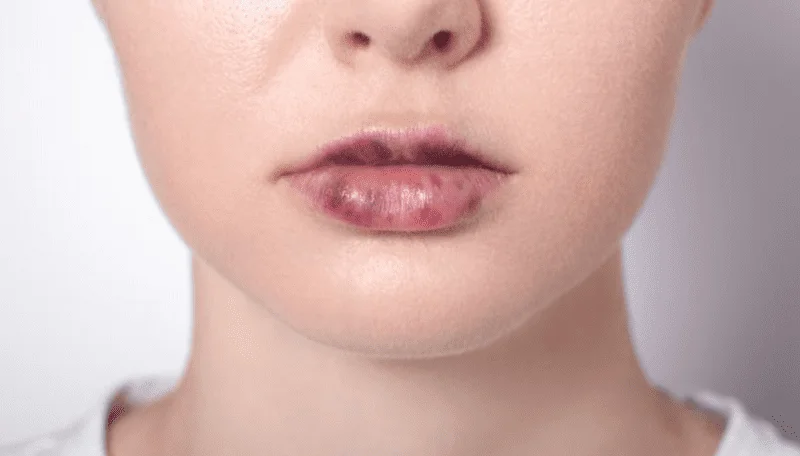
Most aesthetic treatments are straightforward, but complications can occasionally occur after dermal fillers, anti-wrinkle injections, skin boosters or other injectable procedures. The important thing is knowing when a problem needs assessment rather than simply waiting for it to settle.
A small amount of swelling or bruising immediately after treatment is usually very different from persistent lumps, infection, significant asymmetry or changes in skin colour. Some complications can also appear weeks or months after the original treatment.
What counts as an aesthetic complication?
An aesthetic complication is an unwanted or unexpected problem following a cosmetic treatment.
Examples include:
- Persistent lumps or nodules
- Significant swelling or inflammation
- Infection
- Unevenness or contour changes
- Filler migration
- Persistent skin discolouration
- Problems caused by incorrect product placement
- Vascular complications after dermal filler
Not every unusual result is a serious complication. For example, temporary bruising, tenderness and mild swelling are common after injections. The concern increases when symptoms are persistent, worsening or significantly different from what would normally be expected.
Why can complications be difficult to diagnose?
The appearance of a problem does not always tell you what is happening underneath the skin.
A firm lump, for example, could have several possible explanations. It might relate to the position of filler, inflammation, a delayed reaction or another tissue change. Calling every lump a “granuloma” is also inaccurate because a granuloma is a specific histological diagnosis, not simply another word for a lump.
This is why a proper assessment should come before deciding how to correct the problem.
When should you see an aesthetic complications expert?
I would recommend seeking assessment when a problem is persistent, worsening, painful, unusual or not behaving as expected.
For example, a lump that remains long after the expected recovery period deserves assessment, particularly if you do not know exactly what product was injected or where it was placed.
The same applies to persistent asymmetry. It is not always a matter of simply adding more filler to the other side. The underlying cause needs to be understood first.
A doctor may need to consider the original treatment, product used, injection depth, timing of symptoms and any previous aesthetic procedures before deciding what to do next.
Ultrasound can sometimes show what is happening beneath the skin
One of the most useful developments in aesthetic complications management is the use of high-frequency ultrasound.
Ultrasound can help identify filler, determine its location and assess surrounding tissues. With Doppler imaging, blood flow can also be assessed when a vascular problem is suspected. Recent literature describes ultrasound as an important tool for identifying and assessing a range of filler complications, including nodules, migration, inflammation and vascular complications.
This can be particularly useful when someone has had several previous treatments and is unsure which product remains in the tissue.
Instead of relying entirely on what can be seen from the outside, ultrasound can provide information about what is actually present underneath the skin.
What about a lump months after filler?
A delayed lump does not automatically mean that the filler has “gone wrong”.
Delayed-onset nodules can have different causes, including inflammatory reactions, technical or placement issues, filler-related changes and infection.
This is where assessment becomes important.
If the lump is simply dissolved without understanding its cause, the underlying problem may not be addressed. In contrast, once the likely cause and location have been established, treatment can be more targeted.
What symptoms need urgent attention?
Some complications require prompt medical assessment rather than waiting for a routine appointment.
After dermal filler, severe or increasing pain, unusual whitening or mottling of the skin, marked colour changes or visual symptoms can indicate a vascular complication. Vascular occlusion is uncommon but potentially serious and requires urgent recognition and treatment.
Similarly, increasing redness, warmth, swelling, pain or discharge can indicate infection and should be assessed medically.
The key point is simple: do not wait for a serious symptom to become severe before seeking advice.
Why previous treatment information matters
If you develop a complication, bring as much information about previous treatment as possible.
Useful details include:
- The name of the product used
- The date of treatment
- The area treated
- How much product was injected
- Whether other products have been used in the same area
- When the problem first appeared
- Any previous attempts to correct it
This information can make assessment much more straightforward.
If you are considering injectable treatment in the future, understanding what happens during a proper consultation is also useful. Our guide to the first cosmetic consultation explains what to expect before treatment.
Choosing an aesthetic complications expert in Hornchurch
When something goes wrong after an aesthetic treatment, the priority should be diagnosis before correction.
An aesthetic complications expert should be able to assess the visible symptoms, understand the history of previous treatment and, where appropriate, use imaging such as ultrasound to investigate what is beneath the skin.
This is particularly relevant when dealing with filler complications because the material may remain in the tissues long after the original treatment.
At Dr Salim Aesthetic Medicine, complications are assessed as a medical problem rather than simply a cosmetic issue, with ultrasound-guided assessment available where appropriate.
Frequently Asked Questions
Can an aesthetic complication appear months after treatment?
Yes. Some complications occur immediately, while others can develop weeks, months or even years after an injectable treatment. The timing can provide useful information when determining the likely cause.
Can ultrasound find old dermal filler?
High-frequency ultrasound can identify and localise many types of dermal filler and can help assess associated complications. This can be particularly useful when treatment records are incomplete.
Should every filler lump be dissolved?
No. A lump can have different causes, so it should be assessed before deciding whether hyaluronidase or another treatment is appropriate.
When is a filler complication an emergency?
Severe pain, sudden skin whitening or mottling, significant colour change or visual symptoms following filler require urgent medical assessment because they can indicate vascular compromise.



