





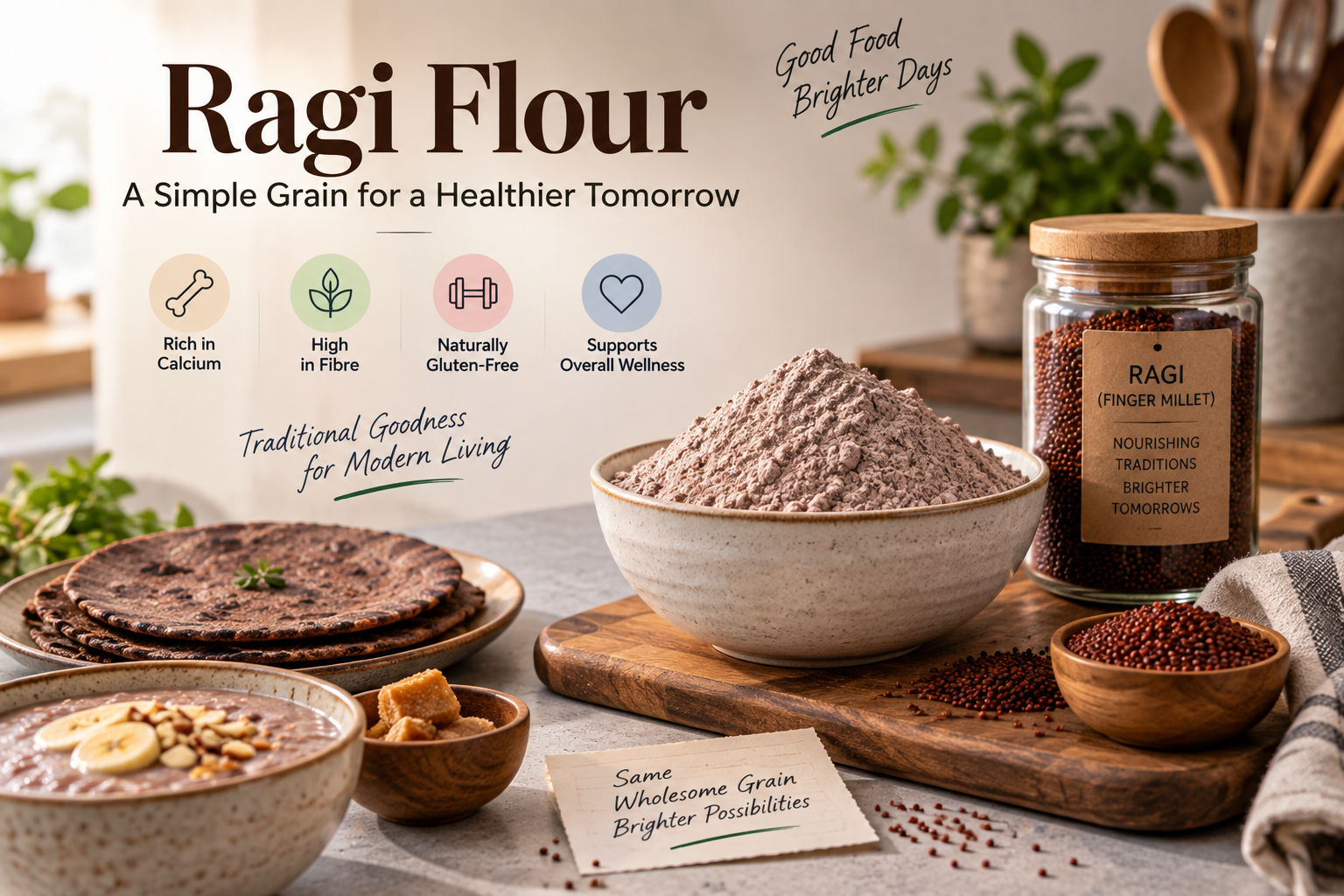
The Quiet Comeback of a Grain That Never Really Left
Ragi has been part of Indian kitchens for centuries, particularly across Karnataka, Andhra Pradesh, and Tamil Nadu, where it’s been eaten in one form or another long before anyone started calling it a superfood. What’s changed recently is that more people across the country are rediscovering it, not out of nostalgia but because it genuinely holds up well against newer, trendier alternatives when you actually look at what’s in it.
The flour ground from ragi — also called finger millet — is what most households work with. It’s what goes into rotis, dosas, porridge, and a handful of baked goods that have quietly started appearing in home kitchens where all-purpose flour used to be the default.
What Makes Ragi Flour Worth Using
The nutritional case for ragi is straightforward without needing to be overstated. It’s one of the better plant-based sources of calcium available in any kitchen — useful for children, older adults, and anyone not getting enough dairy. It’s also naturally gluten-free, which matters for people with gluten sensitivity who want a flour that works in real cooking rather than just in specialty baking.
The fibre content is another practical point. Ragi flour digests more slowly than refined wheat flour, which means it keeps you fuller for longer and doesn’t cause the same sharp energy spike and crash that comes with highly processed grains. For people managing blood sugar levels, that slower digestion is genuinely relevant rather than just a talking point.
Iron content is worth noting too, particularly for women and growing children, since iron deficiency is one of the more common nutritional gaps in Indian diets. Ragi isn’t a replacement for medical advice on this front, but it’s a straightforward way to add a useful nutrient through food rather than supplements.
How to Actually Use It in a Kitchen
The most common starting point is ragi roti, which works well once you get the dough consistency right — slightly softer than wheat dough, and better rolled between wet hands or plastic sheets rather than dry-floured surfaces. It doesn’t behave exactly like wheat flour, and the first few attempts usually teach more than any written instruction can.
Ragi porridge is the other entry point that most people find easy. Cooked with water or milk and sweetened with jaggery, it’s a genuinely filling breakfast that takes about ten minutes to make. It’s also one of the more common first foods for infants in South India, which gives you a sense of how long this grain has been trusted across generations.
Beyond these basics, ragi flour works in dosas when mixed with rice batter, in idli batter for a slightly denser result, and in cookies and pancakes for anyone experimenting with wheat-free baking at home. It has a slightly earthy, nutty flavour that takes some getting used to if you haven’t cooked with it before, but that same flavour pairs well with jaggery, coconut, and most spices that already feature in South Indian cooking.
Whole Grain vs Processed — Why It Matters Here
Most of the nutritional value in ragi sits in the outer bran layer of the grain. Whole ragi flour retains this, which is what gives it the fibre, calcium, and iron content that makes it worth using in the first place. Heavily processed or refined versions of the flour lose a significant portion of this along the way.
This is worth paying attention to when buying, since not all ragi flour on the market is the same. 10on10Foods sources whole ragi atta that retains the grain’s natural nutrient profile, which is the version that actually delivers what the flour is known for rather than just the look of it.
A Few Practical Notes Before You Start
Ragi flour absorbs water differently from wheat flour, so recipes designed for wheat don’t always translate directly. It helps to start with recipes written specifically for ragi rather than substituting it directly into wheat-based dishes and expecting the same result. The dough is stickier, the texture is denser, and the cooking time can vary — none of which is a problem once you’ve cooked with it a few times and know what to expect.
Storage is simpler than some whole grain flours — a cool, dry place in an airtight container keeps it fresh for several months without any special handling. Like most whole grain products, it has a shorter shelf life than refined flour, so buying in quantities you’ll actually use within a reasonable timeframe makes more sense than stocking up in bulk.
About The Author