


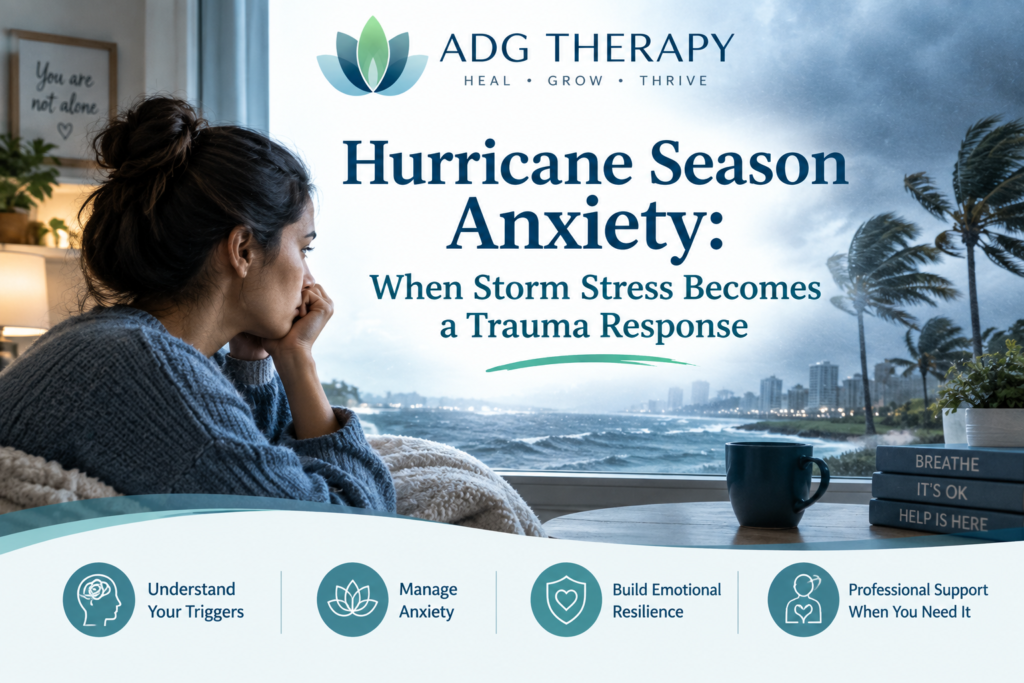
Every year, from early summer through the fall, Floridians watch the tropics. A new storm forms, the forecast cone shifts, and something in your body tightens. For many people, this is ordinary stress that fades once the storm passes. For others, it goes deeper: sleepless nights, a racing heart at the sound of wind, or a constant feeling of dread that doesn’t switch off.
If that sounds familiar, you’re not alone, and you’re not overreacting. Hurricane anxiety trauma Florida is more common than most people realize, and support is available. This guide explains the difference between normal storm stress and a trauma response, what the signs look like, and what can help.
Why Hurricane Season Hits So Hard in Florida
Living with hurricane season means living with uncertainty. You prepare, you wait, you watch the news, and you often have little control over what happens next. The Atlantic hurricane season runs through the end of November, so for a good part of the year, the possibility of a storm is always in the background.
For people who have been through a serious storm, the stress can be even stronger. Losing a home, being displaced, going without power for days, or feeling unsafe can leave a lasting mark. Even people who weren’t directly harmed can feel more fear and worry from watching news coverage and weather updates. And for some, the return of hurricane season each year can bring back anxiety and other warning signs tied to earlier experiences.
Normal Storm Stress vs. a Trauma Response
Feeling on edge before a hurricane is completely normal. The body is doing its job: preparing you for a possible threat. In most cases, this stress settles down once the danger has passed and life returns to normal.
A trauma response is different. It happens when your nervous system stays stuck in survival mode long after the threat is over, or gets triggered again and again by reminders.
| Normal storm stress | Possible trauma response | |
|---|---|---|
| Timing | Rises before or during a storm, then eases | Continues for weeks or months, or returns strongly each season |
| Intensity | Worry that feels proportionate | Fear or panic that feels overwhelming or out of your control |
| Triggers | An actual approaching storm | Forecasts, alerts, wind, rain, sirens, or anniversaries of past storms |
| Daily life | You can still function | Sleep, work, relationships, or mood are affected |
| Memories | You recall the event without distress | Intrusive memories, flashbacks, or nightmares |
Common Signs of Hurricane-Related Anxiety and Stress
Disaster-related stress can show up in different ways. Public health guidance lists common signs such as fear, anxiety, sadness, numbness, trouble concentrating, difficulty sleeping, feeling on edge, and problems at work or school. Other signs include changes in appetite, fatigue, and feelings of hopelessness.
You might notice:
- Trouble falling or staying asleep during storm season
- Checking forecasts constantly, or feeling unable to stop
- Feeling jumpy at sudden noises or weather changes
- Racing thoughts about “what if it happens again”
- Irritability, anger, or feeling emotionally flat
- Physical reactions such as a pounding heart, tight chest, or stomach trouble
Signs the Stress May Have Become a Trauma Response
Consider reaching out to a professional if you notice:
- Intrusive memories or flashbacks of a past storm or its aftermath
- Nightmares about the storm, evacuation, or damage
- Strong physical reactions to reminders, like heart racing, sweating, or trouble breathing
- Avoidance of news, weather, certain places, or conversations about storms
- Being constantly on guard (hypervigilance), even when there’s no immediate danger
- Persistent negative feelings, such as guilt, shame, helplessness, or numbness
- Symptoms that last for weeks or months, or that return strongly each hurricane season
Only a licensed professional can diagnose a condition like PTSD, but you don’t need a diagnosis to seek support. If these experiences are affecting your daily life, therapy can help.
Why Your Body Reacts This Way
When you face something frightening, your nervous system goes into protection mode: fight, flight, or freeze. This response is meant to keep you safe. After a threatening experience, though, the nervous system can learn to stay on high alert. The sound of heavy wind, a phone alert, or a certain color on a weather map can signal danger to your body, even when you’re safe.
This isn’t weakness or a failure to “move on.” It’s a protective pattern your nervous system learned. Understanding this can bring relief on its own, and it’s the first step toward changing the pattern.
Who May Be More Affected
Anyone can be affected by storm-related stress, but some people may be more vulnerable, including those who:
- Lost property, a home, or a loved one in a past storm
- Were displaced or lived through long recovery periods
- Have a history of other difficult or traumatic experiences
- Have children or dependents to protect
- Feel isolated or lack support
- Are managing anxiety, depression, or other stress at the same time
If you’ve experienced other trauma in the past, a storm can sometimes stir up old feelings of helplessness or lack of safety, even if the storm itself didn’t cause direct harm.
Ways to Cope During Hurricane Season
These steps won’t replace professional care, but they can help you feel steadier.
1. Focus on what you can control. Prepare your supplies and your plan early and calmly. Having a plan can reduce the feeling that everything is uncertain.
2. Limit constant news and forecast checking. Choose one or two trusted sources and set specific times to check. Endless scrolling tends to raise anxiety rather than ease it.
3. Use grounding techniques. Try slow breathing, naming five things you can see, or pressing your feet into the floor. These tell your body that you’re safe right now.
4. Protect your basics. Aim for regular sleep, healthy meals, gentle movement, and a steady routine as much as you can.
5. Stay connected. Talk with a friend, family member, or neighbor. Spending time with others and scheduling pleasant activities can help balance the stress.
6. Be kind to yourself. Strong reactions are understandable. You don’t have to “just get over it.”
When to Seek Professional Support
Consider talking with a therapist if:
- Your anxiety or stress doesn’t ease after the storm passes
- You’re having nightmares, flashbacks, or panic reactions
- You’re avoiding things that used to be part of your normal life
- Sleep, work, or relationships are being affected
- You feel stuck, numb, or constantly on edge
- Coping on your own no longer feels like enough
If you need immediate help during or after a disaster, free and confidential support is available around the clock through the SAMHSA Disaster Distress Helpline. You can call or text 1-800-985-5990 to connect with a trained crisis counselor.
How Trauma Therapy Can Help
Trauma-focused therapy helps you process the experiences that your nervous system is still holding onto. Rather than only teaching you to push through, it can help you understand your reactions, calm your body’s alarm system, and reduce the emotional charge of difficult memories.
Approaches such as EMDR (Eye Movement Desensitization and Reprocessing) are designed to help the brain process distressing experiences so they feel less overwhelming and more like the past. A good trauma therapist works at your pace, focuses first on safety and stabilization, and never pushes you to relive painful moments before you’re ready.
How ADG THERAPY Can Help
At ADG THERAPY, Dr. Acralys Diaz-Gonzalez, a licensed mental health counselor, provides individual trauma therapy and EMDR therapy for clients in Cooper City and Fort Lauderdale. The approach is trauma-informed, collaborative, and paced to your comfort. The focus is on helping you understand your nervous system, process what you’ve been through, and feel more grounded, confident, and at ease.
If storm season leaves you feeling anxious, overwhelmed, or unsafe, ADG THERAPY offers a free 15-minute consultation. It’s a low-pressure way to share what you’re experiencing, ask questions, and see whether it feels like the right fit before you commit.
Frequently Asked Questions
Q: Is it normal to feel anxious during hurricane season?
A: Yes. Uncertainty and the possibility of danger naturally raise stress, especially in Florida. It becomes a concern when the anxiety is intense, lasts long after the storm, or interferes with your daily life.
Q: Can a hurricane cause PTSD?
A: Natural disasters can be traumatic, especially for people who lost a home, loved ones, or their sense of safety. Some people go on to develop post-traumatic stress symptoms. Only a licensed professional can diagnose PTSD, but you can seek support whether or not you have a diagnosis.
Q: Can I feel traumatized even if my home wasn’t damaged?
A: Yes. Experiences like evacuating, losing power, feeling unsafe, or watching news coverage can cause real stress. Your reaction doesn’t have to match the amount of damage to be valid.
Q: Why do I feel worse every time hurricane season starts?
A: Reminders such as forecasts, alerts, and the time of year can trigger your nervous system’s memory of past danger. This is a common trauma response, and it can improve with the right support.
Q: What are common signs of hurricane-related trauma?
A: Signs can include nightmares, flashbacks, trouble sleeping, being easily startled, avoidance of storm-related reminders, strong physical reactions, and feeling numb or on edge.
Q: How can I calm my anxiety during a storm?
A: Grounding techniques, slow breathing, limiting news checks, keeping a routine, and staying connected with others can all help. If you feel overwhelmed, the Disaster Distress Helpline is available at 1-800-985-5990.
Q: Can EMDR help with storm-related trauma?
A: EMDR is a trauma-focused therapy that helps the brain process distressing experiences so they feel less intense. A trained therapist can tell you whether it may be a good fit for your situation.
Q: When should I talk to a trauma therapist?
A: Consider reaching out if your symptoms last for weeks or months, return strongly each season, or affect your sleep, work, or relationships. You don’t need to wait until things feel unbearable.
Conclusion
Hurricane season stress is normal, but living in constant fear is not something you have to accept. If storms leave you anxious, on edge, or reliving painful moments, your nervous system may be asking for support, not judgment. With understanding, coping tools, and trauma-informed care, it’s possible to feel safer and more settled, even in a place where storms are part of life.
If you’re dealing with hurricane anxiety trauma Florida, ADG THERAPY is here to support you. Schedule your free 15-minute consultation and take the first step toward feeling steadier and more like yourself again.
About The Author