




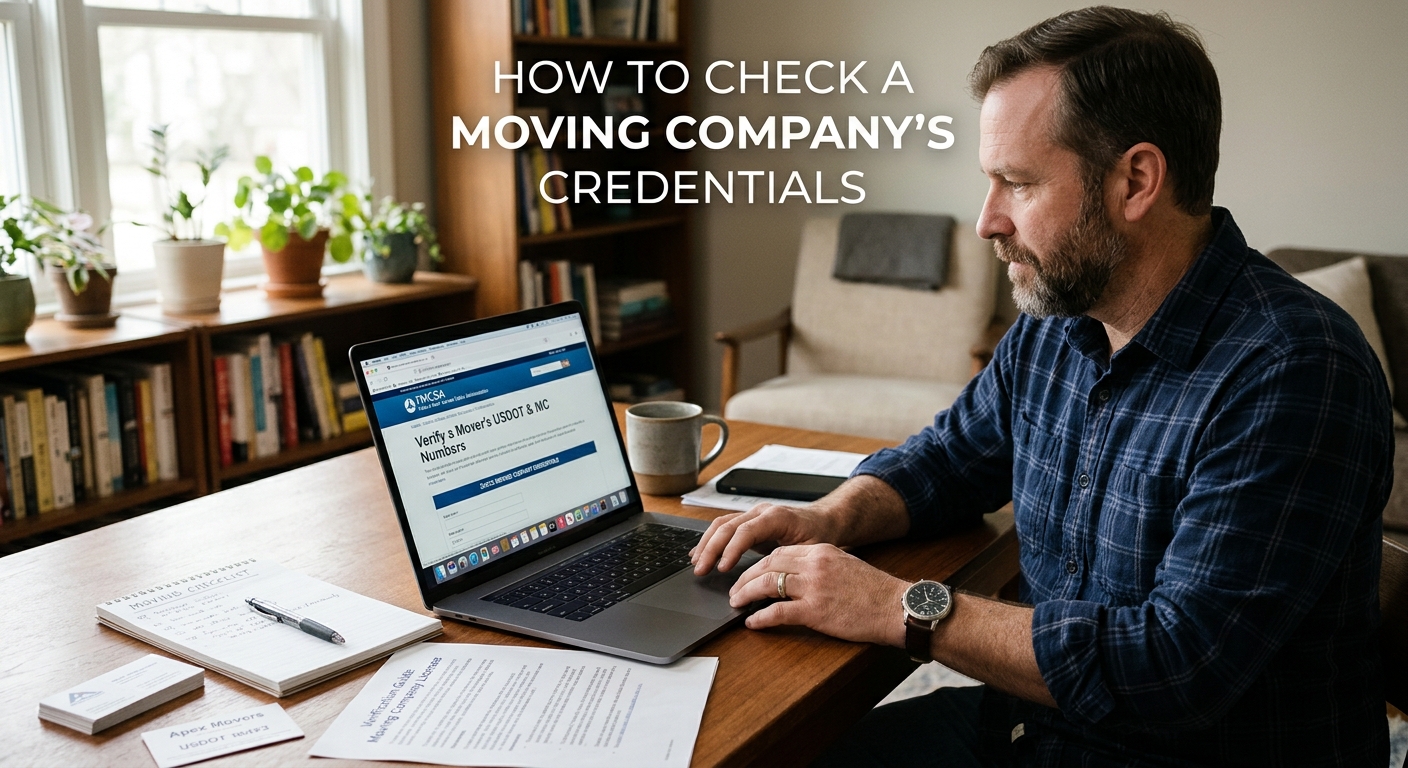
A moving company’s polished website can make a strong first impression.
Its credentials reveal whether that impression holds up under scrutiny.
Before booking, a household can check official records, coverage, and contracts to make a more informed choice.
Start With Evidence Beyond the Sales Pitch
A friendly representative and an attractive quote can make a mover seem dependable. Neither confirms that the business has the authorization, coverage, or operating history needed for the job.
The consequences of skipping those checks can be expensive. In February 2025, the U.S. Department of Transportation’s Office of Inspector General reported a moving-fraud case involving fake reviews, low estimates, and demands for additional payments. Four defendants were ordered to pay approximately $1.8 million in restitution. The investigation shows why online popularity alone deserves caution.
Consumer-awareness platforms such as Moving Scam Stories offer accounts that can help households recognize suspicious behavior. Those accounts provide useful context, while official registration records establish whether a company holds the credentials required for a particular move.
A practical review should connect three things: the business advertising the service, the company named in official records, and the company accepting responsibility in the contract.
Establish Which Requirements Apply to the Move
Before checking a license number, a household needs to identify the type of move being arranged. Different regulators oversee different services.
Interstate Moves
An interstate move involves transportation between states. The Federal Motor Carrier Safety Administration, or FMCSA, requires interstate household-goods movers to be federally registered and have a USDOT number.
However, a USDOT number alone does not establish authorization to transport household goods. FMCSA specifically warns that a company can be registered without holding the necessary moving authority. Its guidance on avoiding rogue movers explains this distinction.
Moves Within One State
For a move that stays within one state, the household should check the relevant state requirements. Depending on the location, oversight may sit with a transportation department, public utilities commission, or consumer-affairs agency.
An interstate registration should never be treated as a substitute for checking applicable state rules. The correct regulator can confirm which permits or registrations the company needs.
Match the Company’s Identity Across Its Records
The first request should be straightforward: the mover’s full legal business name, any trading name, physical address, USDOT number, and applicable operating-authority details.
Those details should then be compared with the quote, website, contract, and official database entry.
Search the Official Mover Database
FMCSA’s registered-mover search provides information including business location, registration status, business type, complaints, and safety information.
A useful verification checklist includes:
- The legal name and trading name match the paperwork.
- The listed address corresponds with the company’s explanation of its operations.
- The registration belongs to the business being hired.
- The company’s recorded role matches the service being sold.
- Any discrepancies receive a clear, documented explanation.
A mismatch does not automatically establish fraud. A company may use a registered trading name or work through an agent. Still, unresolved differences should pause the booking process.
For example, a quote issued by one business and a payment request from an unrelated business require clarification before money changes hands.
Confirm Whether the Business Is a Carrier or Broker
A carrier transports the belongings. A broker arranges transportation through another company. Both can participate in a legitimate move, but their responsibilities differ.
A household dealing with a broker should establish who will actually collect and transport the shipment. The assigned carrier’s credentials deserve their own review.
For readers comparing legitimate moving companies, a state-focused verification guide can provide additional context. Any state-specific advice should be checked against the regulator responsible for that location.
FMCSA explains that interstate household-goods brokers must meet requirements that include federal registration, using registered movers, and providing a list of the moving companies they use. Its broker guidance helps clarify what customers should receive.
The key question is simple: which business will be responsible at each stage of the move? The answer should appear clearly in the paperwork.
Verify Coverage and Understand Its Limits
“Fully insured” sounds reassuring, but it leaves important questions unanswered. A household needs to distinguish the mover’s insurance filings from the protection available for its belongings.
Check the Company’s Coverage Information
The company’s official record should be reviewed for relevant insurance information. If the mover supplies a certificate, the household should check the named business, policy dates, and type of coverage.
Where further confirmation is needed, the insurer or agent can be contacted through independently verified contact details. A document bearing an insurance company’s logo should not end the inquiry.
Review Shipment Valuation Separately
For interstate moves, FMCSA identifies two liability options: Full Value Protection and Released Value Protection.
Released Value Protection provides compensation of up to 60 cents per pound per article. A hypothetical 10-pound item would therefore carry just $6 in protection under that option, even if its replacement cost were much higher.
Full Value Protection generally places broader responsibility on the mover for covered loss or damage, subject to applicable terms. FMCSA’s liability and protection guidance explains the options and their limitations.
Before signing, a household should understand the selected protection, any deductible, relevant exclusions, and the treatment of high-value belongings.
Read Complaints for Patterns
A star rating compresses many different experiences into one number. Complaint details often reveal more.
The Federal Trade Commission recommends reading reviews and searching the company name alongside terms such as “complaint” or “scam.” Its consumer advice on hiring movers also recommends checking registration, licenses, insurance, and contact information.
Repeated reports deserve particular attention when they describe:
- Large price increases after loading.
- Belongings withheld during payment disputes.
- Unexplained changes in the company handling the shipment.
- Missing items followed by unanswered claims.
- Difficulty reaching anyone after a deposit is paid.
A single complaint needs context. A larger company may handle substantially more shipments than a smaller competitor, and an allegation is not a regulatory finding.
The company’s response also matters. Specific explanations and documented resolutions are more informative than repeated generic replies.
Use the Estimate to Test Professionalism
Credentials establish important facts about a business. The estimate shows how carefully that business has assessed the actual job.
A useful written estimate should reflect the belongings being moved and the services requested. Stairs, long carrying distances, packing, storage, and access restrictions can all affect the work involved.
FMCSA recommends obtaining written estimates from several movers and comparing them. Its mover-selection guidance emphasizes an inspection of the household goods and checking authorization, insurance, and complaint history.
Clarify What Could Change the Price
The household should establish whether the estimate is binding or nonbinding and ask which circumstances could affect the amount due.
A low quote becomes difficult to compare when it excludes services included elsewhere. Two estimates should be reviewed against the same inventory and requirements.
Promises about delivery dates, included services, and charges should appear in writing. An unexplained fee is easier to question before the truck arrives.
Check the Final Paperwork Before Paying
The final review should bring the earlier checks together. Business names, contact details, services, payment terms, and responsibility for the shipment should be consistent.
For interstate moves, FMCSA states that movers and brokers must provide the federal Your Rights and Responsibilities When You Move booklet before transportation is arranged. Its moving preparation guidance explains why those documents matter.
A household should keep copies of:
- Written estimates and service agreements.
- Registration-search results and coverage documents.
- Inventory records and photographs.
- Payment receipts and deposit terms.
- Emails confirming important promises or changes.
Blank or incomplete documents should be completed before signing. Last-minute changes to the carrier, price, or payment recipient deserve fresh verification.
Choose a Mover Whose Records Support Its Promises
Checking a moving company’s credentials means following the evidence from the first quote to the final agreement.
A dependable choice begins with the correct registration and authority, continues through coverage and complaint checks, and ends with clear written terms. Each step answers a different question about the business and the proposed move.
When the records agree and the company explains its responsibilities clearly, a household has a stronger basis for booking. When important details remain unresolved, continuing the search can prevent a rushed decision from becoming an expensive problem.
About The Author