


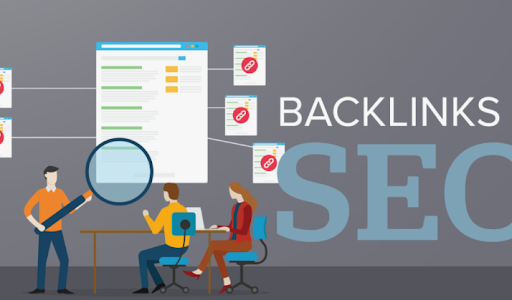
Link building for SEO (Search Engine Optimization) is a crucial aspect of website optimization, contributing to the website’s authority, visibility, and the ability to draw in relevant organic traffic. It’s about getting links from other sites that link to your pages, generally, to have the search engines discover your content and understand how the various sites are associated. But it’s not enough to just have backlinks, you need to have the right ones. What is more important than the quantity of links is the relevance, quality, trustworthiness and naturalness of those links.
The key to a successful link building strategy is to offer valuable content, build relationships with publishers, get real-word recommendations and develop resources that others websites will reference. Link building, when done responsibly, can be a beneficial component of a long-term SEO strategy, boost brand awareness, and improve a company’s presence in search engine results.
SEO link building is the process of acquiring links from other websites.
Link building for SEO involves obtaining links from other websites to boost your own website’s search engine optimization and user-friendliness. Backlinks or inbound links are these hyperlinks.
Suppose you have created a comprehensive guide on digital marketing. Your guide is mentioned in a marketing blog and linked to. The link is a backlink. It can provide referral traffic, be used by search engines to help them find the page and as an indicator that another publisher thinks the content is valuable enough to cite.
Link building is not just about linking to your website. Internal links are links within your website and External backlinks are links pointing to your website.
The primary goal is to acquire relevant, credible, and user-friendly links that are applicable to the content and natural to the users. No one can promise you a set number of backlinks that will guarantee a website to top the Google pages. Rankings can be determined by numerous factors—such as page content quality and relevance, technical accessibility, competition, and search intent.
So, what is the reason behind the importance of link building in SEO?
Backlinks can help SEO in a number of ways, but only if they are acquired in the right manner.
To enhance the discoverability by the search engines.
Links are used by search engines to find pages and get from site to site. But when your website is new and hasn’t been indexed by search engines, or your content isn’t very popular, a backlink from a page that can be crawled can be helpful.
But, a backlink does not ensure that an index page will be indexed. Search engines also take into account the quality of the content, whether the page is canonical, crawlable, and offers value for the page.
Building and supporting the authority and trust of your site.
If the reputable websites link to useful content, then that can help promote a website’s stature and recognition. Google’s ranking algorithms rely on link-based metrics, such as systems that have been linked to PageRank, to help determine relationships and importance throughout the web.
Although these are third party metrics like Domain Authority (DA), Domain Rating (DR), and Authority Score, they can help as indicators when you’re starting your evaluation but are not a ranking factor for Google. The fact that it has a high score does not mean that a backlink will be beneficial to rankings.
Generating Referral Traffic
A great backlink can drive traffic right from the other website. For example, if a link is included in an article that is relevant to your industry, readers who are interested in the products and services you offer may be drawn to your company.
These visitors can visit more of your pages, sign up for your newsletter, reach out to your team, or even become customers. This is an important indicator of link building beyond search, as it is a measure of referral traffic.
Strengthening Brand Awareness
Being featured in trusted industry websites can reach out to new audiences for your brand. It doesn’t matter if a mention has a nofollow or other qualifying link attribute, it can still generate referral traffic, recognition, and opportunities for business.
Supporting Competitive SEO Strategies.
You can gain industry publications, resource pages, relevant communities and content topics to explore by analysing other competitors backlinks. It’s about finding legitimate links, not about mimicking all the links that your competitor has bought.
Your own link strategy should be focused on relevance, usefulness, editorial quality, while also conducting competitor analysis to guide your research.
Types of SEO Link Building
The various link building techniques have a variety of uses. It’s entirely dependent on your own industry, your target audience, the tools you have at your disposal, and the nature of the type of content your web site supplies.
1. Guest Post Link Building
Guest posting is creating an article and publishing it on another site’s blog. It can be beneficial in showcasing knowledge, establishing connections with publishers, and reaching new readers.
For instance, a digital marketing firm might submit an article on a particular marketing publication covering technical SEO. The text may contain a contextual link to a helpful resource on the agency’s site.
The important element is editorial value. Guest articles should give valuable insights to readers and not be written just to link back. For paid or sponsored placements, it is important to use the correct link attributes, if necessary, in compliance with Google’s guidelines.
Google for Developers+1
2. Digital PR Link Building
Digital PR is about securing editorial coverage and backlinks via newsworthy stories, original research, expert commentary and useful data.
A firm could conduct a survey on industry trends and present it to the press and publications. Researchers may be cited in articles by editors if they deem it worthy.
This strategy can create relevant links, references, referrals, and more visibility. It is successful if the story is good and it is relevant to the readers of the publication.
3. Link Building through Printable Pages of the Site.
Resource pages compile helpful tools, guides, references, and education resources about a specific topic. These can give you the chance to make links when your content is filling an actual void.
For instance, a list of all the items that need to be addressed in an SEO audit may be a valuable resource for a digital marketing resource page.
Determine, prior to contacting owner of site, that your resource is relevant, accurate, accessible and of benefit to the intended audience.
4. Broken Link Building
The Broken Link Building Technique is a process of locating links on websites that are relevant to the website you’re trying to link to, but are broken.Broken link building is a technique of searching for broken links on websites that are relevant to your website, and make a recommendation for the appropriate link.
It starts with detecting a Link that is broken on a beneficial resource page. Then you see what you’re missing and if you have content around the same subject, you realize that you have a good alternative. If the need arises, you may develop a better resource prior to contacting the publisher.
The publisher is not obligated to provide the link replacement so outreach should be courteous in trying to enhance the reader’s experience.
- Linkable Asset Creation
A “linkable asset” is anything that is worth linking to that others websites can describe naturally.
That can be anything from original research to free calculators, statistics about the industry, detailed tutorials, templates, interactive tools, and so on, to comprehensive guides.
For example, a free backlink analysis checklist on a website can get links from other websites in the SEO blog and educational articles as well as marketing newsletters.
This is a great way to have long-term opportunities as the strong resource can still get attention after the initial promotion.
- Mention Brands Unlinked.
In some instances, the publisher will reference a business, product or website without a link. Reclaiming brand mentions requires detecting those mentions and reaching out to the publisher to determine if they will include a relevant link.
It’s very handy when the mention already gives the context for the business or resource.
But it’s not enough for a brand to be mentioned to get a backlink. Depending on what is appropriate, a link may be added that will be beneficial to the reader.
- Competitor Backlink Analysis
Competitor backlink analysis lets you know what kind of sites are linking to businesses that are completing in your market.
Using backlink analysis tools, you can find out which domains are referring to you, which pages link to you, which are industry publications and which has interesting content.
The aim is to find the potential opportunities that are suitable for your website. Don’t copy other pages with a lot of spammy links or assume that every backlink you see to their competitors is of any value.
List of business directories and industry listings.List of business directories and industry listings.
Users can find local businesses, professional services and industry organizations that are relevant through a business directory.
A local business could have up-to-date information in well-known business listing or industry organizations, for instance.
Select directories based on the credibility and audience they attract. If you submit your site to hundreds of unrelated directories, just for backlinks, it’s not going to be a great longterm SEO strategy.
- Relationship-Based Link Building
Establishing connections with bloggers, journalists, researchers, business owners and industry professionals can open opportunities for a mutually beneficial relationship.
Relationships can result in guest interviews in magazines and other platforms, joint research, resource recommendations, and mentions in magazines. These links are most useful if they occur in the context of the work itself and not because of the use of artificial link exchanges.
How to Identify a good Link?
Not all backlinks have the same potential value. Assess them in terms of multiple criteria not just one.
Topical relevance
If there’s a link from a site with related content, it’s easier to make sense of than a link from an unrelated site.
Editorial credibility
It’s better to have links where they’re relevant based on the content of the page rather than only linking up to gain rankings.
Relevant page content
The linking page should have a clear purpose with meaningful content that relates to the linking page’s destination.
Potential referral traffic
Think about if actual users might click the link and gain from the destination page.
The natural placement and anchor text of the link.
Links must tie in to the context, and the text that is linked to should clearly explain what the link will take users to.
Domain Authority and Domain Rating
There are a number of metrics used to compare websites, including Domain Authority, Domain Rating etc. These figures are third party estimates and not official estimates from Google.
High authority sites can offer a bad link opportunity if they have little to no real audience engagement, offer manipulative link placements, or post content that isn’t related to the site. Similarly, if you have a smaller niche site, it can be extremely relevant and have the exact target audience that you’re looking for.
Consider the website, the linking page, editorial standards and context of the proposed link all together.
How to Build Backlinks Step by Step
A formally guided process will enable you to prioritize opportunities and make progress without taking short-cuts and risks.
Determine the pages you’d like to rank for.Find your target pages.
Pick the pages that will have more exposure, like the original research, services, detailed guides or helpful tools. Ensure that every page offers the visitors something of value.
Develop content to be referenced
Create resources to solve a problem, give original information, answer a real question, or make an arduous task easier. There’s a rationale behind publishing for citations.
Find relevant websites
Look through articles in research industry publications, resource pages, journalists, professional communities, and research industry websites on your topic. Review the importance and editorial value of each prospect.
Personalize your outreach
State the reason for your contact with the publisher, the article or opportunity of interest to readers, and how your resource could be beneficial to readers. Don’t send out marketing emails or false statements.
Review acquired links
Check to see that the link is right, and that it functions correctly, and that it is in an appropriate context. Note the source page, target page, text of the link, and other attributes of the link.
Conduct assessment of the results of the measures and enhance them
Monitor referring domains, visits from referring pages, visibility of keywords, conversions and behavior of your target pages. Use the results to further improve your content and outreach strategy.
Anchor Text in Link Building – What is it and why it matters.
Anchor text is the text that is hyperlinked and contains the action links that people click on to go to another webpage. It offers a context to your readers and search engines of your destination.
For instance, “A well-executed SEO strategy can enhance your business’s organic presence. The words “SEO strategy” might connect to a pertinent guide on that.
A natural backlink profile can contain different anchor text types. There is no universally correct percentage for exact-match, branded, or partial-match anchors.
Avoid forcing commercial keywords into every backlink. Excessive keyword-rich anchor text, especially in paid or otherwise manipulative placements, can violate search engine spam policies. Anchor text should be descriptive and appropriate to the surrounding sentence.
Google for Developers+1
White Hat vs Black Hat Link Building
White-hat link building is about quality content and valuable information, relationship building, and reaching out in a manner that resonates with the audience.
Black hat link building involves deceptive techniques like link farms, automated backlink creation, hidden links and backlinks paid for to gain ranking credit.
The difference is not only in the amount of money that is exchanged. Businesses are entitled to advertisement or sponsorship. The concern is raised when rankings are being manipulated with a placement without using the proper link qualification.
Purchasing or selling links for ranking, too many link exchanges, automated link schemes, and some guest posts that are manipulative are all forms of link spam, Google says. Violations may lead to ranking loss and/or manual action.
Google for Developers+1
Focusing on links with a true editorial or audience value, not for a sustainable strategy, is the approach to take. If it is a paid or sponsored link, use the rel=”sponsored” attribute, not an editorial link, and if appropriate, use nofollow.
You should steer clear of the most common SEO Link-Building Errors.
Rather than Quality, the focus should be on Quantity.
Don’t be fooled by the number of irrelevant links you get; having hundreds of links with no relevance to the website doesn’t necessarily mean it will boost organic traffic. The better way to do this is to evaluate relevance, credibility, editorial context and potential business value.
You can purchase links to manipulate rankings.Links can be purchased to manipulate rankings.
If you pay for a placement where the intent is to get ranking credit, then you may be violating Google’s link spam policies. When advertising/sponsored content is bought, make sure the link is properly qualified.
Private Blog Networks (PBNs):Private Blog Networks (PBNs):
Private blog networks, or PBNs, are a network of websites that are created mainly for the purpose of creating backlinks with the main aim of affecting search engine rankings. Such networks do run a risk and they could generate links that are not really of any editorial value.
Consequently, people have to depend on computer automated link building software.
Spammers can generate many links automatically, be it from comments, profiles, forums or poor websites, and generate spam-like patterns in the process.
Do SEO research, analysis and prospecting rather than automated link building.
Overusing Exact-Match Anchors
Paying or coordinating links with the same commercial keyword can be more of an indication of manipulation, especially if it’s used repeatedly. Let the anchor text fit the context of each reference.
Failing to follow the Linking Website’s Quality”
Never use a website DA or DR score as the only way to evaluate a site. Examine its actual content, topical interest, editorial quality, traffic statistics (if available), and the quality of its outbound links.
Expecting Immediate Results
Acquisition, crawling, indexing & ranking changes do not happen on a strict schedule. It’s not uncommon for a legitimate backlink to not lead to any significant ranking results. Don’t expect to build links and suddenly see your website’s rankings rise.Building links should form part of an overall SEO strategy, not be a means to an end to get you kickstarted with rankings.
Is Link Building Still Important for SEO?
Yes, link building is still likely to be relevant since links can assist search engines in finding pages and create relationships between content across the web. According to Google documentation, links are used for page discovery and as signals for, as mentioned, relevance.
Google for Developers+1
But link-building isn’t a replacement for meaningful content, a website that is easy to navigate, great web design, or meeting search intent. A page that has a lot of backlinks may not rank well if it does not provide the answers to the user’s query.
The best way to do it is to build content, link to it, optimize it, develop digital PR, and strategically reach out. Links must add value to a website as a whole, and not just be used as a ranking strategy.
Conclusion
SEO link building works best when it is done with the objective of obtaining links from pages that are relevant to the product being advertised or links that have a high degree of trustworthiness.The best approach to link building is to get links from pages that are relevant to what you are advertising or on pages that are very trustworthy. When it comes to building backlinks, having a ton of links from high-authority sites is not the most effective approach, and neither is achieving a high score in authority metrics. Businesses should focus their efforts on creating valuable content, making meaningful outreach, cultivating industry connections, and building ethical digital PR profiles.
Check referring domains, traffic from referring sites, search activity and conversions to find out what works. Don’t engage in manipulative link schemes and properly qualify paid placements. Link building, when done in conjunction with effective content marketing and good technical SEO, can be an effective aspect of a sustainable organic growth program.
About The Author