



If you are new to hair care, the world of herbal oils can feel confusing. Shelves are full of bottles with long ingredient lists, friends and relatives all swear by different remedies, and every second video online claims to have a secret for thicker, longer hair. Where do you even begin?
The good news is that herbal hair oiling is not complicated. It is one of the oldest and simplest forms of hair care in South Asia, passed down through families for generations. This beginner’s guide explains what herbal oils are, how they support the scalp and hair, which ingredients are worth knowing, and how to build a routine you can actually stick with.
What Is an Herbal Hair Oil?
An herbal hair oil is made by combining plant ingredients, such as dried herbs, flowers, seeds, or fruits, with a carrier oil like coconut, sesame, or almond. In traditional preparation, the herbs are slowly heated in the oil so that their plant compounds gradually blend into it. The result is a fragrant, nourishing mixture that combines the conditioning qualities of the oil with the traditional uses of each herb.
Modern products follow the same idea, though quality varies widely. Some contain generous amounts of real herbs, while others are mostly mineral oil with a little fragrance. Knowing the difference is one of the most useful skills a beginner can develop.
Why the Scalp Matters So Much
Every strand of hair grows from a follicle in your scalp. Around each follicle are tiny blood vessels, oil glands, and nerve endings. When the scalp is clean, balanced, and comfortable, it provides a healthy foundation for hair. When it is dry, flaky, greasy, or inflamed, hair has a harder time looking and feeling its best.
Many people focus only on the lengths and ends of their hair, but scalp care deserves equal attention. Think of it like gardening: you cannot expect healthy plants from poor soil. That is why a good hair oil for hair growth is usually designed to be massaged into the scalp, not simply smoothed over the ends.
What Herbal Oils Can and Cannot Do
Let us be honest about expectations. Herbal oils can moisturize the scalp, condition the hair, reduce friction and breakage, and make a regular massage more enjoyable. They can support a healthy scalp environment, and healthy hair tends to hold on to its length better.
What they cannot do is change your genetics, correct hormonal imbalances, or cure nutritional deficiencies. Hair grows only about half an inch per month, so no oil will produce dramatic results overnight. If a product promises miracles in a week, be skeptical. Realistic, steady care is what makes the difference.
Herbs Every Beginner Should Know
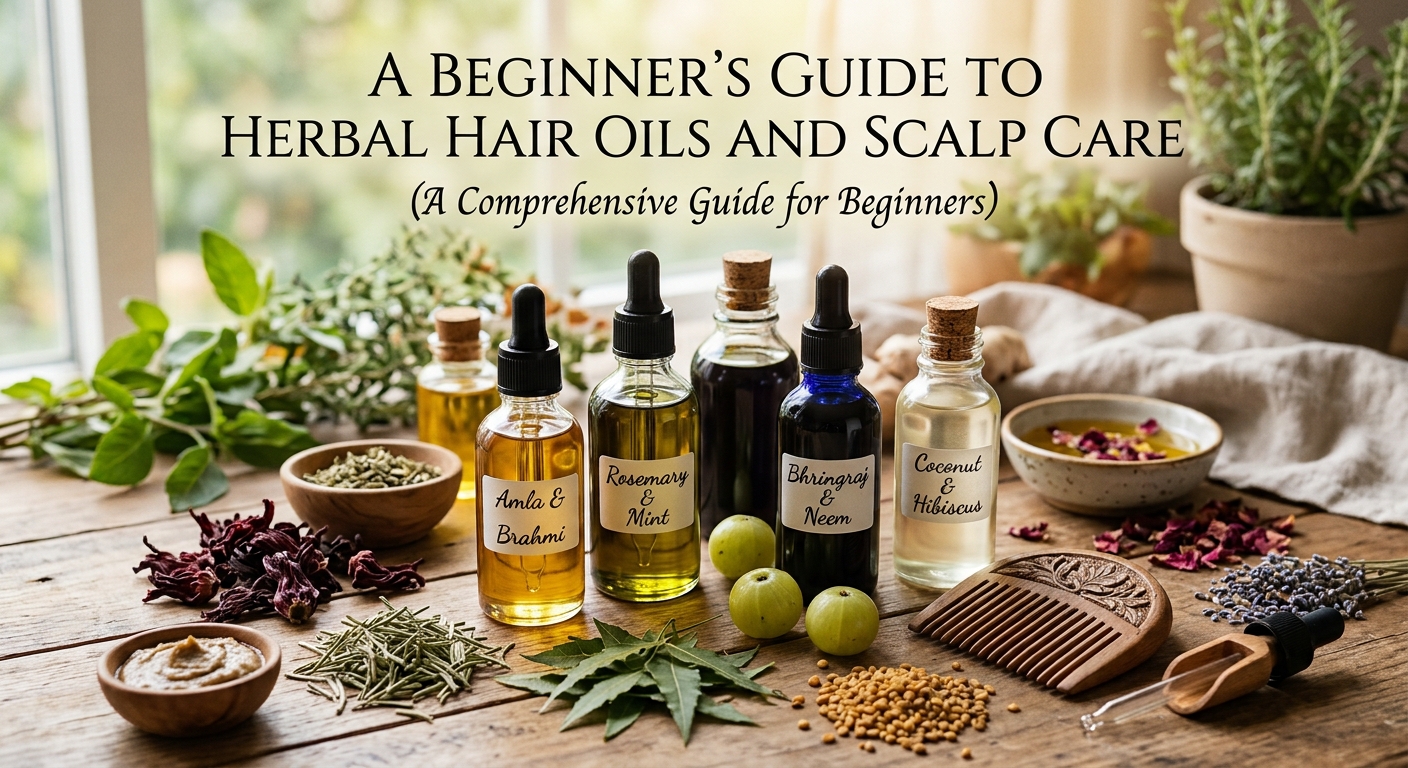
Amla (Indian gooseberry) is rich in vitamin C and antioxidants and is a staple of Ayurvedic hair care. Traditionally it is valued for keeping hair feeling nourished and looking glossy.
Bhringraj is often called the “king of herbs” for hair. It is commonly infused into oils and massaged into the scalp to condition the hair and support a healthy-feeling scalp.
Hibiscus flowers and leaves are naturally slippery, which makes them excellent for conditioning and detangling. They add softness and shine.
Neem is known for its cleansing and soothing qualities. Its mild antimicrobial properties make it popular for scalps prone to itching or buildup, though it has a strong smell.
Fenugreek (methi) contains protein, iron, and a gel-like substance called mucilage that conditions and softens hair.
Brahmi has a long reputation in traditional medicine for its calming qualities and is often included in oil blends for scalp massage.
Rosemary has attracted attention in recent years. A small study suggested it may perform similarly to a common hair loss treatment over six months, but the research is limited and should not be treated as proof. Rosemary essential oil must always be diluted.
Onion is rich in sulfur, and early small studies on onion juice have been encouraging, though larger research is needed. It can be irritating, so patch testing is essential.
Carrier Oils: The Base of Every Blend
The carrier oil makes up most of the bottle, so it matters. Coconut oil can penetrate the hair shaft and help reduce protein loss during washing. Sesame oil is a traditional favorite, absorbing well and nourishing the scalp. Almond oil is light and rich in vitamin E, suiting dry or frizzy hair. Castor oil is thick and moisturizing but best mixed with a lighter oil. Olive oil is a gentle conditioner for dry or coarse hair, and jojoba closely resembles the scalp’s natural sebum, which makes it suitable for most scalp types.
How to Choose a Good Herbal Oil
Reading labels is the most valuable habit for any beginner. Ingredients are listed in order of quantity, so the first few items make up most of the product. Look for recognizable plant oils and herbs near the top. If a herb advertised on the front of the bottle appears at the very end of the list, there may be very little of it inside.
Be cautious of products dominated by mineral oil, which sits on the hair without nourishing it, along with heavy synthetic fragrance and artificial colors, which may irritate sensitive scalps. Choose a texture that suits your scalp: lighter oils for oily or fine hair, richer ones for dry or thick hair.
If you prefer not to prepare infusions at home, ready-made options can be convenient. Brands like Desi Khazanay make herb-inspired oils based on traditional recipes, which can suit beginners who want a natural product without the effort of sourcing and simmering ingredients. Whichever brand you consider, check the ingredient list, read what the company actually claims, and be realistic about the timeline for results.
Always Patch Test First
Natural does not automatically mean safe for everyone. Herbs and essential oils can cause allergic reactions in some people. Before using a new oil on your scalp, apply a small amount to your inner forearm and wait 24 hours. If you notice redness, itching, or burning, do not use the product. Avoid applying any oil to broken, irritated, or infected skin.
How to Oil Your Hair: Step by Step
Here is a simple method that works well for beginners.
First, warm a small amount of oil. You can place the bottle in a bowl of warm water for a few minutes or rub a few drops between your palms. It should be comfortably warm, never hot. A tablespoon or two is usually enough.
Second, part your hair into sections. Using your fingertips, apply the oil directly to the scalp, working section by section.
Third, massage in small circular motions for five to ten minutes. Use the pads of your fingers, not your nails, and apply firm but gentle pressure so the scalp moves over the bone beneath. This is where much of the benefit comes from, since massage may support circulation and helps release tension.
Fourth, spread any leftover oil through the lengths and ends, where hair tends to be driest.
Fifth, leave the oil in for at least an hour. Overnight is fine if your scalp tolerates it, but protect your pillow with a cap or an old cloth.
Finally, wash with a gentle shampoo. If the oil is stubborn, apply shampoo to your dry, oiled hair first, then add water and lather. Rinse well and condition the ends if needed.
How Often Should You Oil?
For most beginners, once or twice a week is plenty. Daily heavy oiling can lead to buildup, itching, and dandruff, particularly for oily scalps. If your scalp is dry, you may benefit from slightly more frequent use, while oily scalps may prefer less. Pay attention to how your scalp feels and adjust accordingly.
Seasons matter too. In Pakistan’s hot, humid summers, lighter oils and smaller amounts feel better, since heavy oil can trap sweat. In dry winters, richer oils and longer treatments are more comfortable.
Basic Scalp Care Beyond Oil
Oil is only one part of caring for your scalp. Keep it clean with a gentle shampoo suited to your scalp type, washing two to three times a week for most people. Use lukewarm water, since very hot water strips natural oils. Avoid scratching, and treat dandruff or itching early.
Wear loose hairstyles when possible, as constant tension from tight ponytails can stress the follicles. Clean combs and brushes regularly, change pillowcases often, and protect your scalp from strong sun with a scarf or hat.
Common Beginner Mistakes
The most common mistake is using too much oil. A thick layer does not increase benefits; it only makes the scalp harder to clean. Another is applying oil that is too hot, which can burn the skin. Many beginners also give up too soon. Because hair grows slowly, you need at least three to four months of consistent use before judging any hair oil for hair growth fairly.
Switching products every few weeks is another trap, as is expecting an oil to solve a medical problem. If your hair fall is linked to anemia, a thyroid condition, or hormonal changes, only proper treatment will address it.
Support Your Hair From the Inside
Hair is built mainly from protein, and it depends on iron, zinc, vitamin D, B vitamins, and healthy fats. Include eggs, lentils, chickpeas, leafy greens, nuts, seeds, fish, and fruit in your diet. Drink enough water, sleep well, and manage stress. These habits support every product you use.
When to See a Professional
Herbal oils are supportive care, not medical treatment. If you notice sudden or heavy hair fall, bald patches, a rapidly widening part, or a scalp that is painful, scaly, or persistently itchy, consult a doctor or dermatologist. Early diagnosis can save you months of trying the wrong solutions.
Final Thoughts
Herbal hair oiling is simple, affordable, and deeply rooted in tradition. As a beginner, you do not need a cabinet full of products. Start with one well-chosen oil, learn your scalp’s needs, massage gently once or twice a week, and pair it with good nutrition and gentle handling.
A thoughtful hair oil for hair growth can become a relaxing ritual that supports a healthier scalp and softer, stronger-looking hair. Be patient, stay consistent, and let your routine grow naturally, just like your hair.
About The Author