



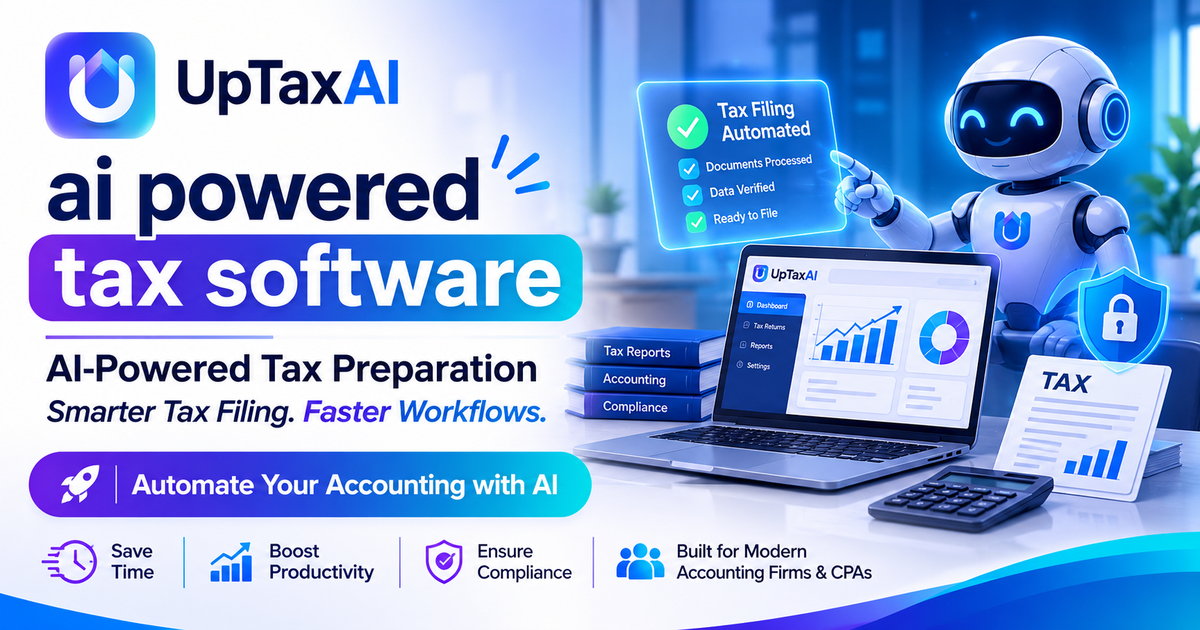
Every year around this time we hear similar stories from clients about their experience preparing tax returns – they’re sending us blurry PDFs, mismatched spreadsheets, late paperwork and we have no choice but to manually key everything into our systems.
This takes away from precious hours we could be using advising you on your return. AI powered tax software promises to automate these types of repetitive tasks, freeing up advisors to spend more time helping clients.
What Is AI Powered Tax Software?
AI powered tax software uses machine learning and document recognition to handle tasks that used to require manual input. It reads tax forms, pulls out the key figures, and places them in the right fields. It can also flag numbers that look unusual.
Traditional tax software relies on you to enter everything. Tax software AI tools add a layer that reads, sorts, and checks the data first.
Common capabilities include:
- Extracting data from W-2s, 1099s, K-1s, and bank statements
- Matching documents to the right client and tax year
- Flagging missing forms or figures that do not add up
- Suggesting categories for business expenses
- Keeping a record of what changed and when
Where AI Helps Most in Tax Preparation
Document Intake and Sorting
Collecting client documents is often the slowest step. AI can read uploaded files, label them, and tell you what is still missing. That cuts down on back-and-forth emails.
Data Entry and Error Checking
Typing figures from a K-1 into a return invites small mistakes. Automated extraction reduces retyping, and built-in checks can catch mismatches before review.
Review Support
AI can point a reviewer to the lines that deserve a closer look. It does not decide what is correct. The preparer or CPA still makes the call.
How CPA Firms Are Using AI
AI tax preparation for CPA firms usually starts small. A firm picks one pain point, often document intake or organizer follow-ups, and tests it during a few weeks of the season.
Here is a simple way to run that pilot:
- Pick one workflow with clear volume, such as 1040 intake.
- Record how long it takes today.
- Run the same workflow with the AI tool on a sample set of clients.
- Compare time, error rates, and staff feedback.
- Expand only if the numbers justify it.
This approach keeps risk low and gives partners real data instead of vendor promises.
What Small Businesses Should Look For
Small business owners who seek out the ideal artificial intelligence tax software end up comparing features rather than suitability. The software that is designed to work in a ten-person firm is likely to be too complex for an LLC with only one owner.
Use this checklist:
- Accuracy: Does it show you where each number came from?
- Security: Look for encryption, access controls, and a clear data policy. The IRS expects tax professionals to protect client data under the FTC Safeguards Rule.
- Integrations: Does it connect with your accounting or bookkeeping system?
- Support: Can you reach a real person during busy season?
- Pricing: Is it per return, per user, or a flat fee? Watch for add-on costs.
Platforms such as built around this kind of workflow for CPA and EA firms, so it helps to see how any tool handles intake, review, and audit trails before you commit.
Limits and Risks to Keep in Mind
AI makes mistakes. A model can misread a scanned form or place a figure in the wrong box. Treat the output as a draft that needs review.
Watch for these risks:
- Overreliance: Staff may stop checking numbers they assume are right.
- Privacy gaps: Ask where data is stored and who can access it.
- Changing rules: Tax law updates every year, so confirm how quickly the tool reflects new IRS guidance.
A good habit is to keep a human review step on every return, no matter how confident the software appears.
Conclusion
Around this time every year, many of us at Tax Jar start hearing complaints from our clients about the process of getting ready for tax season.
Clients are emailing us blury PDFs, sending over spreadsheets that don’t match each other, missing forms, etc. It’s all taking up valuable hours where we could be advising them on their taxes.
Also reads about: https://guestpostingforseo.com/see-how-uptax-helps-firms-prepare-returns-faster/
FAQs
What is AI powered tax software?
It is software which applies machine learning to analyze and record tax information in an effort to detect errors.
Is AI tax preparation software accurate?
Accuracy is dependent upon the product and document quality.
Can AI replace a CPA?
Not really. It’s the role of AI to perform repetitive tasks. Decision making and signing of the returns still fall on a CPA, EA, or anyone authorized to prepare returns.
Is AI tax software safe for client data?
This is the case when the provider employs encryption, access control, and retention policies.
How much does AI tax software cost?
Pricing models include per-return fees, monthly subscriptions, and per-user plans.
About The Author