


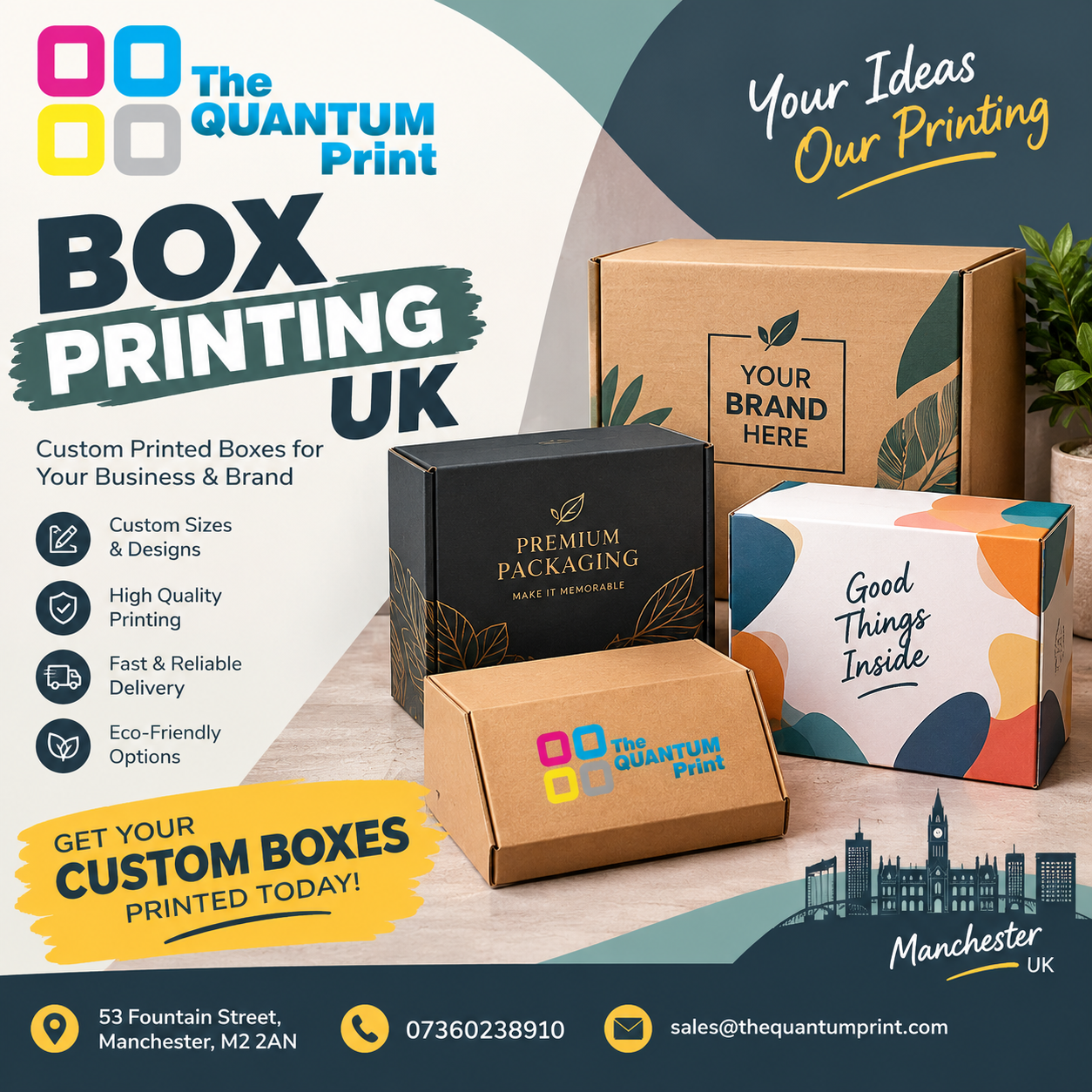
Packaging is becoming an increasingly important part of how businesses present their products, protect goods and communicate with customers. In the United Kingdom, changing shopping habits, the growth of e-commerce and rising expectations around sustainability are influencing how companies approach packaging design. Printed packaging is no longer simply a protective covering; it is an important part of product identity, customer experience and brand communication.
From independent retailers to established manufacturers, businesses are exploring creative packaging solutions that combine attractive designs, practical functionality and responsible material choices. The demand for a professionally designed print box UK solution is particularly relevant for companies looking to create consistent packaging across retail shelves, online orders and product deliveries.
Looking ahead to 2026 and 2027, developments in printing technology, material innovation and personalised packaging are expected to influence the industry further.

1. Packaging Industry Trends Shaping 2026–2027
The UK packaging industry continues to adapt to consumer expectations and changing business requirements. Several important trends are influencing how printed packaging is designed and produced.
Sustainable and Recyclable Packaging
Environmental responsibility remains a significant consideration for packaging decisions. Businesses are increasingly exploring recyclable cardboard, responsibly sourced paper, kraft materials and packaging designs that reduce unnecessary waste.
Some important developments include:
- Recyclable paperboard and cardboard packaging.
- Reduced use of unnecessary plastic components.
- Minimalist packaging designs that use fewer materials.
- Water-based and suitable low-impact printing inks.
- Packaging sizes designed to minimise empty space during transportation.
Sustainable packaging is not only about selecting environmentally considerate materials. It also involves designing packaging that is appropriate for its intended purpose, easy to handle and suitable for existing recycling systems.

Minimalist Designs and Premium Finishes
Minimalist packaging is another growing design direction. Clean typography, balanced colours, simple graphics and carefully selected finishes can create a professional appearance without making packaging unnecessarily complicated.
Businesses are also considering finishes such as:
- Matt and gloss lamination.
- Foil stamping.
- Embossing and debossing.
- Spot UV coating.
- High-quality full-colour printing.
The most suitable finish depends on the product, budget, target audience and overall packaging objectives.
Personalised Packaging Experiences
Personalisation is becoming more important in retail and e-commerce. Businesses are exploring packaging designs that reflect seasonal campaigns, limited-edition products and specific customer groups.
Custom printed packaging can help businesses create a consistent visual identity while making products easier to recognise.
2. Why Printed Boxes Matter for UK Businesses
Packaging performs several important functions throughout the product journey. It protects products during storage and transportation, communicates essential information and creates the first physical impression customers receive.
For retailers and online sellers, professionally produced print boxes can support several business objectives.
Brand Recognition
Consistent colours, logos, typography and design elements help customers recognise a business. When packaging follows the same visual identity as a website, product labels and marketing materials, it creates a more unified brand experience.

Product Protection
The appearance of packaging is important, but its structural strength is equally essential. A suitable box should match the product’s weight, dimensions and handling requirements.
For example:
- Corrugated cardboard can provide additional protection for shipping.
- Folding cartons are suitable for many retail products.
- Rigid boxes can support premium product presentation.
- Kraft boxes offer a natural-looking packaging option.
Selecting the correct board thickness and box construction can help reduce product damage during transportation.
Better Customer Experience
Packaging is often the first physical interaction customers have with an online business. A well-designed box that opens easily, protects the contents and presents the product professionally can contribute to a positive customer experience.
3. How to Choose the Right Printed Box for Your Business
Selecting suitable packaging requires more than choosing an attractive design. Businesses should consider product requirements, production specifications and the complete delivery process.
Identify Product Dimensions and Requirements
Start by measuring the product accurately. Consider its length, width, height, weight and fragility.
A box that is too small may damage the product, while oversized packaging can increase material consumption and transportation costs.

Select Suitable Packaging Materials
Different products require different packaging structures.
Common options include:
- Folding carton boxes: Suitable for cosmetics, food products and retail items.
- Corrugated boxes: Commonly used for shipping and e-commerce deliveries.
- Kraft cardboard boxes: Useful for businesses seeking a natural packaging appearance.
- Rigid boxes: Often selected for premium gifts and luxury products.
The choice should reflect product protection, presentation and handling requirements.
Consider Printing and Finishing Options
Before finalising a design, businesses should understand the available printing methods.
Digital printing can be useful for shorter production runs and designs that require flexibility. Offset printing is often suitable for larger quantities where consistent colour reproduction is important.
Artwork should be prepared with correct dimensions, bleed areas, colour settings and resolution. Requesting a physical sample or proof can also help identify potential issues before production begins.
Compare Production and Delivery Requirements
When businesses plan to buy printed boxes, they should consider more than the initial production cost.
Important factors include:
- Minimum order quantities.
- Printing specifications.
- Material quality.
- Production lead times.
- Delivery arrangements.
- Storage requirements.
- Reordering consistency.

Comparing these details can help businesses make informed packaging decisions.
4. The Growing Demand for Print Boxes in Manchester and Across the UK
Manchester is an important commercial and retail centre, with businesses operating across manufacturing, fashion, food, cosmetics, technology and e-commerce.
The demand for print box Manchester solutions reflects the packaging requirements of different industries. Local retailers may need attractive product boxes, while online sellers require packaging that can withstand transportation and handling.
Businesses in Manchester and other UK locations may use printed packaging for:
Retail and Fashion: Clothing accessories, footwear, jewellery and lifestyle products often require branded packaging that supports product presentation.
Food and Bakery: Bakeries, confectionery businesses and food retailers need packaging that considers product protection, hygiene and applicable food-contact requirements.
Cosmetics and Beauty: Printed cartons and premium boxes can help communicate product information and create a consistent visual identity.
E-commerce: Online retailers need practical packaging that protects products during delivery while presenting a professional brand image.
Corporate Gifts: Custom packaging can make promotional products, event materials and business gifts more organised and visually appealing.
The most effective packaging approach depends on the specific product and how customers receive it.

5. Common Printed Packaging Challenges and Practical Solutions
Despite improvements in printing technology, businesses can still encounter challenges when developing packaging.
Inconsistent Colours
Colours displayed on a computer screen may look different when printed. This can happen because of differences between RGB and CMYK colour systems, materials and printing processes.
Practical solution: Use the correct print-ready colour settings and request a colour proof before approving a large production run.
Incorrect Box Dimensions
Incorrect measurements can result in poor product fitting, damaged goods or unnecessary packaging material.
Practical solution: Confirm internal and external dimensions and test a sample using the actual product.
Balancing Cost and Quality
Businesses sometimes focus entirely on reducing packaging costs, overlooking the importance of durability and presentation.
Practical solution: Compare material specifications, printing quality and total production requirements rather than judging packaging on price alone.
Delayed Production
Last-minute artwork changes, unclear specifications and approval delays can affect delivery schedules.
Practical solution: Finalise artwork, quantities, material choices and delivery expectations before production begins.
For businesses researching packaging providers, The Quantum Print provides information about UK printed box packaging options at:
https://www.thequantumprint.com/box-packaging/print-box-packaging-uk/

Conclusion: The Future of Printed Packaging in 2026–2027
The future of printed packaging in the United Kingdom will be shaped by sustainability, innovative printing methods, personalisation and practical product protection. Businesses will increasingly need packaging that performs well during transportation while maintaining a consistent and recognisable brand identity.
Whether a company operates in Manchester, London or another part of the UK, selecting suitable materials, accurate dimensions and effective printing techniques can make a meaningful difference to packaging performance.
As businesses prepare for 2026 and 2027, investing time in packaging research, design testing and material selection can help avoid common production problems and improve the overall customer experience.
Ultimately, successful printed packaging combines functionality, visual appeal and responsible material choices. Businesses that understand these priorities will be better positioned to meet changing retail and e-commerce expectations.
Contact Us : https://www.thequantumprint.com/contact-us/
About Us : https://www.thequantumprint.com/about-us/
Website Link : https://www.thequantumprint.com/
INN-News.Net : https://www.inn-news.net/
Social Media : (Read More)
- https://www.thequantumprint.com/the-quantum-print-reviews/
- https://www.thequantumprint.com/is-the-quantum-print-a-registered-company/
- https://www.thequantumprint.com/where-is-the-quantum-print-based-7-things-uk-customers-should-know/
- https://bondhusova.com/blogs/497687/Custom-Cricket-Bat-Stickers-2026-2027-Printing-Innovations-and-Design
- https://ayema.ng/blogs/495948/Cricket-Bat-Stickers-UK-Custom-Designs-Printing-Trends-Personalisation-2026
- https://sites.google.com/view/custom-hologram-stickers-uk/home
About The Author