




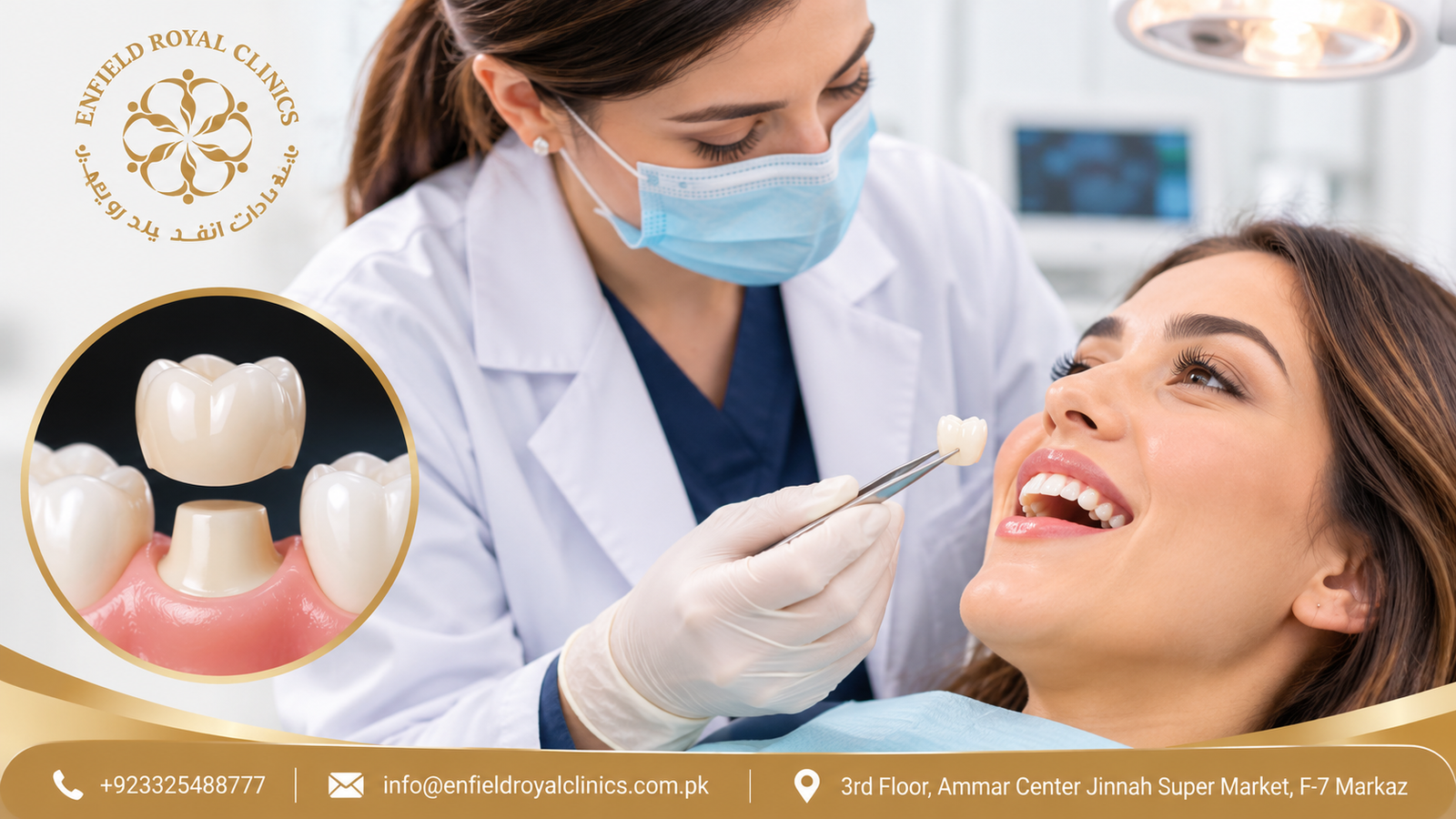
Dental crowns are commonly used to restore damaged, weakened, or severely worn teeth. They help rebuild a tooth’s shape, protect its remaining structure, and improve chewing function. However, patients preparing for treatment often wonder whether getting a crown will affect their everyday activities, eating habits, work schedule, or oral hygiene routine.
The good news is that dental crown treatment usually requires only a few temporary adjustments. Once the permanent crown is properly fitted and the tooth has settled, most patients can return to their normal daily activities. A few long-term care habits are important for protecting the restoration and maintaining good oral health.
Dental Crown Treatment in Islamabad can be a suitable option for patients with extensive tooth decay, broken teeth, large fillings, or weakened molars. Understanding what changes to expect before and after treatment can help patients prepare comfortably and maintain their regular lifestyle.
1. What Changes Can Patients Expect Immediately After Treatment?
The first few hours after dental crown treatment may involve some temporary changes. Local anaesthesia is generally used during tooth preparation, so the treated area, lips, tongue, or cheeks may remain numb for a while.
Patients should avoid eating until the numbness has completely disappeared. This helps prevent accidental biting of the tongue or cheek. Very hot drinks should also be avoided while sensation is reduced.
Some patients may experience mild temporary symptoms, including:
- Slight sensitivity to hot or cold foods and drinks.
- Mild gum tenderness around the treated tooth.
- A feeling that the new crown is unfamiliar.
- Minor discomfort when chewing during the initial adjustment period.
These symptoms often improve over the following days. Many patients can return to routine activities, such as working, studying, and performing household tasks, shortly after a standard crown appointment.
However, treatment involving additional procedures, such as root canal therapy or gum treatment, may require different recovery instructions. Patients should follow the advice provided for their individual dental condition.
2. Does Dental Crown Treatment Change Daily Eating Habits?
Eating habits may need some temporary adjustment, especially during the period between tooth preparation and permanent crown placement.
If a temporary crown is used, patients should be more careful because temporary restorations are generally less durable than permanent crowns. Hard or sticky foods may loosen or damage them.
During this stage, softer foods are often more comfortable, such as:
- Soft rice and well-cooked vegetables.
- Scrambled eggs.
- Yogurt and other soft dairy foods.
- Mashed potatoes.
- Soft fruits.
- Soup served at a comfortable temperature.
Patients may also be advised to chew on the opposite side of the mouth to reduce pressure on the temporary restoration.
After the permanent crown is fitted, most patients can gradually return to their usual diet once any sensitivity has settled and the restoration is secure. A permanent crown is designed to handle normal chewing forces, but certain habits should still be avoided.
Chewing ice, biting hard candies, cracking nuts with the teeth, and using teeth to open packages can damage natural teeth and crowns. Very sticky foods may also place unnecessary pressure on a restoration.
For individuals considering Dental Crown Treatment in Islamabad, it is helpful to understand that long-term dietary restrictions are usually minimal. Sensible eating habits and avoiding excessive pressure are generally more important than making major changes to the daily diet.
3. Will a Dental Crown Change Brushing and Flossing Routines?
A dental crown does not usually require a completely different oral hygiene routine. Patients should continue brushing twice daily and cleaning between their teeth every day.
However, extra attention should be given to the area where the crown meets the natural tooth. Although crown materials such as porcelain and zirconia do not develop cavities, the natural tooth underneath and around the crown margins can still decay.
A consistent cleaning routine helps prevent plaque accumulation and supports healthy gums.
Important habits include:
Brush Twice Daily: A soft-bristled toothbrush and fluoride toothpaste help remove plaque from the crown and surrounding teeth. Gentle brushing around the gumline is particularly important.
Floss Every Day: Cleaning between teeth removes food particles and plaque that a toothbrush cannot easily reach. Patients should floss carefully around the crown rather than avoiding the area.
Clean Along the Gumline: Plaque can collect around the edges of a crown. Careful cleaning helps reduce the risk of gum inflammation.
Attend Regular Check-Ups: Dental examinations allow the condition of the crown, surrounding gums, and underlying tooth to be monitored.
Patients wearing temporary crowns should follow the specific cleaning instructions provided, as these restorations may require additional care to prevent displacement.
4. Does a Dental Crown Affect Speaking, Sleeping, or Working?
Most patients do not experience major changes in their normal routines after permanent crown placement. However, a newly fitted restoration may feel slightly different at first.
A crown restores the tooth’s shape, so the tongue may initially notice a change in its surface or contour. Some patients may need a short adjustment period before the restoration feels completely natural while speaking or chewing.
Work and study schedules generally do not need major changes after routine crown treatment. Many patients can resume their normal activities on the same day, depending on the procedure and how they feel afterward.
Sleeping routines also usually remain unchanged. However, patients who grind or clench their teeth during sleep should discuss this habit during consultation. Repeated grinding can place excessive pressure on the crown and natural teeth. A custom nightguard may be recommended when appropriate.
A crown should not cause persistent difficulty speaking, closing the mouth, or sleeping. If it feels too high, causes pain, or interferes with the normal bite, the patient should contact the dental professional for an assessment.
5. What Long-Term Lifestyle Habits Should Patients Maintain?
Once the permanent crown is fitted and the initial adjustment period has passed, most patients can follow their usual lifestyle. However, certain habits help maintain the restoration and protect the natural tooth underneath it.
Helpful long-term practices include:
- Avoid chewing ice and extremely hard objects.
- Do not use teeth to open bottles or tear packaging.
- Maintain regular brushing and flossing habits.
- Limit frequent sugary snacks and drinks.
- Manage teeth grinding or clenching with professional guidance.
- Attend routine dental examinations.
- Seek advice if the crown becomes loose, cracked, or uncomfortable.
Patients should also pay attention to changes around the treated tooth. New sensitivity, swelling, food trapping, or pain during chewing should not be ignored.
Many dental crowns last around 5 to 15 years or longer, although their lifespan depends on the material, fit, oral hygiene, bite pressure, and personal habits. Regular dental monitoring can help identify potential problems early.
For patients receiving Dental Crown Treatment in Islamabad, these habits do not require a major lifestyle change. They are practical steps that support the long-term health of both the restoration and surrounding natural teeth.
6. How Much Time Is Needed to Adjust to a New Dental Crown?
The adjustment period differs from person to person. Some patients become comfortable with a new crown very quickly, while others may notice a slightly different feeling for several days.
Mild sensitivity to temperature or pressure can occur after tooth preparation. It often improves gradually as the treated area settles.
The crown should feel stable and should not create an uneven bite. If the patient feels that the restored tooth touches before the others, a bite adjustment may be needed.
Patients should contact the dental professional if they experience:
- Persistent or worsening tooth pain.
- Sharp discomfort while biting.
- A crown that feels too high.
- A loose or displaced temporary or permanent crown.
- Swelling or significant gum tenderness.
- Sensitivity that does not gradually improve.
A loose temporary crown should be reported promptly because the prepared tooth needs protection until the permanent restoration is fitted. Patients should never attempt to attach a crown with household glue.
Overall, dental crown treatment usually causes only minor temporary changes to everyday life. Once the permanent restoration is properly placed and adjusted, most patients can eat, speak, work, and carry out their normal activities comfortably. Consistent oral hygiene and sensible habits help maintain the results over time.
For more information visit Enfield royal clinic in islamabad
Frequently Asked Questions
1. Can patients return to work after dental crown treatment?
Most patients can return to work or study after a routine crown appointment. However, numbness, additional procedures, or individual discomfort may affect the timing.
2. Do patients need to change their diet permanently after getting a dental crown?
Usually, no. Most patients can eat their normal foods once the permanent crown is fitted and any sensitivity has settled. Avoiding very hard foods and chewing ice is still recommended.
3. Can patients brush normally after dental crown placement?
Yes. Brushing twice daily with fluoride toothpaste should continue. Patients should also clean between their teeth and pay attention to the crown margins.
4. Does a new dental crown affect speaking?
A new crown may initially feel unfamiliar to the tongue, but most patients adjust quickly. Persistent speaking difficulties or an uncomfortable bite should be checked.
5. Can patients sleep normally after getting a dental crown?
Yes, in most cases. Patients who grind or clench their teeth during sleep should discuss protective options, such as a custom nightguard, with a dental professional.
6. Does dental crown treatment require lifelong special care?
Crowns generally require the same basic oral hygiene routine as natural teeth, along with regular dental check-ups. Avoiding excessive biting pressure also helps protect the restoration.
About The Author