





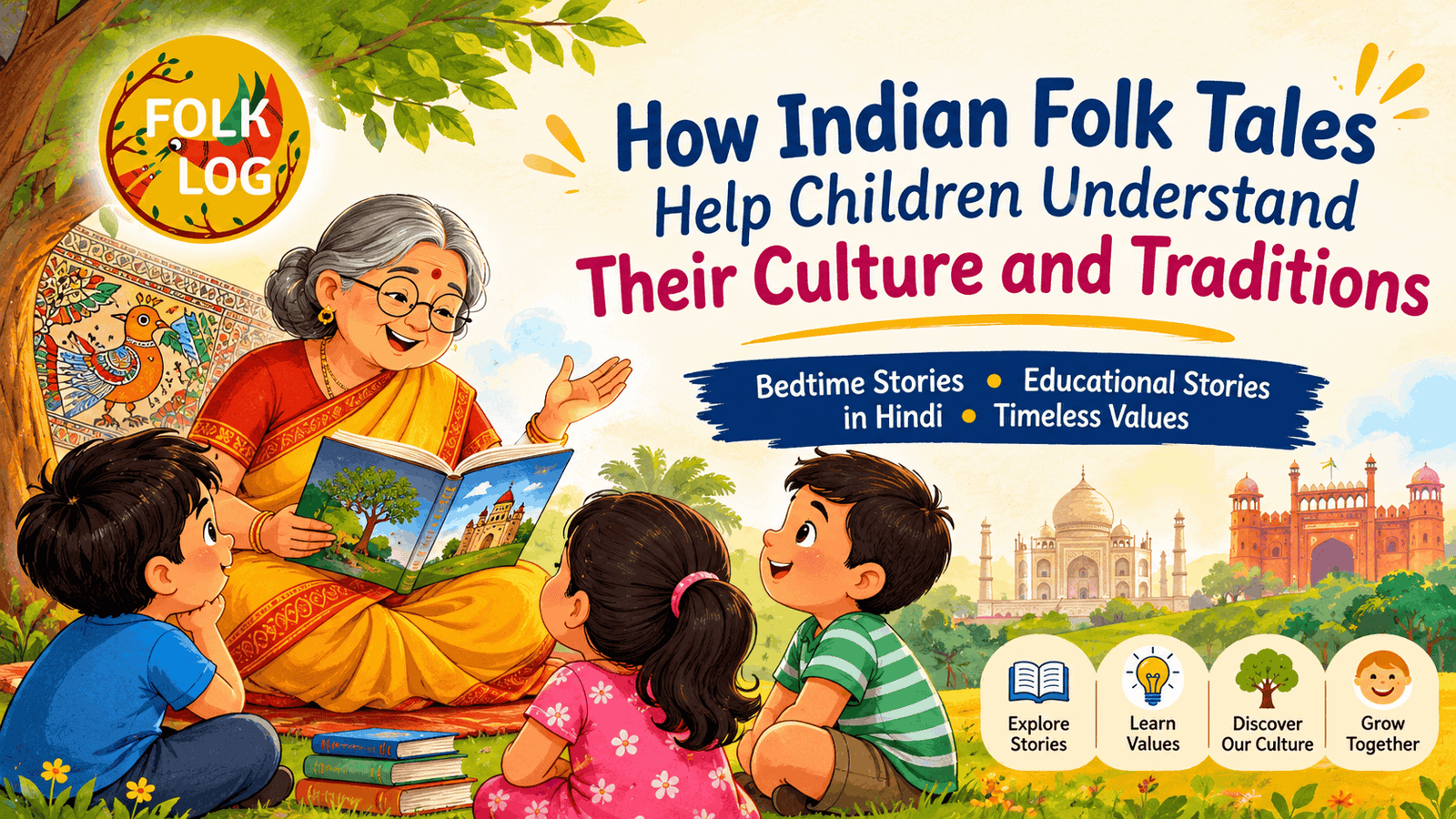
India is a country of diverse languages, festivals, traditions, art forms and cultural practices. Every region has its own collection of fascinating stories that have been shared across generations. These traditional narratives are more than entertaining tales; they introduce children to their roots, explain cultural values and help them understand the world around them. Indian folk tales play an important role in connecting young minds with the country’s rich heritage through imagination and storytelling.
In today’s digital world, children have access to different forms of entertainment and learning. However, traditional storytelling continues to offer something special. Through engaging characters, meaningful situations and memorable lessons, folk tales make cultural learning enjoyable for young readers and listeners.
Why Are Indian Folk Tales Important for Children?
Indian folk tales reflect the lifestyle, beliefs, customs and experiences of different communities. They often feature animals, kings, villagers, wise characters and ordinary people who face interesting challenges.
These stories help children discover how people lived in earlier times, celebrated festivals, respected nature and maintained relationships within their communities. For example, a regional folk tale may introduce a traditional occupation, a local festival or an art form that children have never encountered before.
Instead of simply reading facts about Indian culture, children experience traditions through storytelling. This makes cultural knowledge easier to understand and remember.
Connecting Children with India’s Regional Traditions
India’s cultural diversity is reflected in its storytelling traditions. Every region has unique tales influenced by local history, geography, language and artistic expression.
Stories from Rajasthan, Bengal, Bihar, Himachal Pradesh, Maharashtra and other regions introduce children to different customs and ways of life. They also help young audiences understand that India’s identity is shaped by many communities and traditions.
Visual storytelling makes this experience even more interesting. Traditional art forms such as Madhubani painting from Bihar and Chamba Rumal embroidery from Himachal Pradesh provide distinctive artistic styles through which stories can be presented.
By exploring these illustrations and narratives, children develop curiosity about regional creativity and cultural heritage.
How Bedtime Stories for Kids Make Cultural Learning Enjoyable
Storytelling can become a meaningful part of a child’s daily routine. Bedtime stories for kids provide an opportunity for parents to introduce traditional tales in a relaxed and enjoyable way.
A short folk story before bedtime can take children into a world of clever animals, brave characters, magical adventures and interesting cultural settings. Along the way, they may discover lessons about kindness, honesty, respect and responsibility.
Parents can also discuss the characters and events after reading a story. Simple questions such as why a character helped someone or how a problem was solved encourage children to think about the message behind the narrative.
This approach makes storytelling more interactive and creates opportunities for meaningful family conversations.
The Importance of Bedtime Stories for Children in Hindi
Language is an important part of cultural identity. Listening to stories in a familiar language helps children connect with traditional expressions, vocabulary and regional storytelling styles.
Bedtime stories for children in Hindi can introduce young listeners to Indian folklore while helping them become more comfortable with the language. Parents can choose stories with simple words, engaging characters and understandable situations.
Hindi storytelling can also introduce children to traditional phrases, cultural references and expressions that may not appear in their everyday conversations.
For multilingual families, exploring stories in different Indian languages can further encourage curiosity about the country’s linguistic diversity.
Educational Stories for Students: Learning Beyond Textbooks
Stories can make several educational subjects easier to explore. Historical references, cultural traditions, environmental awareness and social values can all become more approachable through interesting narratives.
Educational stories for students encourage children to understand ideas through characters and situations rather than simply memorising information. A folk tale about protecting a forest, for example, can introduce environmental responsibility. Similarly, a story about a helpful community can encourage discussions about cooperation and kindness.
Teachers can also use storytelling activities to encourage reading, classroom discussions, creative writing and imaginative thinking.
When children connect lessons with interesting stories, learning can become a more engaging experience.
Short Educational Story in Hindi: Small Stories, Meaningful Lessons
Children do not always need lengthy narratives to discover something valuable. A short educational story in Hindi can communicate an important idea through a simple situation and memorable ending.
Short stories are particularly useful for younger readers because they allow children to follow a complete narrative without losing interest. Parents and teachers can select stories around values such as sharing, patience, honesty, friendship and respect for others.
After listening, children can explain what they learned, describe their favourite character or imagine a different ending. Such activities encourage comprehension, creativity and communication skills.
Bringing Traditional Storytelling into the Digital Age
Modern technology has created new opportunities to preserve and share traditional stories. Digital storytelling platforms can make cultural narratives accessible through illustrated books, animated films, audio recordings, games and interactive activities.
AppFolkLog follows this approach by bringing Indian folk stories to children through multiple storytelling formats and languages. Its content combines traditional narratives with artistic presentations inspired by India’s regional folk art traditions.
The platform also offers audio storytelling, illustrated content, animated films, interactive games and puzzles, helping children explore cultural stories in different ways.
By combining traditional knowledge with modern formats, storytelling can remain relevant and interesting for younger generations.
Keep India’s Storytelling Traditions Alive with AppFolkLog
Indian folk tales are valuable cultural treasures that deserve to be shared with future generations. They introduce children to regional traditions, encourage curiosity and communicate meaningful lessons through memorable stories.
Whether parents are looking for bedtime stories, teachers need educational storytelling resources or children want to explore fascinating cultural narratives, folk tales offer an enjoyable starting point.
AppFolkLog brings these storytelling experiences together through engaging multimedia content inspired by India’s rich cultural heritage. By making traditional stories accessible to young audiences, it helps create meaningful connections between childhood learning and the country’s diverse traditions.
Every story carries a piece of our heritage, and every child deserves the opportunity to discover it.
Frequently Asked Questions (FAQs)
1. Why should children read Indian folk tales?
Indian folk tales introduce children to regional cultures, traditional values, languages, customs and art forms. They also encourage imagination, curiosity and an appreciation of India’s cultural diversity.
2. How do bedtime stories for kids support learning?
Bedtime stories for kids introduce new vocabulary, memorable characters and meaningful situations. They can encourage listening, comprehension, imagination and discussions between parents and children.
3. Are bedtime stories for children in Hindi useful for language development?
Yes. Hindi stories expose children to familiar expressions, new vocabulary and sentence structures. Listening to stories regularly can also encourage interest in reading and speaking Hindi.
4. How are educational stories for students different from regular stories?
Educational stories for students combine interesting narratives with learning opportunities. They may introduce cultural knowledge, environmental awareness, social values and important life lessons through relatable situations.
5. What is a short educational story in Hindi?
A short educational story in Hindi is a brief narrative that communicates a useful lesson or concept through simple language and engaging characters. It is suitable for introducing young children to meaningful ideas.
6. How can parents introduce Indian traditions through storytelling?
Parents can choose folk tales from different Indian regions, discuss traditional festivals, explain cultural references and explore illustrations inspired by regional art forms. These activities make cultural learning enjoyable.
7. Where can children explore Indian folk tales online?
Children can explore Indian folk tales through digital storytelling platforms such as AppFolkLog, which offers animated stories, audio narrations, illustrated content and interactive activities inspired by India’s cultural heritage.
8. How does AppFolkLog make traditional stories interesting for children?
AppFolkLog presents traditional stories through animated films, audio stories, illustrated flipbooks, interactive games and puzzles. Its content draws inspiration from different Indian folk art styles and storytelling traditions.
About The Author