





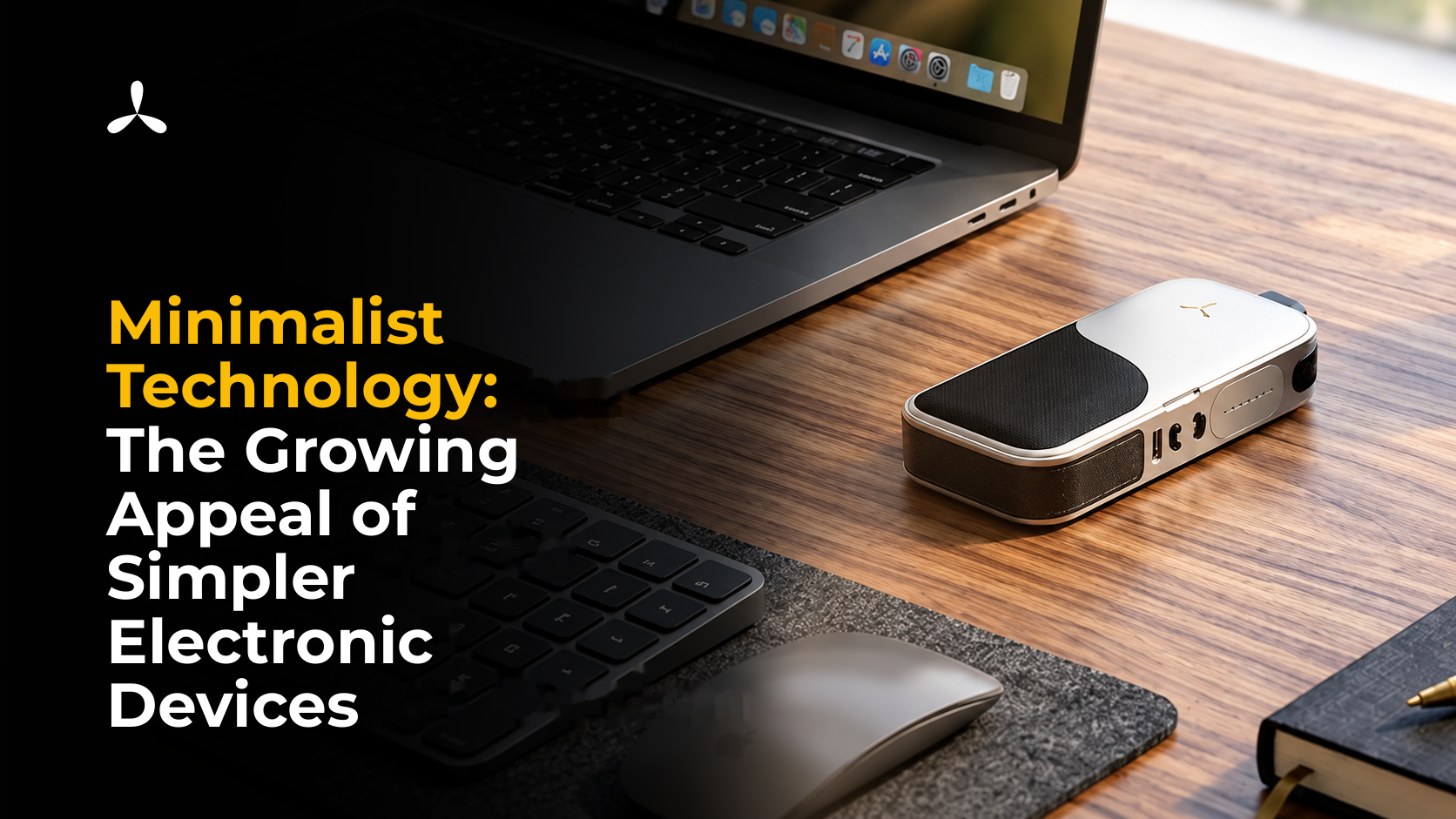
Technology has become an essential part of everyday life. From smartphones and smartwatches to portable electronics and home appliances, modern devices are designed to make daily activities easier, faster, and more convenient. However, as technology continues to advance, consumers are beginning to question whether more features always mean a better experience.
This shift has contributed to the growing appeal of minimalist technology, a design philosophy that prioritizes simplicity, functionality, and ease of use over unnecessary complexity.
Instead of focusing on adding more buttons, settings, and digital features, minimalist electronic devices aim to deliver essential functions through thoughtful design and intuitive operation.
For brands such as AirVape, which develops portable vaporizer technology, this philosophy is particularly relevant. Compact construction, accessible controls, and purposeful engineering demonstrate how sophisticated technology can be incorporated into devices without making everyday operation unnecessarily complicated.
What Is Minimalist Technology?
Minimalist technology refers to electronic products designed around essential functions, straightforward interfaces, and efficient construction.
The objective is not necessarily to remove advanced technology. Instead, it is to ensure that every feature serves a practical purpose.
A minimalist device may contain sophisticated internal components while presenting users with a simple, understandable interface.
Common characteristics include:
- Clean design: Uncluttered surfaces, balanced proportions, and limited visual distractions.
- Intuitive controls: Buttons, displays, and settings that are easy to understand.
- Purposeful functionality: Features selected for their practical value rather than novelty.
- Compact construction: Efficient use of internal space without unnecessary bulk.
- Simplified maintenance: Accessible components and straightforward cleaning procedures.
- Consistent operation: Predictable behavior that reduces the need for repeated adjustments.
Minimalism does not mean sacrificing performance. A thoughtfully designed electronic device can provide advanced capabilities while remaining approachable for everyday users.
Why Are Consumers Becoming More Interested in Simpler Devices?
1. Digital Complexity Can Become Overwhelming
Modern consumers interact with numerous digital interfaces throughout the day. Smartphones deliver notifications, applications require regular updates, and connected devices frequently introduce additional settings.
Although these features can be useful, they can also increase the amount of attention required to operate everyday technology.
Minimalist devices offer an alternative by reducing unnecessary interaction.
For example, a portable electronic device with clearly labeled controls and a straightforward operating sequence may require less effort to learn than one with multiple menus and complicated combinations of buttons.
The benefit is not simply convenience. It is the ability to use technology without constantly thinking about how the technology works.
2. Ease of Use Is Becoming a Competitive Advantage
A product can contain impressive technical specifications and still deliver a frustrating user experience.
When consumers evaluate electronic devices, usability often matters just as much as the number of available features.
Simple interfaces can help users:
- Understand essential functions more quickly.
- Make adjustments without navigating complicated menus.
- Recognize device status through clear visual feedback.
- Avoid accidental changes to important settings.
- Develop confidence through consistent operation.
This is especially important for portable electronics, which are often used away from a desk or dedicated workspace.
A device that requires extensive instructions for basic operation may introduce unnecessary friction into an otherwise simple activity.
3. Portability Encourages More Efficient Design
As consumers increasingly use electronic devices while traveling, commuting, or moving between locations, portability has become an important design consideration.
Minimalist construction often supports this requirement.
Slim profiles, integrated components, and efficient internal layouts can make devices easier to carry and store.
However, smaller dimensions alone do not guarantee better usability. Engineers must also consider battery capacity, thermal management, component accessibility, and structural durability.
Successful minimalist design balances physical size with practical performance.
The goal is not always to create the smallest possible device. It is to create a device that fits naturally into the situations for which it was designed.
How Minimalist Design Is Influencing Portable Electronics
Minimalist design is visible across several categories of consumer electronics, including wireless headphones, fitness trackers, portable chargers, and compact personal devices.
Although these products perform different functions, they share a common design challenge: delivering useful technology within a limited physical space.
Manufacturers must determine which features deserve immediate access and which can operate automatically in the background.
For instance, a portable device may use a small number of physical controls while relying on internal electronics to regulate temperature, manage power, or monitor operating conditions.
This approach allows the device to remain relatively simple on the outside without necessarily reducing its technical capabilities.
The Importance of Clear Visual Feedback
Minimalist technology depends on effective communication between the device and its user.
When a product has fewer controls, each indicator becomes more important.
LED lights, vibration feedback, and compact displays can communicate information without requiring large screens or complicated interfaces.
In portable vaporizers, these indicators may communicate heating status, selected temperature levels, or battery conditions.
The most effective systems provide enough information to support confident operation without overwhelming the user.
AirVape and the Balance Between Simplicity and Performance
AirVape EU provides several examples of how different approaches to minimalist design can coexist within one product category.
Rather than making every device identical, the AirVape range includes models that prioritise different combinations of portability, straightforward controls, and advanced adjustment options.
AirVape XS GO: Compact Technology With Simple Controls
The AirVape XS GO illustrates how a compact electronic device can incorporate useful functionality without requiring an elaborate interface.
Its design includes one-button operation, five preset temperature settings, an oval ceramic heating chamber, and integrated packing and scraping tools.
According to AirVape EU, the device weighs approximately 2 ounces and reaches its selected operating temperature in around 20 seconds.
The XS GO demonstrates several minimalist design principles:
- A single-button interface reduces the number of physical controls.
- Preset temperature levels simplify heat selection.
- Integrated tools reduce dependence on separate accessories.
- Compact dimensions support convenient storage and transportation.
These characteristics make the XS GO a useful example of how thoughtful product design can simplify the interaction between users and electronic technology.
AirVape Legacy CORE: Simplifying Advanced Functionality
The AirVape Legacy CORE demonstrates a different approach.
Instead of focusing exclusively on minimum size, the Legacy CORE combines advanced internal technology with a simplified external control system.
The device uses hybrid heating technology, a removable battery, and a removable glass airpath. Its seven LED heat levels allow users to select from predefined settings without navigating a complex digital menu.
The model also features interchangeable exterior skins, providing personalisation without changing its core operating system.
This distinction is important because minimalist technology does not require every product to have the same number of features.
A device can offer several capabilities while still maintaining an intuitive operating experience.
AirVape Legacy PRO 2: Advanced Control With Purposeful Design
Minimalism is also compatible with more detailed adjustment options.
The AirVape Legacy PRO 2 is positioned as a premium device with hybrid heating, precision temperature control, and Session and On-Demand operating modes.
These capabilities introduce more flexibility than a basic preset-only interface, but they also serve specific user preferences.
The important design question is whether additional features provide meaningful control.
For users who value detailed temperature adjustment, advanced settings may improve usability rather than complicate it.
This illustrates a central principle of minimalist design: simplicity should be measured by how effectively a device meets its intended purpose, not merely by how few features it contains.
The Role of Materials in Minimalist Electronic Design
Materials contribute significantly to the appearance, usability, and durability of electronic devices.
Minimalist products often rely on restrained surface treatments, consistent finishes, and carefully selected construction materials.
However, material selection also influences functional characteristics such as heat resistance, structural strength, weight, and maintenance requirements.
In portable vaporizer construction, materials may include ceramic, stainless steel, glass, and specialised exterior finishes.
Each material serves different engineering purposes.
For example, ceramic components may be selected for heating chambers or mouthpieces, while glass can be used in removable airpath assemblies.
AirVape’s product range demonstrates how material choices can contribute to both functional construction and visual identity.
The broader lesson is that minimalist design should not focus exclusively on appearance. Internal engineering and material suitability remain essential.
Why Simpler Interfaces Can Improve Everyday Usability
A well-designed interface helps users understand what a device is doing and what actions are available.
This principle applies whether the product is a kitchen appliance, a wearable electronic device, or a portable vaporizer.
Reducing the Learning Curve
Electronic devices with straightforward operating sequences are generally easier to approach.
Clear controls and understandable feedback reduce the amount of information users must remember.
For products intended for occasional use, this can be particularly valuable because users may not remember complicated procedures between sessions.
Making Essential Functions Accessible
Frequently used controls should be easy to locate and operate.
Functions such as power activation, temperature selection, and battery-status checking should not require unnecessary navigation.
This is one reason physical buttons and simple LED indicators remain relevant despite the availability of more sophisticated digital interfaces.
Supporting Predictable Operation
Consistency is another important part of usability.
When controls behave predictably, users can develop familiarity with a device over time.
Clear feedback also helps distinguish normal operation from situations requiring attention, such as low battery levels or maintenance needs.
Minimalist interfaces are most effective when simplicity does not come at the expense of important information or safety functions.
Does Minimalist Technology Mean Fewer Features?
Not necessarily.
There is an important difference between removing unnecessary features and removing useful capabilities.
A product with too few controls may actually become harder to use if essential adjustments are difficult to access.
For example, a device with only one button may appear simple, but complicated combinations of short presses, long presses, and repeated presses can create confusion.
Similarly, eliminating a display may reduce visual clutter but make it harder to understand device status.
Effective minimalist design requires balance.
Manufacturers must evaluate which features users need, how frequently they use them, and whether the interface communicates those functions clearly.
The ideal result is not always the simplest-looking product. It is the product that offers the most understandable experience for its intended users.
Minimalist Technology and Long-Term Product Ownership
The appeal of simpler electronics extends beyond initial operation.
Consumers also need to consider how easily devices can be cleaned, maintained, charged, and serviced.
A product with a clean exterior may still be difficult to maintain if important components are inaccessible.
Conversely, removable parts and clearly defined maintenance procedures can make long-term ownership more manageable.
Accessible Components
Products designed with removable components can make certain maintenance tasks easier.
For example, accessible mouthpieces, screens, and airpath components can simplify routine cleaning in portable vaporizers.
However, removable components must still be handled according to manufacturer instructions to avoid damage.
Battery Considerations
Battery design is another important factor.
Some portable electronics use integrated rechargeable batteries, while others offer removable battery systems.
Each approach has advantages and limitations.
Integrated batteries can support compact construction, while removable batteries may provide greater flexibility when replacement becomes necessary.
Battery accessibility alone does not determine overall product lifespan. Charging practices, thermal conditions, component quality, and manufacturer support also matter.
Avoiding Unnecessary Accessories
Thoughtful integration can reduce the number of separate items required for basic operation.
Built-in tools, compatible charging connections, and multipurpose components may simplify everyday ownership.
However, integrating too many functions into one component can make repairs more difficult.
The best approach balances convenience with practical serviceability.
The Relationship Between Minimalism and Sustainability
Minimalist design is sometimes associated with environmental responsibility, but the relationship is not automatic.
A smaller electronic device does not necessarily have a lower environmental impact.
Its environmental footprint depends on several factors, including material sourcing, manufacturing processes, battery construction, transport, energy consumption, and end-of-life disposal.
A compact device that becomes unusable after a short period may generate more waste over time than a larger product designed for long-term maintenance.
For this reason, responsible product design should consider durability, repairability, and appropriate electronic-waste handling alongside physical simplicity.
In the European market, consumers can also benefit from checking local electronic-waste collection and battery-disposal guidance.
Minimalism can support more responsible consumption when it encourages thoughtful purchasing and longer product use, but environmental benefits should be evaluated rather than assumed.
How to Choose a Minimalist Electronic Device
Consumers interested in simpler technology should look beyond appearance and consider how a product performs in everyday situations.
Several questions can help guide the decision.
- Are the essential functions easy to access?
A device should allow users to perform common actions without complicated instructions.
- Does the interface provide clear feedback?
Buttons, indicators, and displays should communicate operating status effectively.
- Is the size appropriate for its intended use?
Portability matters, but extremely compact dimensions may introduce compromises in battery capacity or handling comfort.
- Are the materials suitable for the product’s function?
Construction quality, heat resistance, and component durability are important considerations.
- Can the device be maintained properly?
Accessible components and clear cleaning instructions can make routine ownership easier.
- Are advanced features genuinely useful?
Additional settings should provide meaningful functionality rather than unnecessary complexity.
- Is manufacturer support available?
Replacement components, product documentation, and warranty information may influence the long-term ownership experience.
These considerations apply across many categories of electronics, from personal accessories to portable appliances.
The Future of Minimalist Consumer Electronics
As electronic technology continues to develop, minimalist design is likely to remain an important approach to product development.
Advances in compact components, battery management, sensors, and embedded software create opportunities to deliver more functionality without continually expanding the physical interface.
However, the future of minimalist technology is not simply about making devices smaller.
It is about designing products that require less effort to understand and operate.
This may involve clearer controls, better automatic functions, improved component integration, and more accessible maintenance systems.
Different users will continue to prefer different levels of control. Some will value straightforward preset settings, while others will want detailed customisation.
Successful manufacturers will recognise these differences and design interfaces that support the needs of each audience.
Conclusion
The growing appeal of minimalist technology reflects an important shift in how consumers evaluate electronic devices.
Advanced specifications remain valuable, but they are not the only measure of product quality. Ease of use, portability, thoughtful construction, and practical maintenance are equally important.
Minimalist design encourages manufacturers to consider whether every component and feature contributes meaningfully to the user experience.
AirVape EU illustrates this philosophy through different approaches to portable vaporizer design, from the compact, one-button XS GO to the straightforward LED controls of the Legacy CORE and the more advanced adjustment capabilities of the Legacy PRO 2.
Ultimately, minimalist technology is not about eliminating innovation. It is about making innovation easier to understand, access, and use.
As consumer electronics continue to evolve, the most appealing products may not be those with the longest feature lists, but those that make their essential functions feel effortless.
Explore the design and technology behind AirVape’s portable devices at AirVape EU.
About The Author