




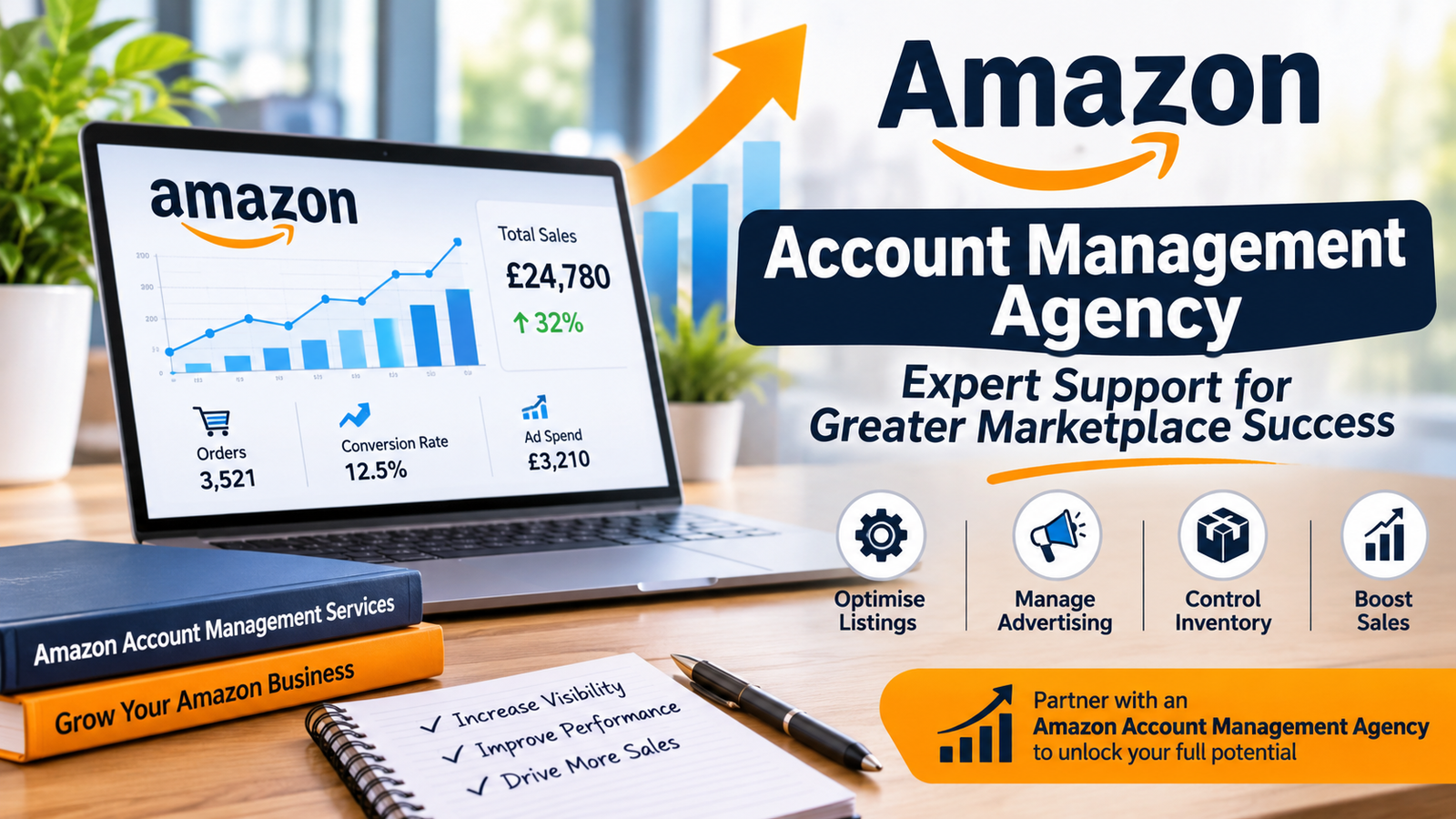
Selling on Amazon has become increasingly competitive for UK businesses. While the marketplace offers access to millions of potential customers, managing an account effectively requires more than uploading products and waiting for sales. Sellers must monitor performance, optimise listings, manage advertising, maintain inventory and respond to changing marketplace requirements. For businesses looking to grow sustainably, professional Amazon account management services can provide the structure, expertise and strategic direction needed to compete more effectively.
Why Amazon Account Management Matters
Amazon is a dynamic marketplace where product visibility, customer experience, pricing and operational efficiency all influence performance. Even a product with strong demand can struggle if its listing is poorly optimised, advertising is inefficient or stock availability is inconsistent.
Effective Amazon Account Management involves overseeing multiple aspects of a seller’s business while ensuring that each activity supports wider commercial goals. Rather than focusing on isolated tasks, a well-planned management strategy considers how product pages, advertising campaigns, inventory and customer satisfaction work together.
For growing brands, maintaining this level of oversight internally can be difficult, particularly when teams have limited time or experience with marketplace operations.
The Value of Professional Marketplace Expertise
Working with an Amazon Account Management Agency can help businesses address operational challenges and identify opportunities they may otherwise overlook. Experienced professionals understand the platform’s tools, marketplace trends, selling requirements and optimisation techniques.
Their support can cover a range of activities, including:
Product listing creation and optimisation
Keyword research and search visibility improvements
Advertising campaign management
Inventory planning and monitoring
Account health and policy compliance
Sales performance reporting
Competitor analysis and strategic planning
Having these responsibilities managed through a coordinated approach can help sellers make informed decisions and reduce the risk of inconsistent account activity.
Listing Optimisation and Keyword Strategy
Product listings are often the first point of contact between a brand and a potential customer. Titles, bullet points, descriptions, images and backend search terms all contribute to how shoppers discover and evaluate products.
A professional team can conduct keyword research to identify relevant search terms, analyse competitors and improve listing content without making it appear unnatural or repetitive. This may include Amazon listing optimisation, Amazon SEO services, product listing management, and Amazon catalogue optimisation.
The goal is to create product pages that are informative, relevant and easy to navigate. Clear descriptions of product features, benefits, specifications and use cases can help customers make purchasing decisions with greater confidence.
Managing Amazon Advertising More Effectively
Advertising is an important part of marketplace growth, but spending without a clear strategy can quickly reduce profitability. Sellers need to understand which campaigns are generating valuable traffic, which search terms are converting and where budgets may be wasted.
An experienced management team can review advertising data, adjust bids, refine targeting and test campaign structures. These activities help align advertising with product margins, sales objectives and seasonal demand.
Professional Amazon PPC management may also involve separating branded and non-branded campaigns, identifying negative keywords, analysing search term reports and monitoring advertising cost of sales. Regular optimisation is particularly important for businesses managing multiple products or competing in crowded categories.
Inventory, Pricing and Account Health
Growth becomes difficult to maintain when operational issues interrupt sales. Running out of stock can affect sales momentum, while excess inventory may increase storage costs and tie up capital. Consistent stock monitoring and demand forecasting can help businesses plan replenishment more effectively.
Pricing also deserves regular attention. Sellers need to consider competitor activity, marketplace fees, promotional opportunities and profit margins before making adjustments. A structured approach to pricing can help protect profitability while remaining competitive.
Account health is equally important. Policy notifications, listing suppressions, product compliance requirements and customer service performance can affect a seller’s ability to trade. Routine monitoring allows potential problems to be identified and addressed before they become more disruptive.
Making Decisions Through Performance Reporting
Regular reporting gives businesses a clearer understanding of what is working and where improvements are needed. Instead of relying solely on total revenue, sellers should review a combination of metrics that reflect the overall health of their Amazon operation.
Useful performance indicators include:
Sales revenue and unit volume
Conversion rate and listing traffic
Advertising spend and return
Organic keyword visibility
Stock availability and sell-through
Product profitability and marketplace fees
A capable Amazon marketplace management team can translate these figures into practical recommendations. Reports should explain trends, highlight concerns and outline priorities for the coming weeks, rather than simply presenting numbers without context.
Choosing the Right Agency for Your Business
Not every seller requires the same level of support. A new business may need help with account setup, product launches and keyword research, while an established brand might prioritise advertising efficiency, catalogue improvements and expansion into new marketplaces.
When choosing an agency, businesses should look beyond promises of rapid growth. Consider the team’s experience, communication process, transparency, reporting standards and understanding of the brand’s objectives. It is also important to clarify which services are included, how account access is handled and who retains ownership of business data.
A suitable partner should provide a clear plan, realistic expectations and measurable objectives. Businesses considering Amazon Account Management Agency support should look for a team that understands both the operational demands of selling and the commercial importance of profitability.
For UK sellers looking for structured support, AMZ Agency is one option to explore when assessing professional marketplace management and growth services.
Conclusion
Amazon success rarely comes from a single adjustment. It usually develops through consistent listing improvements, well-managed advertising, accurate inventory planning, strong account health and informed decision-making. By bringing these areas together, businesses can create a more organised and sustainable marketplace strategy.
Professional management can help sellers spend less time dealing with everyday complexities and more time developing products, improving their business and planning future growth. With the right strategy and ongoing attention, Amazon can become a stronger and more reliable sales channel.
FAQs
1. What does an Amazon account management agency do?
An agency can manage product listings, keyword research, advertising campaigns, inventory monitoring, account health, reporting and other marketplace operations depending on the agreed service scope.
2. Are Amazon account management services suitable for small businesses?
Yes. Small businesses may benefit from expert support when they lack the time, resources or in-house knowledge to manage Amazon operations efficiently.
3. Can account management help improve Amazon sales?
It can help identify opportunities to improve visibility, listing quality, advertising performance and conversion rates. However, results depend on factors such as product demand, competition, pricing and available inventory.
4. Does Amazon account management include PPC advertising?
Some packages include PPC management, while others offer it separately. Sellers should confirm whether campaign creation, bid optimisation, budget monitoring and reporting are included.
5. How do businesses choose the right Amazon management partner?
Businesses should compare experience, service scope, communication, reporting, pricing transparency and strategic approach. A good partner should understand the business’s goals and provide a clear, realistic plan for improvement.
About The Author