


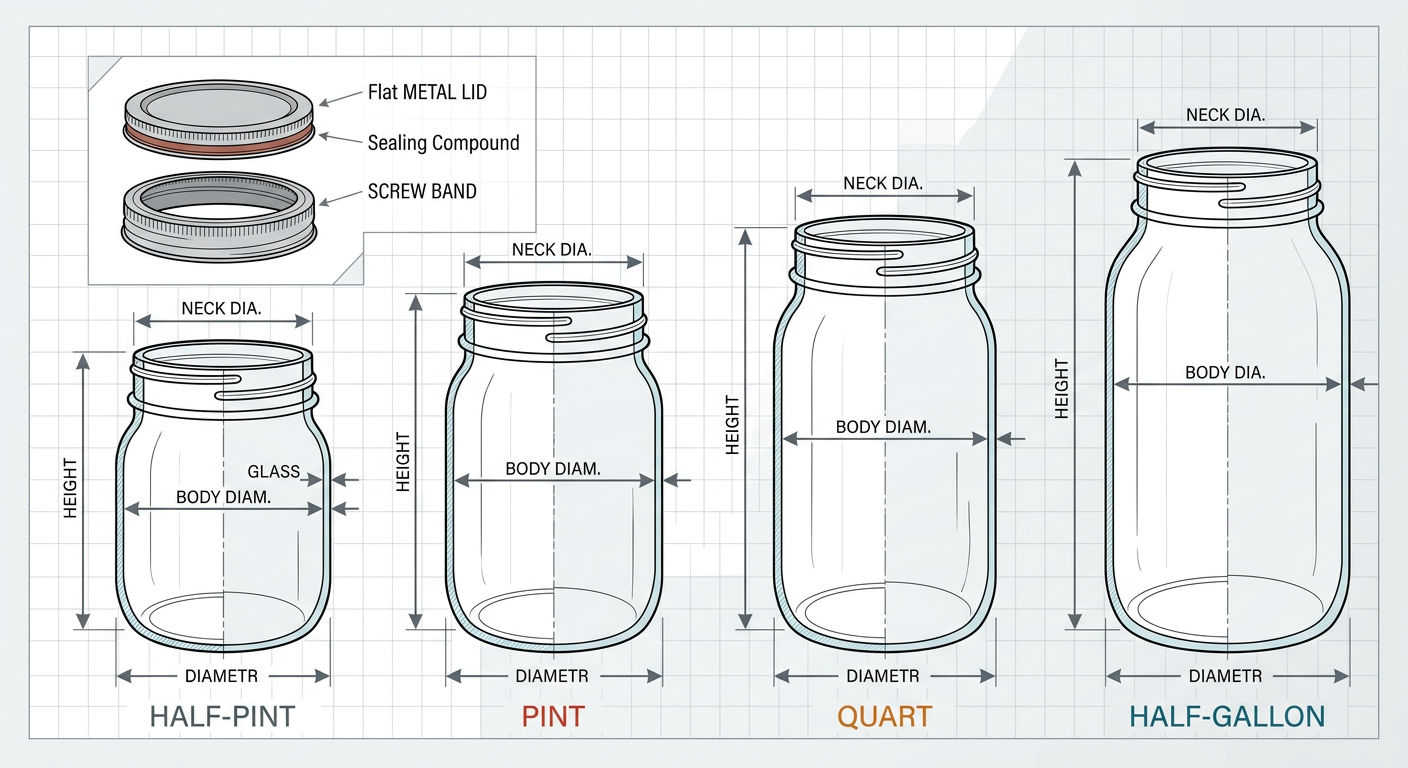
Mason jars have become a staple in kitchens, workshops, and DIY projects worldwide. Whether you’re preserving food, organizing your pantry, or creating crafts, understanding mason jar specifications and sizes is essential. In this guide, we’ll dive into everything you need to know about mason jar specifications, helping you select the perfect size and specification for your needs.
Why Mason Jar Specifications and Sizes Matter
When it comes to mason jars, one size doesn’t fit all. Choosing the right specification and size can make all the difference in how well your food is preserved or how effectively you can organize your space. Mason jars come in various shapes, sizes, and lid types, each designed for specific uses. Knowing the differences will ensure you’re getting the best fit for your projects.
Common Mason Jar Sizes and Their Uses
1. 4 oz Mason Jar
Perfect for small portions, this tiny jar is ideal for sauces, jams, spices, and individual servings. It’s a favorite for party favors and crafting projects.
2. 8 oz Mason Jar
A popular size for preserving small batches of fruits, vegetables, or homemade condiments. It’s also perfect for storing herbs, salad dressings, or even candles.
3. 16 oz Mason Jar (1 Pint)
The 16 oz size is commonly used for canning fruits and vegetables. It’s also great for storing liquids like juices, milk, or smoothies, as well as for larger craft projects.
4. 32 oz Mason Jar (1 Quart)
Ideal for larger quantities of preserves, sauces, and pickles. It’s also a great size for dry goods like pasta, grains, or as a storage container for pantry staples.
5. 64 oz Mason Jar (Half Gallon)
Large mason jars. This size is best for bulk storage, such as large amounts of homemade pickles or a large batch of sauces. It’s also commonly used for fermenting.
Key Features of Mason Jars to Consider
Material
Most mason jars are made from glass, but some come in plastic versions. Glass is preferred for food storage and canning due to its durability and non-reactive nature. It’s also easier to clean and doesn’t retain odors.
Lid Type
Mason jars come with two types of lids: two-piece and one-piece. The two-piece lid system includes a flat lid and a screw band, ensuring an airtight seal, which is essential for canning and food preservation.
- Two-Piece Lid: The most common choice for canning, providing an airtight seal.
- One-Piece Lid: Ideal for storage and crafts but lacks the vacuum seal of a two-piece lid.
Neck Type
Mason jars come in two neck types: regular mouth and wide mouth.
- Regular Mouth Jars: These jars have a smaller opening, making them better for liquids, jams, and jellies.
- Wide Mouth Jars: Easier to fill and clean, they’re great for pickling, canning large items like fruits, and storing bulk ingredients.
How to Choose the Right Mason Jar Size for Your Needs
The right mason jar size depends on the volume of what you plan to store or preserve. If you’re a beginner at canning, it’s recommended to start with 16 oz (pint) or 32 oz (quart) jars. These sizes are versatile, affordable, and sufficient for most household canning and storage needs. For smaller items or gifts, consider using the 4 oz or 8 oz jars.
Tips for Selecting the Best Size:
- For Canning: Larger sizes like 16 oz and 32 oz are ideal for canning fruits, vegetables, and pickles.
- For Storing Dry Goods: Use 32 oz or 64 oz jars for bulk storage like flour, sugar, and pasta.
- For Crafting: Smaller sizes like 4 oz and 8 oz are perfect for candles, flower arrangements, and other creative projects.
Frequently Asked Questions (FAQs)
What’s the difference between regular mouth and wide mouth mason jars?
Regular mouth jars have a smaller opening and are better for jams, jellies, and liquids. Wide mouth jars offer an easier fill and clean experience, making them better for pickling, fruits, or larger items.
Can I reuse mason jars for canning?
Yes, you can reuse mason jars for canning as long as the jars are in good condition, free from cracks, and the lids seal properly. It’s essential to inspect them before reuse to ensure they’re safe for canning.
How do I know if my mason jar lid is sealed properly?
Once processed, check if the lid is concave and doesn’t pop when pressed in the center. If it’s sealed, the lid will stay in place. You can also tap the lid gently; it should sound hollow.
How do mason jar sizes affect storage capacity?
The size of the mason jar determines how much it can hold. For example, a 32 oz jar can store more food or liquids than a 4 oz jar. Consider the quantity of what you plan to store when selecting your jar size.
Can mason jars be used for storage other than food?
Yes! Mason jars are often used for storing crafting supplies, small hardware items like nails and screws, and even for decorative purposes. Their airtight seal also makes them ideal for preserving spices, herbs, and DIY bath salts.
Conclusion
Mason jars are incredibly versatile, and understanding the different specifications and mason jar sizes can help you make the right choice for your storage, canning, or DIY projects. Whether you’re preserving food, organizing your pantry, or creating something new, there’s a mason jar size for every need. Now that you’re equipped with this knowledge, you can confidently choose the perfect jar for your next project!
Ready to get started?
Browse our collection of mason jars today and find the perfect fit for your canning, storage, and creative needs.
About The Author