



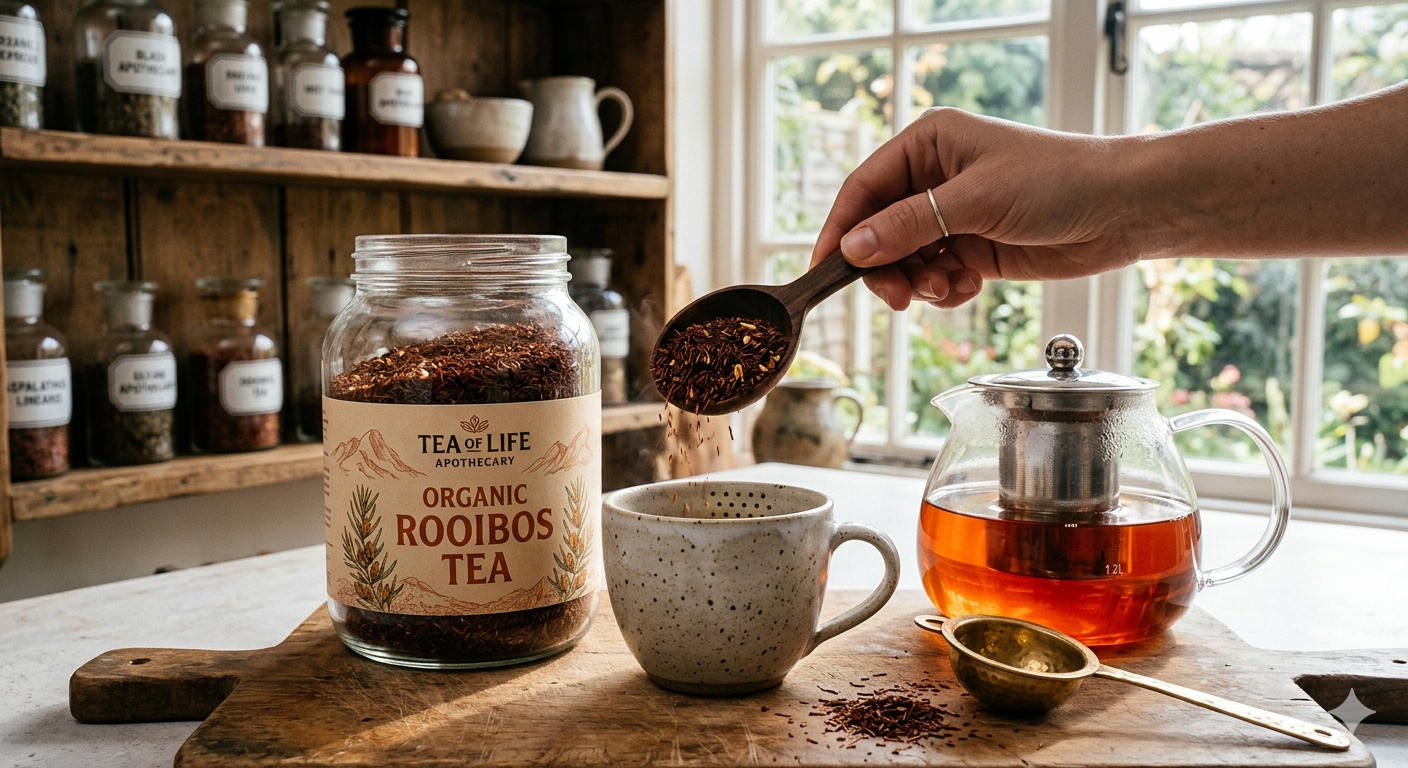
In the vast kingdom of herbal infusions, few beverages possess the striking visual appeal and the profound nutritional density of Rooibos tea. Known scientifically as Aspalathus linearis, this plant is a member of the legume family and is indigenous solely to the Cederberg Mountains of South Africa. For centuries, the local Khoisan people harvested the wild shrub for its medicinal properties, but today, Rooibos Tea has transcended its regional origins to become a global phenomenon.
Unlike traditional teas derived from the Camellia sinensis plant, rooibos is an herbal infusion—or tisane—that is naturally caffeine-free and low in tannins. This unique chemical makeup makes it a versatile tool for health, hydration, and culinary creativity.
Understanding the Alchemy of Rooibos Tea
To appreciate the Rooibos tea in your cup, one must understand the transformation the plant undergoes from a green, needle-like shrub to a deep amber infusion.
The Fermentation Process
The traditional “Red Rooibos” we know is the result of fermentation. After harvesting, the leaves are bruised and aerated, allowing enzymes to oxidize the plant material. This process changes the color from green to a rich mahogany and develops the tea’s characteristic sweet, woody, and slightly nutty flavor profile.
The Rise of Green Rooibos
For those seeking a different experience, “Green Rooibos” is harvested and immediately dried to prevent oxidation. This version of Rooibos tea maintains a lighter, more vegetal flavor similar to green tea but without any of the astringency or caffeine. Green rooibos is particularly prized for containing higher levels of aspalathin, a powerful antioxidant.
The Science-Backed Health Benefits of Rooibos Tea
The popularity of Rooibos tea is not merely due to its flavor; it is supported by a growing body of scientific research highlighting its impact on human physiology.
A Unique Antioxidant Profile
Rooibos is the only known natural source of aspalathin. This antioxidant has been studied for its potential to help regulate blood sugar levels and improve insulin resistance. Combined with nothofagin, these polyphenols help protect the body against oxidative stress and inflammation.
Heart Health and Circulation
Consuming Rooibos tea has been linked to improved cardiovascular health. It acts as a natural ACE (angiotensin-converting enzyme) inhibitor, which can help regulate blood pressure. Furthermore, some studies suggest that drinking several cups a day can lower “bad” LDL cholesterol while slightly raising “good” HDL cholesterol.
Skin Clarity and Anti-Aging
The presence of alpha-hydroxy acid and zinc in rooibos makes it a favorite in the beauty community. While many drink the tea for skin health, some even apply it topically to soothe localized inflammation, acne, or eczema.
Naturally Caffeine-Free and Low Tannin
One of the greatest advantages of Rooibos tea is its lack of caffeine. This makes it an ideal beverage for pregnant women, children, and those with caffeine sensitivities. Unlike black or green tea, rooibos is also very low in tannins, meaning it won’t interfere with the body’s absorption of iron.
Wise Brewing Techniques for the Perfect Infusion
Because Rooibos tea is low in tannins, it is virtually impossible to over-steep. It does not become bitter like traditional teas, allowing for a more relaxed brewing process.
Temperature: Use water that has reached a rolling boil ($100^\circ\text{C}$ or $212^\circ\text{F}$).
Steep Time: For maximum antioxidant extraction, steep the leaves for at least 5 to 7 minutes. Many enthusiasts prefer a 10-minute steep to achieve a syrupy, full-bodied texture.
Versatile Pairings: Rooibos is naturally sweet, but it pairs beautifully with honey, lemon, or a splash of milk. In South Africa, a “Red Latte” (a concentrated rooibos shot with steamed milk) is a popular coffee alternative.
Rooibos Tea in the Kitchen: Beyond the Cup
The culinary applications of Rooibos tea are limited only by your imagination. Its smoky sweetness makes it an excellent ingredient for:
Smoking Meats: Use dry rooibos leaves in a smoker for a unique, earthy flavor.
Baking: Replace water with brewed rooibos in bread or cake recipes for added moisture and a subtle hint of spice.
Soups and Stews: Use a rooibos base for beef or vegetable stews to deepen the umami profile.
Conclusion
In an era of high-stress lifestyles and over-caffeinated routines, Rooibos tea offers a much-needed return to balance. It is a beverage that honors the ancient traditions of the South African landscape while meeting the rigorous health demands of the 21st century. Whether you are looking to support your heart health, soothe your skin, or simply find a grounding evening ritual, rooibos is a timeless solution.
At Tea of Life Apothecary, we believe that every sip of tea should be a step toward a more vibrant life. We don’t view tea as a commodity; we view it as a botanical prescription for a modern world. Our Rooibos tea is sourced with the utmost respect for the Cederberg ecosystem, ensuring that only the most potent, organic “red bush” reaches your teapot.
We meticulously oversee the quality of our infusions to ensure they are free from artificial additives and synthetic flavorings. When you choose Tea of Life Apothecary, you are supporting a brand that values the “Apothecary” tradition—where nature is the primary healer and quality is never compromised.
Invite the ancient wisdom of the South African mountains into your home. Experience the purity, the potency, and the passion behind every blend. Let your path to wellness begin with the deep, amber glow of Rooibos tea from Tea of Life Apothecary.
Also see our guide.
About The Author