





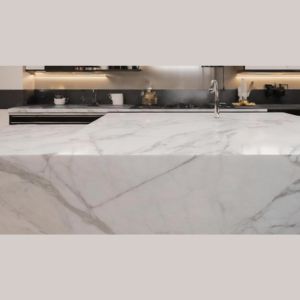
There’s no material that photographs quite like marble. Marble worktops have become something of a shorthand for luxury in modern UK kitchen design, appearing on everything from Instagram renovation reveals to high-end show homes. But marble also comes with a reputation fairly earned for being high-maintenance. So what’s the real story if you’re actually considering it for a kitchen you cook in every day?
Why Marble Still Commands Attention
Marble is a metamorphic rock, formed when limestone is transformed under intense heat and pressure over geological time. That process is what produces marble’s signature veining: soft, flowing lines of colour running through a pale base, no two pieces ever quite alike. It’s genuinely one of the few materials where the natural pattern itself becomes the design feature, rather than something you’re simply matching to cabinetry.
Beyond looks, marble has a practical quality that often gets overlooked: it stays naturally cool to the touch. That’s precisely why serious bakers and pastry enthusiasts have used marble slabs for rolling pastry and tempering chocolate for centuries; the cool surface keeps butter and dough firm in a way that quartz or granite simply doesn’t replicate.
The Honest Downsides
Marble is comparatively soft compared with granite, quartzite, or engineered quartz, and it’s more prone to scratching from knives or heavy cookware dragged across the surface. It’s also porous and calcium-based, which means it reacts with acidic substances (lemon juice, tomato sauce, red wine, vinegar) often etching a dull mark into the surface within minutes if not wiped away promptly. Unlike a stain, etching isn’t really something you can clean off; it’s a subtle change to the stone’s actual surface texture.
This is the trade-off anyone considering marble needs to make peace with: it demands more attentive daily care than any other worktop material on the market, and even with careful use, most marble worktop will develop some visible character (small etch marks, subtle patina) over years of genuine use.
Making Marble Work in a Real Kitchen
None of this means marble is off the table for a working family kitchen; it just means being strategic about where it goes. A popular approach among UK kitchen designers is to reserve marble for a specific zone, such as a baking station, island top, or splashback, while using a more forgiving material like quartz or granite for the main prep and cooking areas that see heavier daily wear. That way you get the visual drama of marble exactly where it has the most impact, without exposing the whole kitchen to its more delicate side.
Onyx worktops occupy a similar space in the luxury stone conversation, even more dramatic and translucent than marble, often used with backlighting for a genuine showstopper feature, but softer still and firmly reserved for low-traffic, statement applications rather than a full working surface.
Sealing and Everyday Care
A properly sealed marble worktop offers better protection than an unsealed one, though sealing slows staining rather than preventing it outright. Most fabricators recommend resealing marble roughly once or twice a year, more often in a heavily used kitchen.
Day to day, the rules are simple but need consistency: wipe spills immediately, especially anything acidic; use coasters and trivets without exception; avoid abrasive scourers and acidic cleaning products; and use a chopping board religiously rather than cutting directly on the surface.
Colour and Style Choices
Classic white marble with grey veining remains the most requested option in UK kitchens, working beautifully against both traditional Shaker cabinetry and sleek modern schemes. Darker options like black marble with white veining, or warmer tones like Emperador, are increasingly popular for anyone wanting the marble look with a bit more forgiveness when it comes to hiding light staining.
Is Marble Right for Your Kitchen?
Marble suits homeowners who genuinely value aesthetics and are realistic about the upkeep involved people who see the developing patina as part of the material’s character rather than damage. It’s less suited to households wanting a fit-and-forget surface, where quartz remains the more sensible everyday choice.
Working With a Specialist
Because marble is unforgiving of poor fabrication and installation, working with an experienced fitter matters enormously. Koliqi supplies and installs marble worktops across the UK, offering honest advice on where marble will genuinely thrive in a kitchen layout, correct sealing on installation, and realistic guidance on the maintenance routine needed to keep it looking its best for years to come.
In Conclusion, Marble worktops aren’t for every kitchen, and they were never meant to be; that’s precisely what makes them feel special where they do appear. Used thoughtfully, whether across a full kitchen or a single statement island, marble delivers a look that engineered materials simply can’t fully replicate.
About The Author