






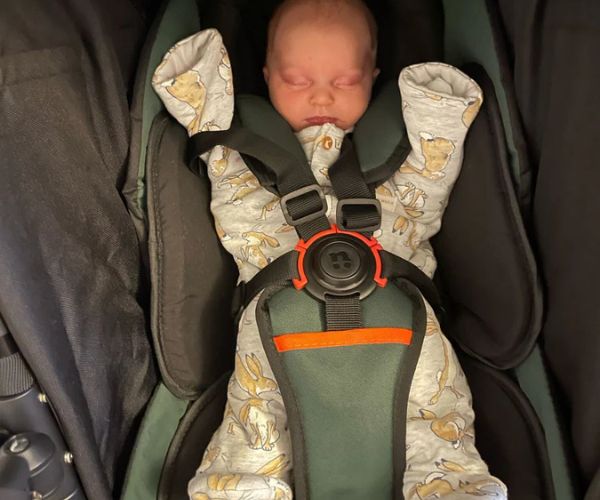
If you’ve spent the last few months pushing a completely flat seat around, it’s natural to start wondering when your baby will be ready to sit upright. It’s one of the most common questions new parents ask, and the honest answer is that there isn’t a single date on the calendar. Instead, the right time depends on a few physical milestones your baby needs to reach first.
Understanding what those milestones actually are rather than guessing based on age alone makes the transition much easier to judge with confidence.
Why Timing Actually Matters
A newborn’s spine starts out curved in a single C-shape, and it takes months of physical development before it forms the S-shaped curve that lets the body support itself in a seated or upright position. Moving a baby into an upright seat before their body is ready can put unnecessary strain on a spine and neck that simply aren’t equipped to handle it yet.
This is exactly why a newborn pushchair is designed to lie completely flat rather than just recline a long way. It’s not a style choice; it’s a safety one, tied to how babies physically develop in those early months.
The Milestones to Watch For
Rather than fixating on a specific age, it’s more accurate and safer to watch for a combination of physical signs.
Head and Neck Control
This is the first and most important milestone. Before a baby can sit upright in a pushchair seat, they need to be able to hold their head steady without it lolling forward or to the side. Most babies start developing this control from around three months, though it varies from child to child.
A simple way parents often check this is by watching how their baby manages tummy time. If they can lift and hold their head up steadily during supervised tummy time, that’s usually an early sign that neck strength is developing well.
Trunk and Core Strength
Head control alone isn’t enough. A baby also needs enough strength through their trunk and core to stay upright without slumping to one side, which usually develops alongside and slightly after — head control.
You might notice this as your baby starts pushing up on their arms during tummy time or shows more stability when propped in a seated position with support.
The Ability to Sit With Support
Many babies can sit reasonably well with some support well before they can sit completely unaided. This “supported sitting” stage is often the point at which a more upright, though still reclined, pushchair position becomes appropriate, rather than waiting until they can sit fully independently.
Full Independent Sitting
Sitting unaided, usually developing somewhere between six and eight months, is generally seen as the point at which a baby is ready for a more traditional, upright buggy seat position without needing a steep recline.
It’s worth remembering that these ranges are general guidance rather than fixed rules. Every baby develops at their own pace, and if you’re ever unsure, a health visitor or GP can offer guidance specific to your child.
What to Look for in a Pushchair That Grows With Your Baby
Rather than buying an entirely new pushchair the moment your baby hits these milestones, many parents prefer a single pushchair designed to transition alongside their child’s development.
A Genuine Multi-Position Recline
Look for a seat that offers a proper range of recline positions, not just “flat” and “upright”. A pushchair that adjusts gradually allows you to match the seat angle to your baby’s current stage, rather than making an abrupt jump.
Adequate Head and Neck Support at Every Stage
Even once a baby has some head control, additional support in the seat itself, such as adjustable side padding, can help during the transitional period when their control is developing but not yet fully reliable.
A Stable, Well-Built Frame
As babies grow and become more active in the seat, a sturdy frame and dependable brakes matter more, particularly if you’re navigating pavements, parks, or busier environments.
Compatibility With Your Family’s Needs
If you have more than one young child, it’s also worth thinking ahead. A double buggy with adjustable seating for each child can offer the same kind of flexibility, allowing one seat to remain reclined for a younger baby while the other supports an older sibling sitting upright.
Making the Transition Gradually
Even once your baby meets the physical milestones, it’s often sensible to introduce the upright position gradually rather than switching all at once. Start with shorter outings in the new position and pay attention to how well your baby holds themselves before extending the time spent upright.
Final Thoughts
There’s no single correct age for moving a baby out of a flat-lying pushchair position. What matters is watching for genuine physical readiness, head control, core strength, and the ability to sit with support, rather than relying on age alone. Choosing a pushchair designed with a proper range of recline positions from the outset makes this transition far simpler, letting one product support your baby comfortably and safely from their earliest days through to sitting confidently upright.
About The Author