





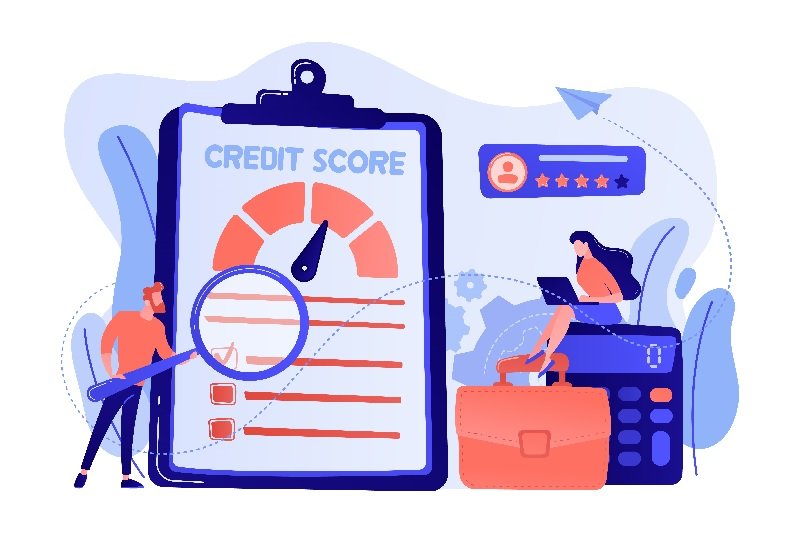
The rejection message rarely explains anything. You apply, you wait two days, and the bank tells you your application could not be processed at this time. No reason given. Then you pull your credit report and there it is a number somewhere around 500, sitting well below what any bank’s website says it wants.
The question after that is always the same: is a loan still possible, or is this a dead end for a year? The short answer is that a 500 CIBIL score loan is harder to get but not impossible. What changes is who will lend to you, how much, against what, and at what price.
What a 500 CIBIL Score Means to a Lender
CIBIL scores run from 300 to 900. Above 750 is treated as safe, 700 to 749 gets you through most doors, and 650 to 699 means a closer look at your paperwork. Below 600 is the band banks call poor, and 500 sits in the middle of it.
What the number tells a lender is not that you are broke. It is that something in your repayment history went wrong EMIs or card bills paid late more than once, a card run close to its limit for months, a settled or written-off account, or a string of applications filed in a short period. Sometimes it is an error on the report, which is worth ruling out first.
Can You Get a Loan with a 500 CIBIL Score?
Yes, in most cases but almost never the loan you originally wanted.
An unsecured personal loan from a large bank at 500 is close to a no. Credit policies there are automated and the cut-off is usually 700 or above, so the file is declined before a human reads it. What stays open are products where the lender’s risk is covered another way: an asset you pledge, someone standing behind the loan, or an NBFC that prices the risk into the rate.
Loan Options Still Available at a 500 CIBIL Score
Secured Loans Against Gold, FD or Property
This is the most reliable route and the one I would try first. A gold loan, a loan against your fixed deposit, or a loan against property changes the question, because the lender is now looking at the asset rather than your history. Gold loans barely care about your score and cost far less than anything unsecured you would be offered at 500. The catch is that you need the asset, and you can lose it.
Personal Loans from NBFCs and Digital Lenders
Several NBFCs and app-based lenders accept scores in the 500s. They start you small — ₹25,000 to ₹1 lakh on short tenures, and lean more on your bank statements than your credit report. Repay one cleanly and the next offer improves. Check that the lender is RBI-registered, because this is the corner of the market where the dubious operators live.
Applying with a Co-Applicant or Guarantor
If a parent, spouse or sibling with a healthy score is willing to sign with you, the lender assesses the application largely on their profile. It works. It also puts their credit history on the line if you miss payments, which is worth saying out loud before anyone signs anything.
Lender Eligibility Requirements Beyond the Score
The score opens or closes the first door. What gets you through the rest of them is everything else on your file.
- Income and its stability. A steady salary credit every month from the same employer counts for a lot. Two years in the same job counts for more.
- Your existing EMI load. Lenders want your total EMIs, this one included, under roughly 40% to 50% of take-home pay.
- How recent the damage is. A default from four years ago with clean conduct since reads very differently from one from last March.
- Recent applications. Each hard enquiry knocks a few points off and signals that others have already said no. Applying to six lenders in a week makes a bad score worse.
- Banking behaviour. Cheque bounces and frequent low balances show up in your statements and get noticed.
Interest Rates and Costs of a Low-Score Loan
Borrowing at a low score is expensive. Where a 780-score borrower might be offered an unsecured loan in the low teens, a 500-score borrower taking a small NBFC loan can be looking at rates well above 20% a year. Processing fees sit at the top of the range too, and the sanctioned amount will be a fraction of what you asked for.
Run those numbers through an Personal loan EMI calculator before you agree to anything. On a one-year ₹50,000 loan, the gap between 14% and 28% is real money, money you are paying for a score you may be able to fix.
Which raises the honest question: does this need to happen now? Six months of clean repayment can move you out of the band where only the costly lenders will talk to you. A real emergency is different. But a lot of 500-score borrowing is for things that could have waited.
How to Improve a 500 CIBIL Score
A 500 is not permanent. Most of the repair work is dull and mechanical.
- Pull your full CIBIL report and read it. Closed accounts still shown as open are more common than people expect, and getting one corrected can lift the score by itself.
- Pay every EMI and card bill on or before the due date. Payment history is the heaviest factor there is, so set up auto-debit and stop relying on memory.
- Bring your credit card usage below about 30% of the limit. Keeping balances low matters more than the limit itself.
- Stop applying. Give it a few months without new enquiries.
- If you have no active credit at all, a secured credit card against an FD is a simple way to build a fresh record.
Six months of this usually shows. A year of it can take you back into bank territory.
Final Word Before You Apply
A 500 CIBIL score loan is available if you look in the right places secured products first, then a registered NBFC, then a co-applicant. What it is not is cheap, and it is not large. Go in knowing the rate you are accepting and whether the expense truly cannot wait.
And while you are at it, start the repair work. The borrower who fixes the score is the one who never has to read an article like this again.
About The Author