




Learning to drive a manual car is a valuable skill that gives drivers greater flexibility and independence. Although automatic vehicles are becoming increasingly popular across the UK, manual cars remain a common choice for everyday driving. For new learners, understanding how gears, clutch control, and vehicle coordination work can make the learning process easier and more rewarding.
Choosing the right manual driving lessons Bolton learners can benefit from is an important first step. With professional instruction, regular practice, and a structured learning plan, beginners can gradually develop the skills needed to drive safely and confidently. Whether you are preparing for your first driving lesson or returning to driving after a break, understanding what manual training involves can help you make better decisions.
Why Learn to Drive a Manual Car?
Manual driving gives learners a broader understanding of how a vehicle operates. Unlike automatic cars, manual vehicles require drivers to coordinate the clutch, accelerator, brake, and gearstick. Although this may initially seem challenging, these skills become more natural with consistent practice.
There are several reasons why learners choose manual driving lessons:
1. Greater vehicle choice
Passing your practical driving test in a manual car generally allows you to drive both manual and automatic cars, subject to the relevant licence conditions. By comparison, passing in an automatic car normally restricts you to automatic vehicles unless you subsequently pass a manual test.
2. Improved vehicle control
Manual driving teaches learners how to select appropriate gears for different road conditions. This can help develop a better understanding of acceleration, engine braking, and vehicle performance.
3. More flexibility
Manual cars remain widely available in the UK second-hand vehicle market. Learning manual driving can therefore provide additional options when choosing a personal vehicle.
4. Valuable driving experience
Managing different controls encourages learners to develop coordination, awareness, and decision-making skills. These abilities are useful throughout their driving journey.
For anyone planning to drive different types of vehicles in the future, learning manual transmission can be a practical long-term investment.
What to Expect from Manual Driving Lessons in Bolton
Starting driving lessons can feel intimidating, especially for people who have never operated a car before. However, professional instruction usually follows a progressive approach, allowing learners to understand basic controls before moving towards more complicated road situations.
When beginning manual driving lessons Bolton, learners typically cover several important areas.
Understanding the Vehicle Controls
The first stage involves becoming familiar with the main controls inside a manual car. These include:
- Clutch pedal: Disconnects the engine from the gearbox to help change gears.
- Brake pedal: Reduces speed and brings the vehicle to a stop.
- Accelerator: Controls engine power and vehicle acceleration.
- Gearstick: Allows the driver to select the appropriate gear.
- Handbrake: Helps secure the vehicle when stationary, particularly on hills.
Understanding these controls creates a foundation for safe driving. Instructors generally explain their functions before asking beginners to practise using them.
Learning Clutch Control
Clutch control is often one of the biggest challenges for new manual drivers. Learners must understand the biting point, which is the position where the clutch begins transferring power to the wheels.
At first, finding this point consistently may take time. However, practising in a controlled environment can help learners develop smoother movements.
Common clutch-control exercises include:
- Moving away slowly from a stationary position.
- Stopping without stalling the engine.
- Controlling the vehicle at low speeds.
- Changing gears smoothly.
- Managing the clutch when approaching junctions.
Patience is important during this stage. Stalling is a common learning experience and should be treated as an opportunity to understand what needs improvement.
Choosing the Right Manual Driving Instructor in Bolton
The quality of instruction can have a significant influence on a learner’s progress. A suitable instructor should provide clear explanations, constructive feedback, and lessons that match the learner’s current ability.
When comparing a manual driving instructor Bolton learners might consider, look beyond hourly prices. Teaching experience, communication, lesson structure, and professional qualifications are equally important.
Here are some factors worth checking before choosing an instructor:
DVSA registration: Check that your instructor is appropriately qualified and registered with the Driver and Vehicle Standards Agency (DVSA).
Teaching approach: Different learners respond to different teaching methods. Some prefer detailed explanations, while others learn more effectively through demonstrations and practical exercises.
Local road knowledge: An instructor familiar with Bolton can introduce learners to a variety of local road conditions, including residential streets, busy junctions, roundabouts, and different speed limits.
Lesson flexibility: Regular lessons are easier to maintain when appointment times fit around work, education, and family responsibilities.
Progress feedback: Constructive feedback helps learners understand their strengths and identify areas requiring additional practice.
A good instructor should also encourage questions and create an environment where beginners feel comfortable discussing mistakes.

Common Challenges When Learning Manual Driving
Manual driving requires coordination and concentration, so it is normal for beginners to experience difficulties during their first few lessons.
Understanding common challenges and knowing how to overcome them can make the learning process less stressful.
1. Stalling the Engine
Stalling often happens when the clutch is released too quickly or the accelerator is not used appropriately. Beginners should practise finding the biting point and coordinating the pedals gradually.
2. Difficulty Changing Gears
Some learners struggle to select the correct gear while maintaining awareness of the road. Regular practice can improve coordination. Drivers should also learn to recognise when a gear change is appropriate based on speed, road conditions, and engine response.
3. Hill Starts
Starting on an incline can be difficult because the vehicle may roll backwards. Learning to coordinate the clutch, accelerator, and handbrake helps drivers manage hill starts more confidently.
4. Busy Junctions and Roundabouts
Bolton has a mixture of residential roads, urban traffic, and busier routes. Approaching junctions requires observation, appropriate speed selection, correct positioning, and timely decisions.
Learners should practise these situations gradually under professional supervision rather than rushing into complicated traffic conditions.
5. Nervousness and Lack of Confidence
Driving anxiety is common among beginners. Making mistakes during lessons does not mean someone is unsuitable for driving. Breaking complicated manoeuvres into smaller steps and receiving constructive feedback can help build confidence over time.
How to Prepare for Your Manual Driving Test
Passing the practical driving test requires more than knowing how to operate the vehicle. Learners must demonstrate safe driving behaviour, good observation, appropriate judgement, and awareness of other road users.
The following preparation strategies can make a difference:
Study the Highway Code: Understand road signs, traffic signals, speed limits, pedestrian crossings, and priority rules.
Practise consistently: Regular lessons help reinforce previously learned skills and reduce the time spent revisiting basic techniques.
Develop observation skills: Check mirrors regularly, observe blind spots when necessary, and anticipate potential hazards.
Improve manoeuvres: Practise reversing, parking, and other required manoeuvres until you can perform them safely and independently.
Understand independent driving: During the practical test, you may need to follow a sat-nav or traffic signs while maintaining safe control of the vehicle.
The DVSA recommends that learners prepare thoroughly before taking their practical test. Your instructor can help assess whether your driving is consistently safe and whether you are ready for the examination.
It is also important to understand that test readiness is based on driving ability rather than simply completing a particular number of lessons.
How to Learn to Drive a Manual Car in Bolton More Effectively
Anyone planning to learn to drive manual car Bolton roads should focus on developing good habits from the beginning. Small improvements in observation, coordination, and decision-making can make a significant difference over time.
Consider following these practical tips:
- Set realistic learning goals for every lesson.
- Arrive on time and prepared to concentrate.
- Ask your instructor to explain mistakes you do not understand.
- Review feedback after each session.
- Learn road signs and traffic rules outside lesson hours.
- Avoid comparing your progress with other learners.
- Maintain a consistent lesson schedule where possible.
It is also worth discussing your progress regularly with your instructor. If a particular skill is proving difficult, spending additional time practising it may be more beneficial than moving quickly to the next topic.
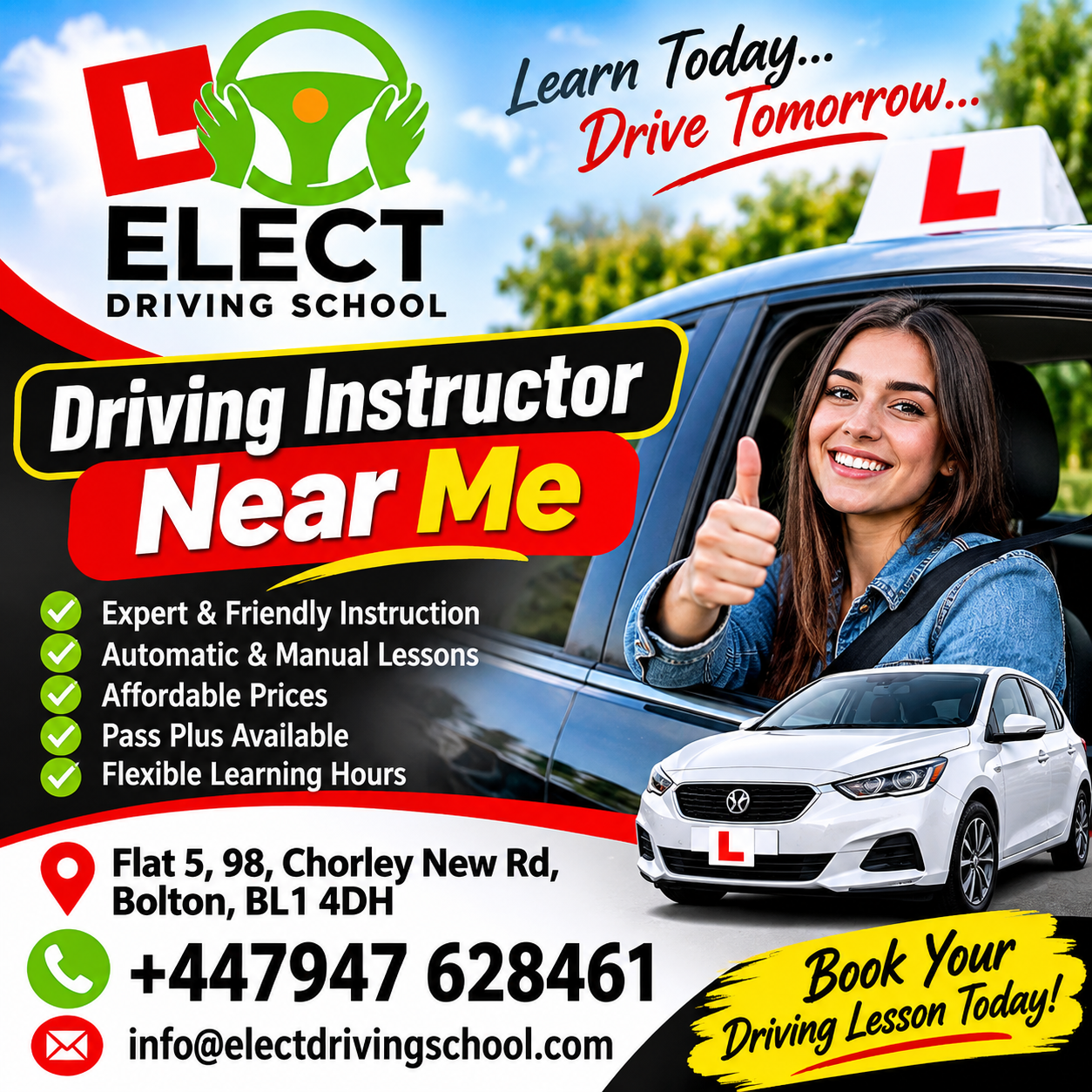
Learners researching local training providers can explore options such as Elect Driving School, based at Flat 5, 98, Chorley New Rd, Bolton, BL1 4DH. Comparing local instruction options can help beginners understand the different approaches available for manual driving education.
Conclusion
Learning to drive a manual car requires patience, practice, and a willingness to develop new skills. From understanding clutch control to handling busy junctions and preparing for the practical test, every stage contributes to becoming a safer and more confident driver.
Choosing suitable manual driving lessons Bolton learners can access, working with a qualified instructor, and practising consistently can make the journey more manageable. Rather than focusing only on passing the test, learners should aim to develop lasting road awareness, responsible driving habits, and the confidence to handle different situations independently.
About The Author