



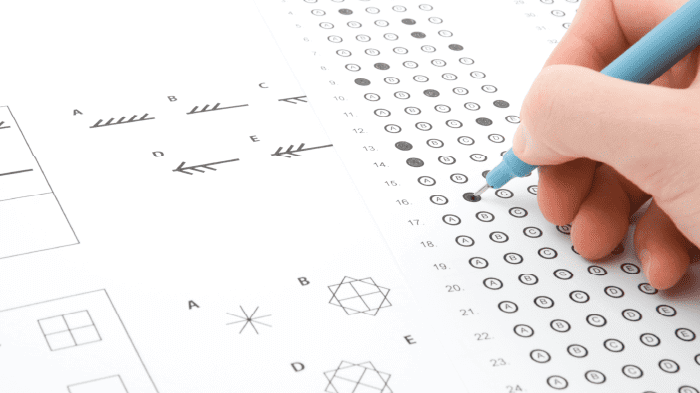
If you have ever searched for an IQ test online, you have probably noticed hundreds of websites promising to measure your intelligence in just a few minutes. Some tests are free, while others offer detailed reports, percentile rankings, or even claims that their results are comparable to professional assessments. But how accurate are online IQ tests, really?
The answer depends on the test itself, how it was developed, how it is administered, and what you intend to use the result for. An online IQ test can sometimes provide an interesting estimate of certain cognitive abilities, but most free internet tests should not be treated as equivalent to a professionally administered intelligence assessment.
Before taking one, consider these 10 important factors.
1. Understand What an IQ Test Measures
IQ stands for intelligence quotient. Traditional IQ assessments are designed to measure particular cognitive abilities, such as logical reasoning, working memory, processing speed, verbal comprehension, and visual or spatial reasoning.
An IQ score is not a complete measurement of everything that makes a person intelligent. Creativity, practical judgment, emotional understanding, motivation, knowledge, social skills, and many other abilities may not be adequately represented.
Online tests vary considerably in what they measure. Some focus primarily on pattern recognition, while others combine vocabulary, mathematical questions, memory tasks, and visual puzzles.
This means two tests can produce different scores even when both describe themselves as IQ tests.
2. Test Quality Makes a Major Difference
One of the biggest factors affecting accuracy is the quality of the test.
Professionally developed intelligence tests generally undergo extensive research and testing. Researchers examine whether individual questions work as intended, whether scores are consistent, and whether performance can be compared with appropriate reference groups.
Many online IQ tests do not provide enough information about their development. A website may tell you that its test is scientifically designed without explaining who created it, how many people participated in testing, or how the scoring system was established.
Before trusting a result, look for information about the test’s methodology, reliability, validity, and standardization.
3. Standardization Matters
A meaningful IQ score requires comparison with a suitable reference population.
Professional intelligence tests are typically standardized using large groups of people. Their scores are interpreted in relation to people of similar age or other relevant characteristics.
For example, simply answering 80 percent of questions correctly does not automatically translate into a particular IQ score. The difficulty of the questions and the performance of the comparison group both matter.
Some online tests provide scores without explaining how those scores were calculated. Without proper standardization, a number presented as an IQ score may have limited meaning.
4. Reliability Is Different From Accuracy
Reliability and accuracy are related, but they are not identical.
A reliable test tends to produce reasonably consistent results under similar conditions. An accurate test should also measure what it claims to measure.
Imagine taking an online test twice and receiving almost exactly the same score each time. That may suggest consistency, but it does not automatically prove that the test is accurately measuring general intellectual ability.
A good assessment needs evidence supporting both reliability and validity.
5. Your Testing Environment Can Affect Results
Even a well-designed test can be influenced by the conditions under which you take it.
If you are tired, distracted, stressed, hungry, or interrupted frequently, your performance may be different from what it would be under ideal conditions.
Computer problems can also affect results. A slow connection, confusing interface, poorly displayed images, or accidental clicks may interfere with your performance.
For a more meaningful result, take a test when you are rested and able to concentrate. Use a quiet environment and follow the instructions carefully.
6. Practice Can Change Your Score
Taking similar tests repeatedly can improve performance because you become familiar with the types of questions being asked.
You may learn common pattern types, recognize frequently used puzzles, or develop strategies for solving questions quickly. As a result, a second or third test may measure both your reasoning ability and your familiarity with the test format.
This is one reason why taking multiple online tests and averaging the scores does not necessarily produce a more accurate IQ estimate.
If you want an informal result, it is generally more useful to treat a single reputable test as a snapshot rather than repeatedly testing yourself until you obtain a preferred score.
7. Time Limits Can Influence Performance
Many IQ-style tests use strict time limits. Speed can therefore become an important part of the result.
Some people may understand a problem quickly but need more time to work through it. Others may perform particularly well under pressure. A person’s score can therefore be influenced by the relationship between reasoning ability and processing speed.
Online tests also differ in how they handle time. Some stop automatically when the timer ends, while others allow users to continue.
When comparing results, pay attention to the testing conditions and time limits. A score from a 10-minute pattern test should not automatically be compared with a score from a comprehensive assessment lasting considerably longer.
8. Free Tests May Have Different Goals
Not every website offering an IQ test is primarily interested in psychological assessment.
Some online tests are designed as entertainment or lead-generation tools. Others may provide a basic score for free but charge for a detailed report. Some may use attention-grabbing claims to encourage users to purchase additional services.
That does not necessarily mean every paid online test is accurate or every free test is poor. The important point is to examine what the website actually provides.
Look for transparent information about the test, scoring method, authorship, privacy practices, and evidence supporting its claims. Be cautious about websites that make extraordinary promises without providing evidence.
9. An Online Score Is Not a Professional Diagnosis
An online IQ test should not normally be treated as a substitute for a professionally administered cognitive assessment.
Psychologists and other qualified professionals can select appropriate assessments, administer them under controlled conditions, interpret patterns across different areas, and consider relevant background information.
This is particularly important when cognitive testing is being considered for educational planning, clinical assessment, disability evaluation, gifted education, or other significant decisions.
If a precise assessment is important for you, consider speaking with a qualified professional rather than relying solely on a website-generated number.
10. Treat the Result as an Estimate, Not Your Identity
Perhaps the most important consideration is psychological.
An IQ score is a numerical result from a particular assessment under particular conditions. It does not define your worth, potential, personality, or future achievements.
People have different strengths. Someone might perform strongly on abstract reasoning but have different abilities in areas that a particular test barely measures. Another person may perform less well under timed conditions while demonstrating strong problem-solving abilities in real-world situations.
Even professionally administered IQ tests have limitations and should be interpreted within context.
If you take an online test for entertainment or curiosity, there is nothing wrong with being interested in the result. The key is to avoid giving a single number more significance than it deserves.
So, How Accurate Are Online IQ Tests?
The question how accurate are online iq tests does not have one universal answer. Some online assessments may provide a reasonable approximation of performance on particular reasoning tasks, especially when they are based on established testing principles. However, many casual internet quizzes lack the standardization, validation, controlled administration, and professional interpretation associated with formal intelligence assessments.
An online score can therefore be interesting, but its accuracy depends heavily on the quality and purpose of the specific test.
Before taking one, investigate who developed it, what abilities it measures, how it was standardized, how scores are calculated, and whether evidence supports its reliability and validity.
Most importantly, remember that an IQ score represents performance on a particular type of cognitive assessment. It is not a complete measurement of human intelligence or personal potential.
If you approach online IQ tests with realistic expectations, they can be an enjoyable way to explore reasoning puzzles and learn more about how certain cognitive assessments work. Just be cautious about treating the final number as a definitive statement about your intelligence.
About The Author