





An order may be confirmed within seconds, but delivering it to the customer involves coordination between several departments. Inventory needs to be verified, warehouse activities must be scheduled, and transportation arrangements have to be made.
When these activities operate independently, even a straightforward order can encounter unnecessary delays.
Connected supply chains help businesses overcome these challenges by improving information exchange between departments, applications, and distribution partners. This allows organizations to manage order fulfillment more efficiently while maintaining better control over operational costs.
What Is a Connected Supply Chain?
A connected supply chain is an operational environment where business systems, suppliers, warehouses, distributors, and transportation partners exchange relevant information throughout the supply chain process.
Instead of relying on separate reports and manual communication, departments can access synchronized information about inventory availability, order status, shipment schedules, and operational performance.
This connectivity helps businesses coordinate activities from the moment an order is received until it reaches the customer.
Why Traditional Supply Chains Struggle With Order Fulfillment
Many organizations experience fulfillment challenges because their existing systems and workflows lack coordination.
Inaccurate Inventory Information
When inventory records are not updated across business applications, companies may accept orders for products that are unavailable. This can result in backorders, cancellations, and delayed deliveries.
Disconnected Warehouse and Transportation Operations
Warehouse employees may complete order preparation without notifying the transportation department. Similarly, carriers may arrive before shipments are ready, resulting in waiting times and additional expenses.
Excessive Manual Intervention
Employees often transfer information between applications, verify stock availability through spreadsheets, and communicate order updates through emails.
These activities consume valuable time and increase the possibility of operational errors.
Limited Order Visibility
Without access to timely order information, customer service teams struggle to provide accurate delivery updates. Managers may also find it difficult to identify where fulfillment delays originate.
How Connected Supply Chains Improve Order Fulfillment
Connecting supply chain operations allows businesses to address fulfillment challenges at different stages of the order lifecycle.
1. Improved Inventory Accuracy
Integrated inventory and order management systems help businesses maintain more consistent stock information across warehouses and distribution centers.
When an order is placed, the system can check available inventory and identify a suitable fulfillment location based on stock levels, delivery requirements, and operational capacity.
This reduces the likelihood of accepting orders that cannot be fulfilled within the promised timeframe.
2. Faster Order Processing
Connected applications reduce the need for employees to enter the same information into multiple systems.
Order details can move automatically from sales platforms to warehouse management systems, allowing employees to begin picking and packing activities without waiting for manual instructions.
Businesses adopting Supply Chain Digital Transformation Services can improve these workflows through system integration, process automation, and targeted modernization of existing applications.
3. Better Warehouse and Transportation Coordination
Order fulfillment depends heavily on how well warehouse and transportation activities are coordinated.
When warehouse management systems and transportation platforms exchange information, logistics teams can schedule pickups based on shipment readiness.
Warehouse managers can also prioritize picking and packing activities according to dispatch schedules, helping reduce missed pickup windows and unnecessary transportation expenses.
4. Earlier Identification of Operational Problems
A connected supply chain makes it easier to identify potential fulfillment issues before they affect customers.
Businesses can monitor exceptions such as:
- Unexpected inventory shortages.
- Delayed order processing.
- Picking and packing errors.
- Missed carrier pickups.
- Shipment delays.
- Changes in customer delivery requirements.
With earlier notifications, operational teams have more opportunities to resolve these problems before delivery commitments are affected.
5. Improved Customer Experience
Customers expect accurate information about their orders. When order management, warehouse, and transportation systems are connected, customer service teams can provide more reliable updates without repeatedly contacting other departments.
Better communication can help businesses reduce customer complaints and strengthen confidence in their delivery processes.
Measuring Order Fulfillment Performance
Businesses should evaluate whether improved connectivity is producing meaningful operational results.
Important order fulfillment metrics include:
| Performance metric | What it measures |
|---|---|
| Order fulfillment cycle time | Time required to complete an order |
| Order accuracy rate | Percentage of orders fulfilled correctly |
| On-time delivery rate | Deliveries completed within the promised timeframe |
| Perfect order fulfillment | Orders meeting delivery, accuracy, condition, and documentation requirements |
| Fulfillment cost per order | Operational expenses associated with completing an order |
| Order cancellation rate | Percentage of orders cancelled |
The Association for Supply Chain Management’s SCOR framework identifies perfect order fulfillment and order fulfillment cycle time as important supply chain performance indicators.
Tracking these metrics before and after system integration can help businesses understand where improvements are occurring.
How Businesses Can Build a More Connected Supply Chain
Improving supply chain connectivity does not necessarily require replacing every existing application.
Businesses can begin with a targeted approach:
- Identify recurring bottlenecks within the order fulfillment process.
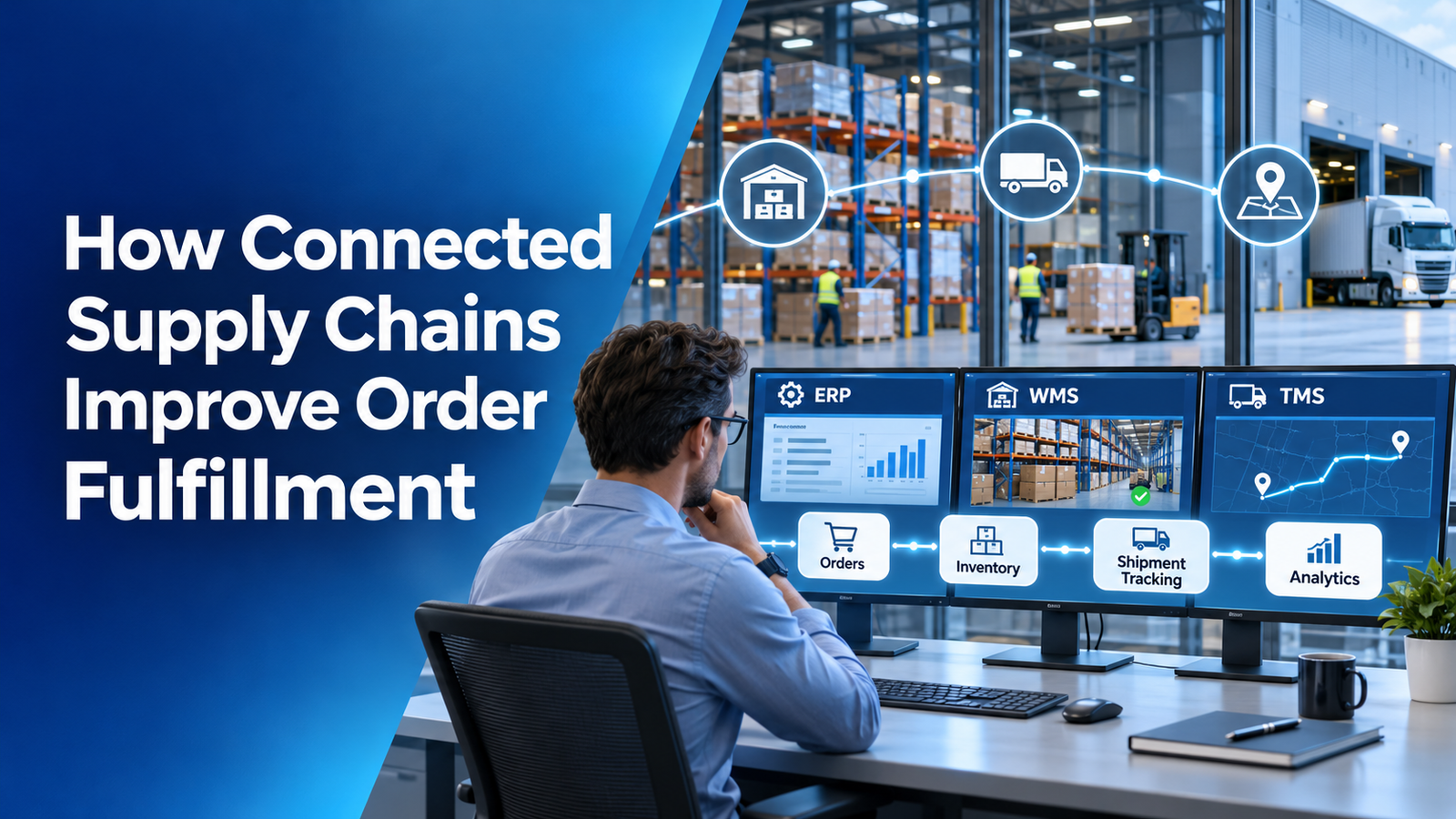
- Connect ERP, warehouse, and transportation management systems.
- Standardize inventory and order information across applications.
- Automate repetitive tasks and information exchange.
- Establish exception alerts for operational teams.
- Measure fulfillment performance regularly.
The priority should be addressing the workflows that create the greatest delays, expenses, and customer service challenges before expanding modernization efforts.
Conclusion
Successful order fulfillment requires coordination across inventory management, warehousing, transportation, and customer service.
When business systems remain disconnected, employees spend unnecessary time managing information gaps rather than completing orders.
By improving system connectivity and modernizing critical workflows, organizations can reduce fulfillment delays, improve delivery accuracy, and accommodate growing order volumes without creating additional operational complexity.
For supply chain leaders, the most practical starting point is identifying where disconnected systems interrupt the journey from order confirmation to final delivery.
About The Author