




Pouring juice into a glass, squeezing sauce onto a plate, or refilling a bottle of handwash should be simple. Yet rigid bottles, jars, and cans can be heavy, hard to store, and messy to use. Brands selling liquids and semi-liquids are now looking at lighter, easier formats that protect the product and make life simpler for the customer. One packaging style in particular has moved from baby food aisles into kitchens, bathrooms, and workshops everywhere.
Rigid Bottles vs Flexible Packs
Traditional liquid packaging relies on rigid containers made of glass, plastic, or metal. They hold their shape, but they also add weight, take up space, and often cost more to ship. A flexible alternative uses laminated film for the body and a fitted nozzle on top. The pack stays compact when empty, stands neatly when filled, and collapses as the contents are used, which reduces trapped air and leftover product.
Everyday Use and Dispensing
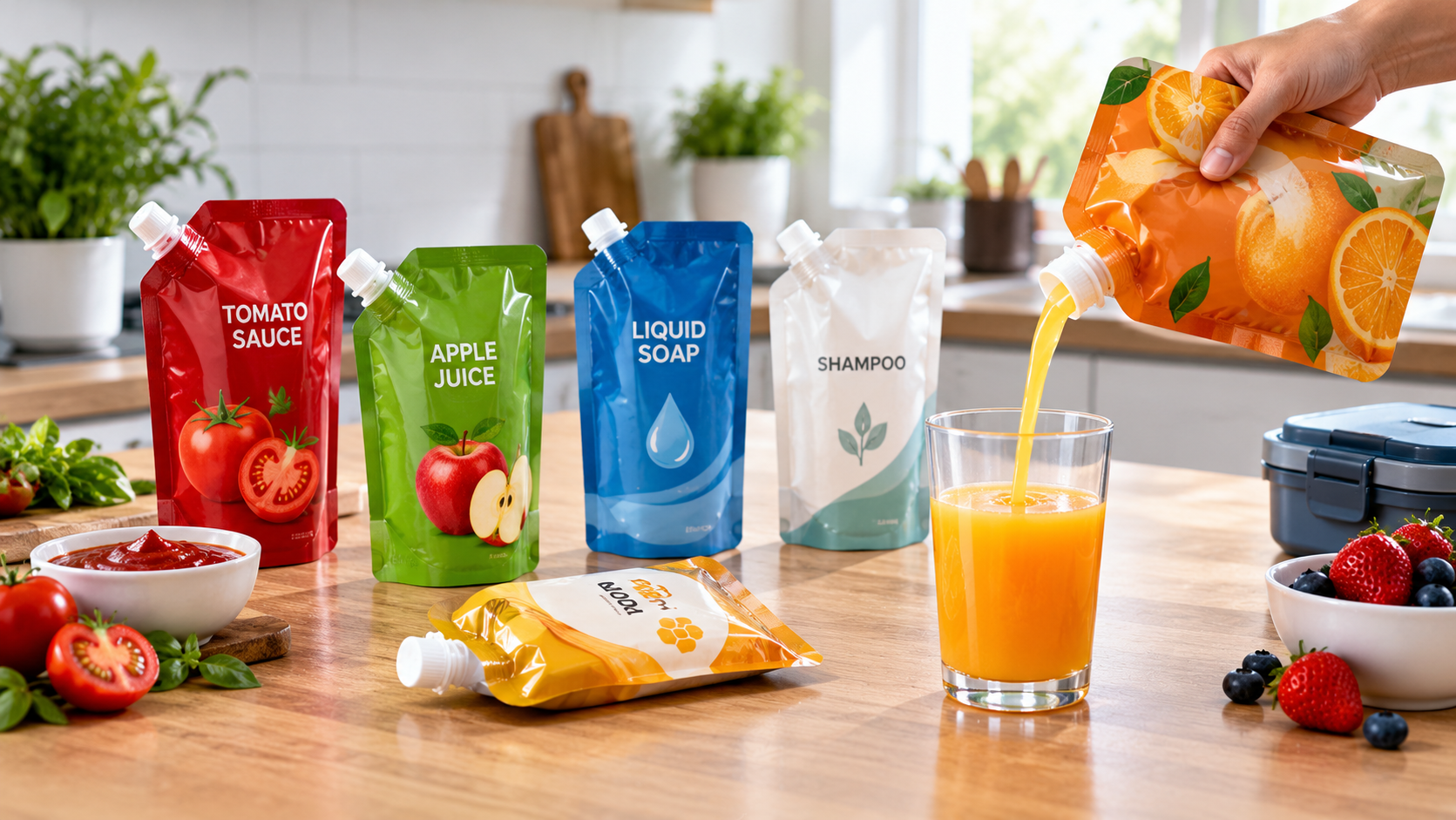
Spout pouches combine a sealed film body with a plastic spout and cap, usually placed at the top or corner of the pack. The customer simply twists the cap, squeezes or pours, and closes it again. The wide variety of spout sizes means thin liquids like juice, thicker items like purees, and even gel-like products can flow properly. Because the opening is controlled, there is less spillage and better portioning than with a torn sachet or a wide-mouth container.
Advantages for Customers
The first advantage is portability. A filled pack is light enough for a school bag, gym kit, or travel pouch, and it can be squeezed flat as the product finishes. The second is easy dispensing, since many users can handle the pack with one hand. The cap also allows reuse, so the product stays fresh between servings. For parents, athletes, and travellers, these small conveniences matter more than they seem on paper.
Advantages for Brands
For the business, the format offers lower freight costs, because empty packs arrive flat and filled packs weigh less than bottles. Storage space in the warehouse is reduced, and fewer breakages occur in transit compared with glass. The large printable surface also gives room for bold branding, usage instructions, and product information. A clear window or a transparent section can let buyers see the colour and texture of the contents, which builds confidence.
Products That Suit This Format
The range is wide. Beverages, concentrates, sauces, jams, honey, cooking oils, baby food, and protein gels all work well. Beyond food, brands use the format for liquid soaps, shampoos, detergents, lotions, and refills. Refill packs are especially popular because customers can top up their existing bottle with a fraction of the plastic used in a new rigid container.
Shelf Life and Product Safety
Liquids need strong protection from oxygen, light, and moisture. Manufacturers choose multi-layer films with barrier layers suited to the product, and sometimes add heat-resistant structures for hot-fill or retort processes. Food-grade materials and approved spout components are essential when the contents are meant to be eaten or applied to the skin. Always discuss your filling temperature, shelf life, and storage conditions with the supplier so the structure matches your needs.
Selecting a Reliable Supplier
Packaging quality directly affects how customers perceive your product, so the supplier you pick matters. When comparing options for the best flexible packaging pouches, ask for samples and test them with your actual liquid. Check how well the seams hold under pressure, whether the cap seals without leaking, and how the pack behaves when dropped or squeezed. Good suppliers also provide printing support, material guidance, and consistent quality across repeat orders.
Mistakes Brands Should Avoid
Many brands choose a spout that is too small for their product, which leads to slow flow and frustrated customers. Others skip drop and transport testing, only to discover leaks after shipping. Overfilling is another frequent issue, because the pack needs some headspace for sealing and handling. Confirming these details before a large order can save time, money, and returns.
Final Thoughts
Liquid products deserve packaging that protects them and makes them effortless to use. A lightweight, resealable, easy-pour pack can improve the customer experience while keeping costs under control for the brand. By matching the material, spout, and size to your product and testing carefully before scaling up, you can build packaging that works as hard as the product inside it.
About The Author