





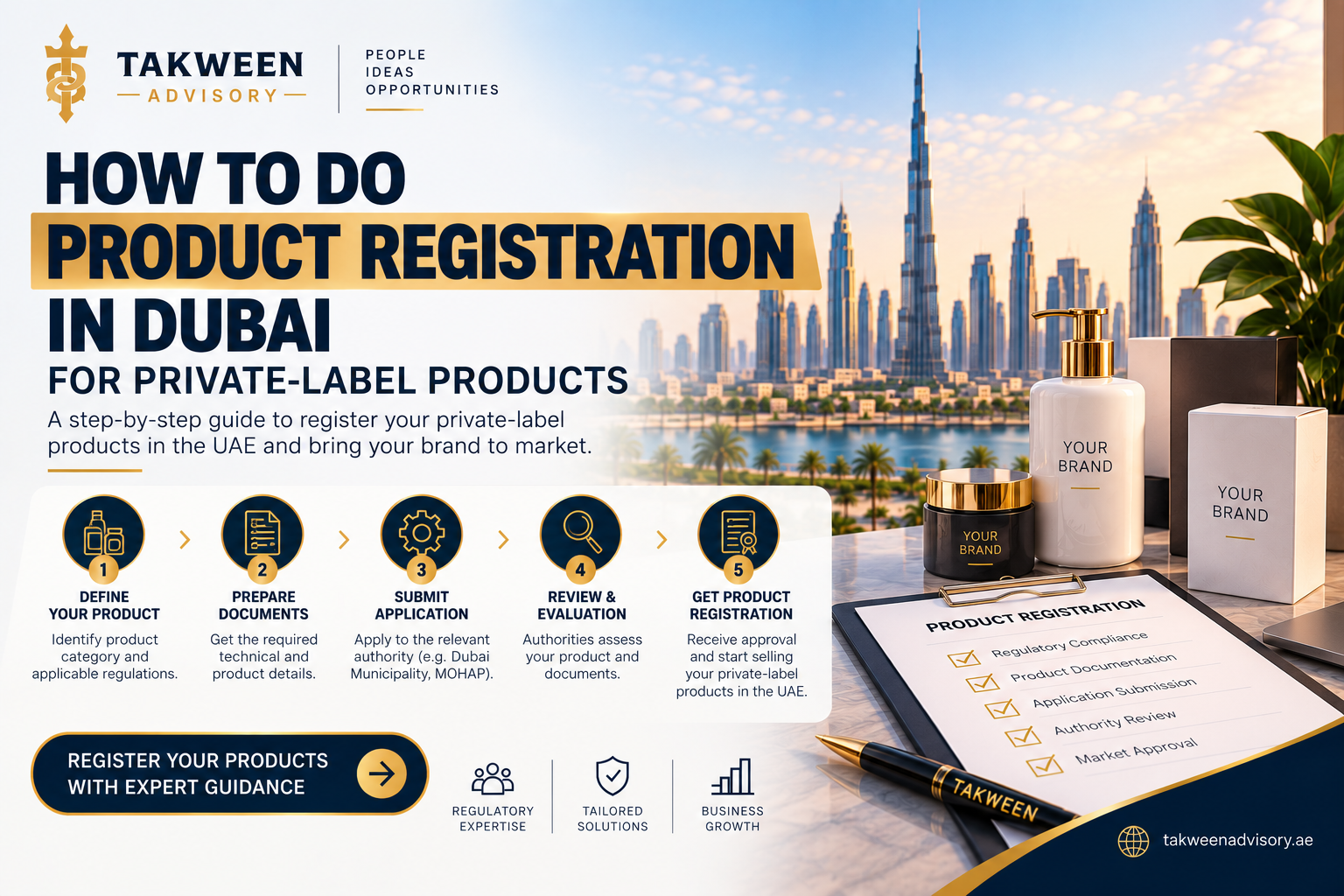
Private-label products are becoming a popular business opportunity for entrepreneurs who want to sell products under their own brand without manufacturing them themselves. Businesses can work with an existing manufacturer, customise the packaging, and market products under a private brand. However, before launching these products in Dubai, it is important to understand the applicable product registration requirements.
Product Registration Dubai requirements depend on the type of product, its ingredients or materials, the intended use, and the regulatory authority responsible for it. Products such as cosmetics, perfumes, personal care items, detergents, and certain consumer goods may require registration through Dubai Municipality’s Montaji system. Food products and regulated health-related products may follow different procedures.
If you plan to launch your own skincare brand, perfume line, cleaning products, or another private-label range, understanding the process early can help prevent delays, import problems, and compliance issues.
This guide explains how private-label product registration works in Dubai, which documents may be required, how to prepare your product labels, and what businesses should check before selling.
What Are Private-Label Products?
Private-label products are goods manufactured by one company and sold under another company’s brand. The brand owner may select an existing product, customise its packaging, or work with a manufacturer to develop a product according to specific requirements.
For example, an entrepreneur may work with a manufacturer outside the UAE to produce a skincare cream. The manufacturer makes the product, but the entrepreneur sells it under their own brand name in Dubai.
Other common examples include perfumes, shampoos, soaps, cosmetics, household cleaning products, and selected food products.
Private labelling allows businesses to focus on branding, distribution, and marketing without necessarily establishing their own manufacturing facility. However, using a third-party manufacturer does not automatically remove the brand owner’s regulatory responsibilities.
The business importing the product or having it manufactured on its behalf may need to arrange the relevant registration, depending on the product category and applicable requirements.
Is Product Registration Required for Private-Label Products in Dubai?
Product registration requirements depend on the category of goods and where they will be marketed.
Dubai Municipality provides a consumer product registration service through its Montaji system. This covers specified consumer product categories, including cosmetics, personal care products, fragrances, health supplements, detergents, biocides, and food-contact materials, subject to the applicable rules.
For products covered by these requirements, having a different brand name or using an overseas contract manufacturer does not automatically exempt the product from registration.
Food products have their own food safety and registration procedures, including Dubai Municipality’s food product regulation platform. Pharmaceuticals, medical devices, and other regulated items may require approval from different authorities.
It is also important to distinguish product registration from business licensing. A company may need an appropriate trade licence to import, distribute, or sell products, as well as the relevant product approvals before placing regulated goods on the market.
Therefore, the first step is to identify your product category and the authority responsible for it.
Step-by-Step Process for Private-Label Product Registration in Dubai
Step 1: Identify Your Product Category
Before preparing an application, determine how your product is classified under the applicable UAE and Dubai regulations.
The product’s intended use, ingredients, formulation, and claims can affect its classification. For example, a moisturising cream may be treated differently from a product marketed with medicinal or therapeutic claims.
Similarly, an ordinary household cleaner may follow different requirements from a disinfectant or biocidal product.
If your product belongs to a specialised or regulated category, confirm the registration route before ordering commercial stock. Incorrect classification can lead to rejected applications, additional testing, or delays at import.
Step 2: Obtain the Appropriate Business Licence
Your business must have the appropriate permissions for its intended activities. Depending on your business model, these activities may include importing, trading, distributing, or selling consumer products.
A business selling private-label perfumes, for example, should confirm that its trade licence covers the relevant commercial activity. If the company intends to manufacture, mix, fill, or package products locally, additional licensing and regulatory requirements may apply.
A business licence and a product registration approval serve different purposes. Obtaining one does not automatically satisfy the requirements for the other.
Before applying for product registration, check whether your company is eligible to submit the application and whether the relevant activity and establishment details need to be recorded in the registration system.
Step 3: Register Your Company on the Relevant Platform
For eligible consumer products regulated through Dubai Municipality, the Montaji portal is used for company and product registration.
The company’s registration requirements depend on its business activity and application route. For example, Dubai Municipality’s published guidance for consumer products sold through e-commerce specifies a valid e-commerce trade licence for company registration on Montaji.
Once the business registration requirements have been satisfied, the applicant can proceed with the applicable consumer product registration service.
Food products may follow a different process through Dubai Municipality’s food product regulation services. Businesses should use the current platform and procedure prescribed for their specific product category rather than assuming that all products are registered in the same system.
Step 4: Prepare the Required Product Documents
Documentation is an important part of private-label product registration. The requirements depend on the product category, and the authority may request additional evidence to assess the product’s safety and compliance.
For applicable consumer products, the documents may include product artwork or images showing all sides of the packaging, a product conformity certificate, a manufacturer’s composition or ingredients report, or a laboratory test report from an approved laboratory.
Additional documents may be requested depending on the product, its claims, or the applicable technical requirements.
For example, Dubai Municipality’s published guidance for cosmetics, personal care products, and fragrances identifies product artwork and supporting conformity, composition, or testing documentation among the registration requirements.
Private-label businesses should coordinate closely with their manufacturer to obtain accurate documents. A supplier’s general product brochure may not provide enough technical information for a registration application.
Before submitting, make sure the documents relate to the exact formulation, product variant, and brand being registered.
Step 5: Prepare Compliant Product Labels and Packaging
Product labels are particularly important for private-label goods because the brand owner may control the packaging design while the manufacturer supplies the product.
The proposed label should meet the requirements for its category and provide accurate product information. Depending on the product, this may include the product name, ingredients or composition, country of origin, manufacturer or responsible business details, net quantity, batch identification, relevant dates, directions for use, and safety warnings.
Arabic-language information may also be required, depending on the product and the applicable rules.
Do not assume that a label accepted in the manufacturer’s home country will automatically comply with Dubai requirements. Some products have specific labelling, ingredient disclosure, or warning requirements.
Check the artwork before arranging a large print run. If the registration authority requests changes, correcting the packaging after production can increase costs and delay the product launch.
Step 6: Submit the Application and Respond to Requests
Once the documents and product information are ready, submit the application through the relevant registration system.
Check that the brand name, product details, formulation, packaging images, and supporting documents are consistent. Differences between the label and the technical documents may result in requests for clarification.
The authority may assess the submitted information and request additional material or testing where necessary. Follow the current instructions provided for the relevant category and respond to requests with accurate documents.
Avoid assuming that an application has been approved simply because it has been submitted or that a product can be marketed while its required approval remains pending.
Step 7: Confirm Approval Before Launching the Product
Before importing or selling the product commercially, confirm that all required product registration and other applicable approvals have been completed.
Keep the product registration information and supporting technical records available for future reference. These records may be useful for importing further consignments, addressing regulatory questions, or maintaining consistent product information.
Remember that approval for one product does not necessarily cover every item in a brand’s range. A different formula, variant, size, or product type may require a separate assessment or registration, depending on the applicable rules.
What Documents Should Private-Label Businesses Request From Manufacturers?
One of the biggest challenges for a private-label business is obtaining complete and accurate information from its supplier.
Before finalising a manufacturing agreement, ask the supplier which regulatory documents it can provide and whether the documents can be used for the intended UAE registration process.
Depending on the product, useful documents may include:
- A complete ingredients or composition report, including relevant concentrations where required.
- Clear product artwork and images showing all sides of the packaging.
- Applicable conformity certificates, safety reports, or laboratory test reports.
- Manufacturer details and evidence of the manufacturing facility’s relevant qualifications or approvals, where applicable.
- Supporting documents for particular claims, ingredients, or product characteristics.
These are examples rather than a universal checklist. Not every item applies to every category, and the authority may require other documents.
It is also wise to confirm who will own the brand, who can access technical product information, and who will supply updated documents if the manufacturer changes the formulation.
A written agreement can help clarify responsibilities for product compliance, packaging changes, quality issues, and regulatory cooperation.
Does Changing the Brand Name Require New Product Registration?
A private-label product may have the same formulation as an existing item but a different brand name and packaging. This does not necessarily mean that the existing registration can be used without changes.
The registration authority may require the brand owner’s details, product artwork, product identity, or other information to be updated or submitted for a separate assessment.
Likewise, changing the ingredients, formulation, product claims, manufacturer, or packaging may affect the existing approval.
Before reusing another company’s product registration, obtain confirmation that the registration can legally cover your product and brand. Do not assume that a supplier’s approval or a registration held by another distributor automatically authorises your company to market a separately branded product.
The safest approach is to confirm the requirements with the relevant authority before printing packaging or shipping commercial stock.
How Much Does Private-Label Product Registration Cost in Dubai?
The cost varies according to the product category, registration route, supporting documents, testing requirements, and any additional approvals required.
The overall budget may include business licensing, company registration on the relevant platform where applicable, product registration fees, laboratory testing, conformity documentation, label adjustments, translation, and import-related requirements.
Some products may need more technical evidence than others. A product with complex ingredients, specialised safety claims, or additional regulatory requirements may require more preparation.
Businesses should request a product-specific estimate instead of relying on a single quoted registration price for every type of good. They should also confirm the current official fees and whether any separate service or testing charges apply.
Common Mistakes to Avoid During Product Registration
Private-label businesses can often prevent delays by addressing key requirements before placing their first order.
Using Incomplete Manufacturer Documents
A manufacturer may provide a certificate or brochure that does not meet the authority’s requirements. Confirm the required document type and obtain the necessary technical information before submitting.
Printing Packaging Too Early
Printing thousands of labels before checking the applicable requirements can lead to expensive corrections. Finalise the regulatory label review before approving bulk packaging.
Assuming All Products Use Montaji
Montaji is used for specified consumer product categories, but food products and certain regulated goods may follow other procedures. Confirm the relevant authority and platform first.
Making Unsupported Product Claims
Claims such as medicinal benefits, antimicrobial effects, or specialised health outcomes can affect product classification and supporting documentation requirements. Make sure product claims are accurate and supported by appropriate evidence.
Assuming One Approval Covers the Entire Brand
Different formulations and product variants may have different registration requirements. Confirm whether each item needs its own registration or whether the authority permits a combined application.
How Takween Advisory Can Help
Launching a private-label brand in Dubai involves more than choosing a manufacturer and designing attractive packaging. Businesses must understand the licensing requirements, product classification, registration process, and documentation needed before introducing products to the market.
Takween Advisory supports entrepreneurs exploring business setup and advisory services in Dubai and across the UAE. Businesses planning to import or sell private-label products should first confirm the relevant product registration requirements and ensure their commercial activity is properly licensed.
For specialised products, it is important to obtain guidance from the relevant regulatory authority or a qualified product compliance professional. This helps ensure that the application follows the correct route and that the manufacturer’s documents and proposed labels meet the applicable requirements.
Frequently Asked Questions
1. Is product registration mandatory for private-label cosmetics in Dubai?
Cosmetics and personal care products that fall within Dubai Municipality’s registration requirements generally need to be registered before they are marketed in Dubai. The precise documents and process depend on the product and the applicable rules.
2. Can I register a product manufactured outside the UAE?
Products manufactured overseas may be eligible for registration, subject to the relevant category’s requirements. The applicant may need supporting documents from the manufacturer, product artwork, and applicable conformity or testing evidence.
3. Can I use my manufacturer’s existing product registration?
Not automatically. Registration may be linked to particular product details, brand information, or the applicant. Confirm with the relevant authority whether the existing registration can cover your private-label product or whether a new application or amendment is required.
4. Do food products follow the same registration process as cosmetics?
No. Food products follow food-specific regulatory procedures, while cosmetics and other eligible consumer products may use the Montaji consumer product registration service. Businesses should confirm the correct registration route for their product category.
5. Can I sell private-label products while registration is pending?
You should not commercially market a product before completing any registration or approval that is legally required for it. Confirm the applicable rules and approval status before importing or selling the product.
6. Does every product variant need separate registration?
It depends on the category and how the authority treats variations in formulation, packaging, size, or product identity. Confirm the requirements for each product rather than assuming one approval covers the entire range.
7. Can I register a private-label product before finalising the packaging?
You can begin researching requirements and preparing technical documents beforehand, but product artwork or packaging images may be required as part of the formal application. Finalise the proposed label in line with the relevant rules before submitting the required artwork.
Conclusion
Private-label products offer businesses a practical way to build their own brands without establishing manufacturing operations. However, product registration remains an important part of launching these goods in Dubai.
The process starts with identifying the correct product category and regulatory authority. Businesses must then check their licensing requirements, obtain the manufacturer’s technical documents, prepare compliant packaging, submit the relevant application, and confirm approval before marketing products where registration is required.
Planning these steps before placing a large manufacturing order can help reduce avoidable costs and delays. For businesses entering the Dubai market, a clear product compliance plan is an important foundation for building a reliable private-label brand.
About The Author



