


For millions of Indian children, the hot meal served at school or at the village Anganwadi centre is the most reliable food of the day. Because these meals are served to young children, food safety rules are taken seriously. Anyone who cooks, stores or serves such meals, whether a school, a self-help group, an NGO or a kitchen contractor, is expected to follow the standards set by the Food Safety and Standards Authority of India (FSSAI). This guide explains how a mid day meal food license works and how Anganwadi FSSAI registration fits into the picture.
Why Food Safety Matters Here
Children are more vulnerable to contamination than adults. A single lapse, such as unclean water, poorly stored grain or undercooked food, can affect dozens of students at once. FSSAI has therefore issued guidance for school meal programmes, and state authorities increasingly ask meal providers to show valid approval before they take on or continue the work.
Who Needs Approval?
Several kinds of operators fall under the rules:
- Government and aided schools that cook meals on their own premises
- NGOs and trusts running centralised kitchens that deliver meals to many schools
- Self-help groups and women’s groups appointed to cook locally
- Caterers and contractors supplying cooked meals or dry rations
- Anganwadi centres providing hot cooked meals, take-home rations or supplementary nutrition
The exact requirement depends on your scale, so confirm with your district food safety officer or the education and child development departments.
Registration or License: How to Decide
Approval type depends mainly on the volume of food handled and the turnover or meal count of the operation.
A small school kitchen or a single Anganwadi centre usually qualifies for fssai basic registration, which has a simple process and a low fee. A centralised kitchen preparing meals for many schools, or a contractor with a larger operation, often needs a state license, which involves more scrutiny and sometimes an inspection.
Rules, thresholds and fee structures change from time to time, and some states have special arrangements for government-run programmes. Always check the latest position before applying.
Documents Commonly Required
Keep these ready:
- Photograph and identity proof of the applicant, such as Aadhaar or PAN
- Proof of the kitchen or centre premises, such as an allotment letter, rent agreement or utility bill
- Appointment or work order from the education or child development department, where applicable
- List of food items prepared or distributed
- Water test report for the kitchen
- Food safety plan, usually needed for a license
- Constitution papers for NGOs, trusts or firms
How to Apply Online
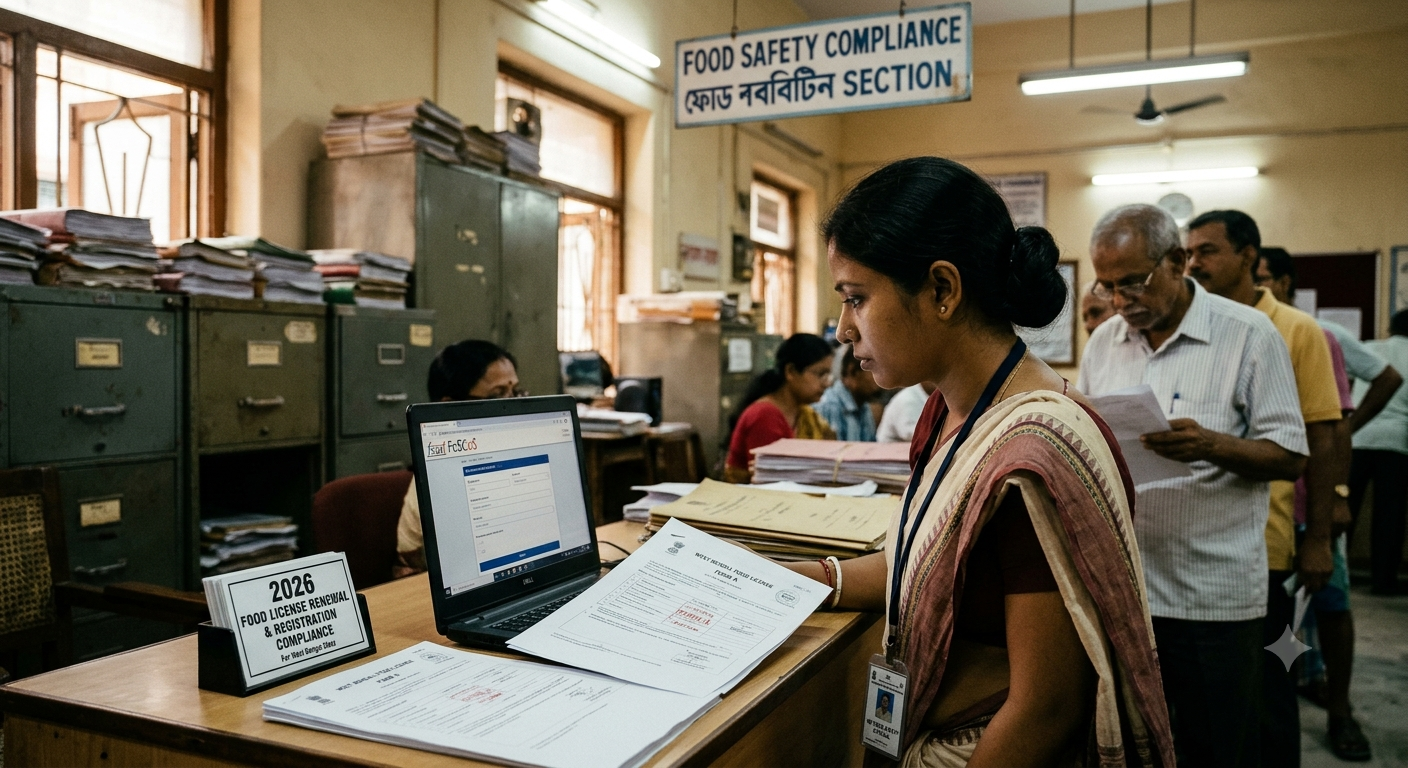
Applications are submitted on the FSSAI FoSCoS portal.
- Create an account with your mobile number and email.
- Choose the option to apply for registration or license.
- Select the correct business type, such as catering or food service, and enter the details of your kitchen or centre.
- Upload documents and pay the fee online.
- Await verification. An officer may inspect the premises before approval.
- Download your certificate and display it at the site.
Standards to Maintain After Approval
Getting the certificate is only half the job. Meal providers should:
- Keep the kitchen clean, with proper drainage, covered bins and pest control
- Use safe drinking water and test it regularly
- Store grain, pulses and oil off the floor and away from moisture
- Maintain personal hygiene: clean aprons, hair covering and regular handwashing by cooks
- Check ingredients for expiry dates and quality before cooking
- Keep records of purchases, menus and cleaning schedules
- Retain food samples where the guidelines require it
Common Mistakes
Operators often assume that a government scheme exempts them from approval. In many places it does not. Others apply under the wrong category, forget to renew, or fail to update the certificate when the kitchen shifts to a new address. Poor record keeping is another frequent problem during inspections.
Benefits of Doing It Properly
A valid approval gives parents and school management confidence that meals are safe. It makes it easier for NGOs and contractors to qualify for tenders, protects staff during inspections, and encourages better habits in the kitchen. Most importantly, it reduces the risk of food poisoning among children.
Final Thoughts
Whether you manage a school kitchen, run a central meal facility or look after an Anganwadi centre, the path is similar: identify the right category, gather documents, apply through the official portal and maintain hygiene every day. When in doubt, speak to your district food safety officer before you begin.
Rules, fees and eligibility change, so verify the latest details on the official FSSAI FoSCoS portal and with your state department before applying.
About The Author