

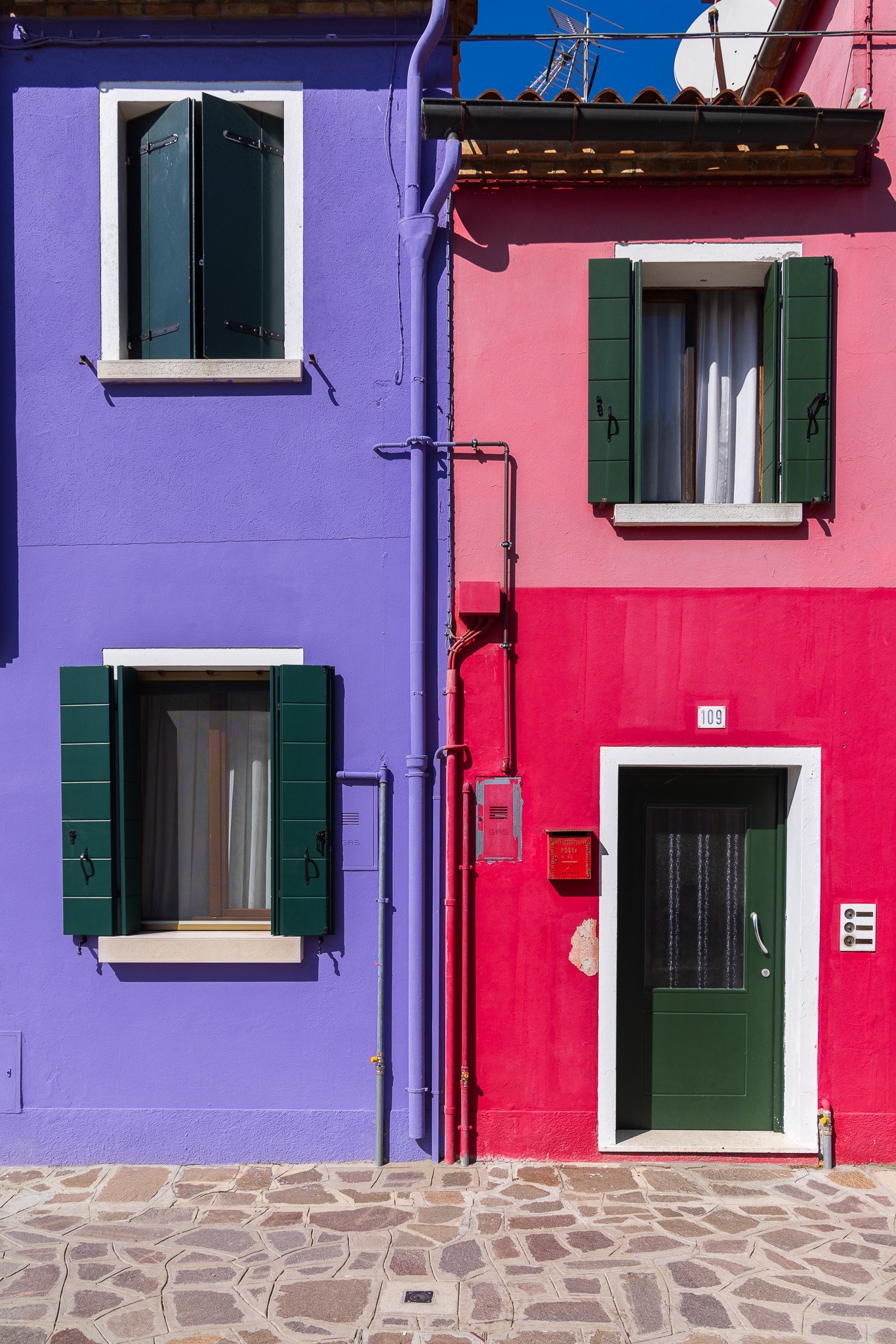
Some places look exactly like their photographs, and photographing Burano is the proof. Step off the vaporetto and you are among coral, cobalt and sunflower-yellow houses, with their colors repeated in the still water of the canals.
The island is small enough to walk in an hour or two, which makes it ideal for a focused photo session. This guide covers the best spots, timing and practical details. For a longer account with hotels and restaurants, see the Burano Photography Guide.
Why Burano Is a Photographer’s Island
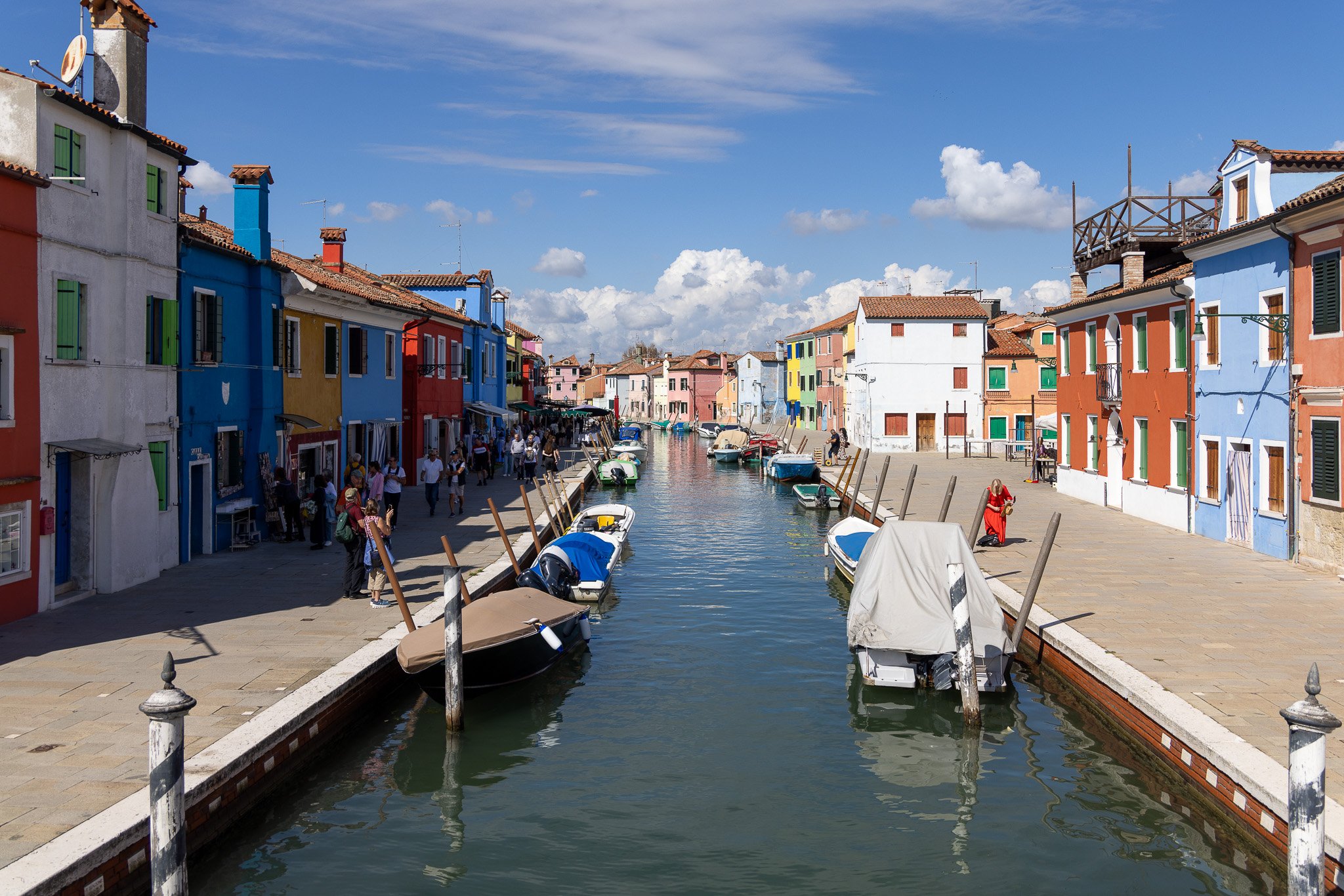
Local tradition says the houses were painted in bright colors so that fishermen could spot their homes through lagoon fog. Whatever the exact history, the result is a tightly packed island where color, reflection and pattern are everywhere. Light changes the mood hour by hour: morning mist softens the palette, midday sun makes strong shadows, and late afternoon turns the canals golden. Everyday life adds interest too, from residents hanging laundry to lace-makers working in doorways, so move slowly and stay quiet.
Best Photo Spots
The side lanes and alleyways
The main street is lively, but the best images are in the narrow lanes that branch off it. Look for contrasting walls, a bicycle against a bright door, or washing strung between two colors. The island is flat and compact, so you can explore on foot and double back when the light shifts.

Canals and reflections
The canals are the island’s signature subject. Shoot from the walkways or the small bridges, get low and close to the water, and use a wide lens to exaggerate the reflection. Wind breaks the mirror surface, so early morning and late afternoon, when the air is calmest, are best. A polarizer helps manage glare and deepen color.

Casa di Bepi Suà
The island’s best-known house is covered in a bold geometric pattern of diamonds and triangles. Come in tight on the facade rather than including the whole square, use a mid-range focal length to flatten the perspective and shoot when the light falls directly on the wall.
Tre Ponti
This viewpoint lines up three bridges along a canal, with colored walls on both sides. It works best with a telephoto lens, which compresses the layers into a graphic composition. Early morning gives soft side light and calm water, and a small boat or a figure crossing a bridge adds scale.
Doors and details
Do not skip the small things. Painted doors, shutters, window boxes and house numbers make great close-up subjects, and they let you build a varied set of images from a single street.

Via Galuppi and the village squares
The island’s main pedestrian street runs from the ferry landing to the central square. Go before 8 am, when it is nearly empty and the east light hits the facades. Stand at a coffee bar with locals for natural portraits, and ask before pointing a lens directly at anyone.
Burano at a glance
| Spot | Best for | Best time |
|---|---|---|
| Canals and reflections | Color mirrored in water | 7 to 9 am and late afternoon |
| Side lanes | Street scenes and contrast | Early morning |
| Casa di Bepi Suà | Geometric pattern | Morning light |
| Tre Ponti | Layered bridge composition | Early morning |
| Doors and details | Close-up color and texture | Any time |
Getting There and Getting Around
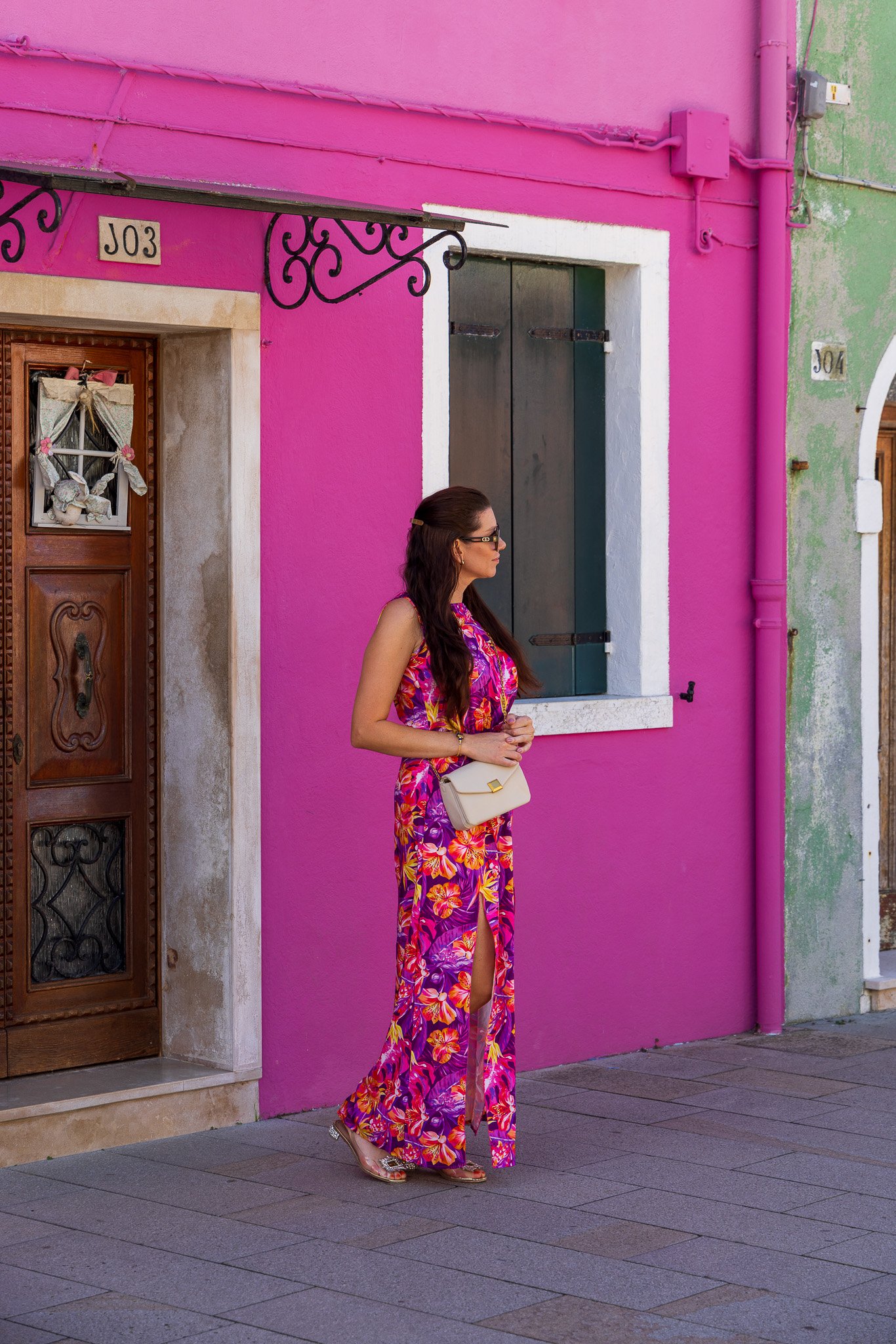
Burano is car-free and reached by water. From Venice, take vaporetto Line 12 from Fondamente Nove, a ride of roughly 45 minutes with views across the northern lagoon. Check the official ACTV timetable before you go, because schedules and fares change. A private water taxi costs far more but is flexible. Once on the island, everything is on foot, so wear comfortable shoes for uneven cobblestones and travel light.
Murano, famous for glass, is on the same line and closer to Venice, so visit Burano first and stop at Murano on the way back.
Best Time to Visit
Spring and autumn offer comfortable weather and softer light. Early mornings are always best for quiet streets and calm water, and late afternoon is the second window. Events add variety: the Venice Carnival in February spills onto the island, and the Burano regatta, held on the third Sunday of September, fills the canals with traditional rowing boats. To compare Burano with other destinations, browse the best places to go month by month.
How Long to Stay
Burano works as a half-day or full-day trip from Venice. For photography, plan two sessions if you can: one at first light for empty lanes and one in late afternoon for warm canal reflections. If you are combining it with Venice and Murano, allow four to five days in the area. Overnight stays on the island itself give you morning light before the day-trippers arrive.
What to Pack
A standard zoom covers most of the island, a short prime helps in tight lanes and low light, and a telephoto compresses rows of houses and isolates details. Bring a circular polarizer for canal glare, a compact tripod for blue hour and reflections, spare batteries and a lens cloth, since lagoon humidity fogs glass quickly. If you are choosing equipment, these gear recommendations are a useful starting point.
Slow down, arrive early and let the light do the work. Burano rewards photographers who stay a while.
Frequently Asked Questions
How do I get to Burano from Venice?
Take vaporetto Line 12 from Fondamente Nove, a ride of roughly 45 minutes. Check the official timetable before you travel.
What is the best time of day to photograph Burano?
Early morning for quiet streets and still water, and late afternoon for warm light and canal reflections.
How long do I need in Burano?
A half-day to full day is enough. Plan two sessions if photography is your priority.
Is Burano worth combining with Murano?
Yes. They share a vaporetto line, so visit Burano first and stop at Murano on the way back to Venice.
Can I fly a drone in Burano?
No. The Venice lagoon, including Burano, is restricted airspace, so leave the drone at home.
About this guide: Written for travelers who want to spend less time second-guessing and more time somewhere worth photographing. Follow the links in the text to go deeper on the places and techniques mentioned.
About The Author
