


Introduction
Pain from joint injuries, tendon problems, sports-related conditions, and chronic musculoskeletal issues can affect mobility and everyday activities. While surgery may be appropriate for some conditions, many patients explore conservative options before considering an operation. Platelet-rich plasma (PRP) therapy is one such treatment that has gained attention as part of modern regenerative orthopedic care.
PRP therapy uses a concentrated preparation made from a patient’s own blood. The goal is to deliver a higher concentration of platelets to a targeted area, where biological factors involved in the body’s natural healing processes may support tissue repair. At RegenOrthoSport, PRP is considered within an individualized treatment plan based on the patient’s condition, symptoms, medical history, and examination findings.
What Is Platelet-Rich Plasma (PRP) Therapy?
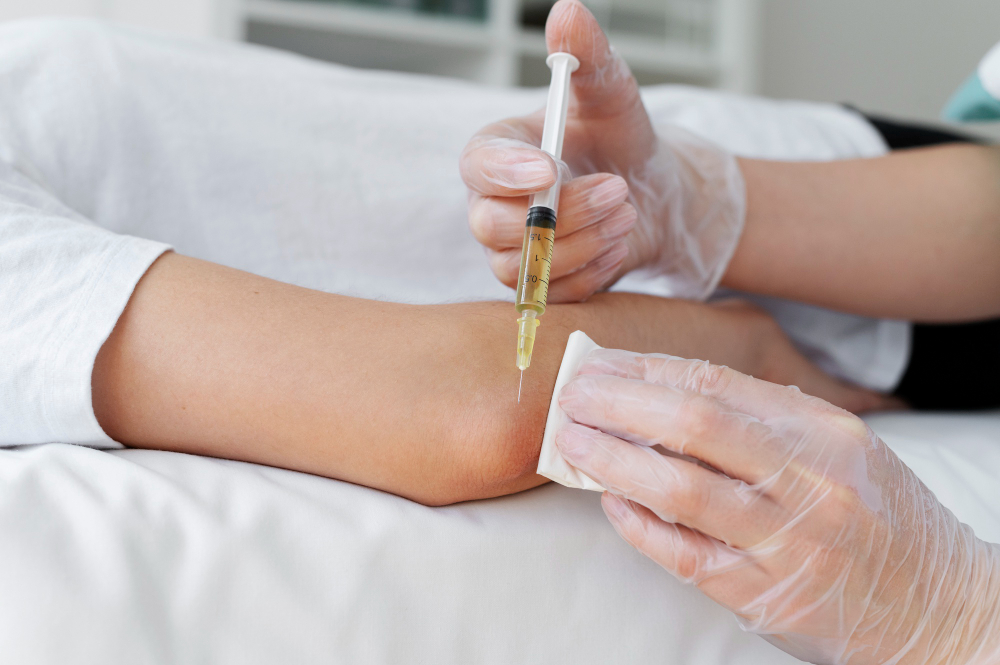
Platelet-rich plasma therapy is a minimally invasive procedure that begins with a small blood sample. The blood is processed to separate and concentrate platelets from other components. The resulting PRP preparation is then delivered to the affected area, commonly with imaging guidance when appropriate.
Platelets contain growth factors and other signaling proteins involved in tissue healing. Researchers continue to study how these components may influence inflammation, tissue repair, and recovery in different orthopedic conditions.
PRP may be considered for selected problems involving joints, tendons, ligaments, and other musculoskeletal tissues. However, outcomes can vary depending on the diagnosis, severity of the condition, treatment technique, and individual patient factors.
How PRP Treatment Works
The PRP process generally involves three stages:
- Blood collection: A small amount of the patient’s blood is drawn.
- Preparation: The sample is processed to concentrate platelets.
- Injection: The prepared PRP is carefully delivered into the targeted area.
The procedure itself is usually performed in an outpatient setting. A healthcare professional first determines whether PRP is appropriate and identifies the specific structure responsible for the symptoms.
Because PRP is prepared from the patient’s own blood, it is different from treatments involving donor tissue or medications. Still, PRP is not suitable for every patient or every condition, making proper evaluation important.
Conditions That May Be Considered for PRP
Depending on an individual’s diagnosis, PRP may be discussed as part of a non-surgical treatment plan for certain orthopedic and sports medicine conditions.
These may include:
- Tendon-related injuries and overuse conditions
- Selected ligament injuries
- Certain forms of joint pain
- Sports-related musculoskeletal injuries
- Some chronic soft-tissue conditions
- Selected cases of degenerative joint problems
PRP should not be viewed as a universal treatment. A thorough assessment helps determine whether the symptoms are caused by a condition that may reasonably be considered for PRP.
Benefits and Considerations of PRP Therapy
One reason patients consider PRP is its non-surgical nature. It generally does not require a large incision or an extended hospital stay. Depending on the treated condition, PRP may be incorporated into a broader rehabilitation program that includes activity modification and physical therapy.
Potential advantages include a minimally invasive procedure, use of the patient’s own blood, and the ability to target a specific area of concern.
However, patients should maintain realistic expectations. PRP does not guarantee tissue regeneration or eliminate the need for surgery in every case. Scientific evidence also varies across different conditions, so treatment decisions should be based on the available evidence and an individual’s clinical circumstances.
Advanced PRP Treatment in Dallas
Choosing an appropriate provider is an important part of any regenerative treatment plan. Advanced PRP Treatment in Dallas should begin with an accurate diagnosis rather than simply treating pain as a symptom.
At RegenOrthoSport, the treatment approach focuses on understanding the underlying orthopedic problem before recommending a procedure. Evaluation may include a discussion of symptoms, physical examination, medical history, and diagnostic imaging when needed.
Founded by Dr. Venkatesh Movva, RegenOrthoSport provides advanced regenerative orthopedic care in (Dallas)
This patient-focused approach can help determine whether PRP, physical therapy, medication, activity modification, or another treatment option is more appropriate.
Finding the Best Platelet-Rich Plasma Therapy
Patients searching for the Best Platelet-rich plasma therapy may encounter many treatment options and claims online. Instead of focusing only on the procedure itself, consider factors such as proper diagnosis, clinician experience, treatment protocols, follow-up care, and realistic expectations.
A quality consultation should explain what PRP can and cannot reasonably accomplish for a specific condition. It should also address alternatives and potential risks so patients can make informed decisions.
For people researching the Best PRP treatment near me, it can be helpful to ask whether the provider evaluates the underlying cause of pain and develops a treatment plan around the patient’s individual needs.
Orthopedic PRP Therapy in Dallas
Orthopedic PRP therapy in Dallas may be considered for patients seeking non-surgical approaches to selected musculoskeletal conditions. PRP is often most useful when it is combined with appropriate rehabilitation rather than viewed as an isolated solution.
Recovery recommendations vary according to the injection site and underlying condition. Patients may be advised to temporarily modify activities and gradually return to normal movement under professional guidance.
RegenOrthoSport emphasizes individualized care, helping patients understand their diagnosis and available treatment options before proceeding with PRP.
What to Expect After PRP
Some patients experience temporary soreness, swelling, or discomfort around the injection site after treatment. Recovery differs depending on the treated tissue and the patient’s overall health.
Following post-treatment instructions is important. Returning to intense exercise or strenuous activity too quickly may interfere with the recommended recovery plan. A clinician may provide guidance on mobility, exercise progression, and physical therapy.
Patients should also understand that improvement, when it occurs, may take time rather than appearing immediately after an injection.
Frequently Asked Questions
Is PRP therapy suitable for everyone?
No. Eligibility depends on the underlying diagnosis, overall health, medications, severity of the condition, and other individual factors. A clinical evaluation is necessary before treatment.
What problems can PRP potentially help with?
PRP may be considered for certain tendon, ligament, joint, and sports-related conditions. Its effectiveness varies considerably by diagnosis, so patients should discuss the evidence for their specific problem with a qualified healthcare professional.
Is PRP therapy painful?
The injection may cause temporary discomfort or soreness. The level of discomfort varies according to the treatment location and individual sensitivity. Your provider can explain what to expect and discuss appropriate measures to improve comfort.
How long does recovery take after PRP?
Recovery depends on the treated area and the underlying condition. Some people can resume light daily activities relatively quickly, while strenuous exercise may need to be limited for a period recommended by the treating clinician.
Can PRP replace surgery?
Not always. PRP is a non-surgical option for selected conditions, but some injuries or advanced structural problems may require surgery or another intervention. A proper diagnosis is essential.
When should someone seek medical advice for joint or tendon pain?
Seek professional evaluation when pain persists, repeatedly returns, limits normal activities, causes significant weakness or instability, or follows a substantial injury. Urgent medical assessment may be needed for severe trauma, sudden loss of function, significant swelling, or other concerning symptoms.
Conclusion
Platelet-rich plasma (PRP) therapy represents one option within the growing field of regenerative orthopedic care. By using a concentrated preparation of the patient’s own platelets, PRP aims to support biological processes associated with tissue healing. Its role depends on the specific diagnosis and individual circumstances.
For patients considering Orthopedic PRP therapy in Dallas, an evidence-informed evaluation can help determine whether PRP is an appropriate part of a broader non-surgical treatment strategy. RegenOrthoSport focuses on personalized orthopedic care, helping patients understand their condition, treatment choices, expected recovery, and alternatives before making a decision.
About The Author