


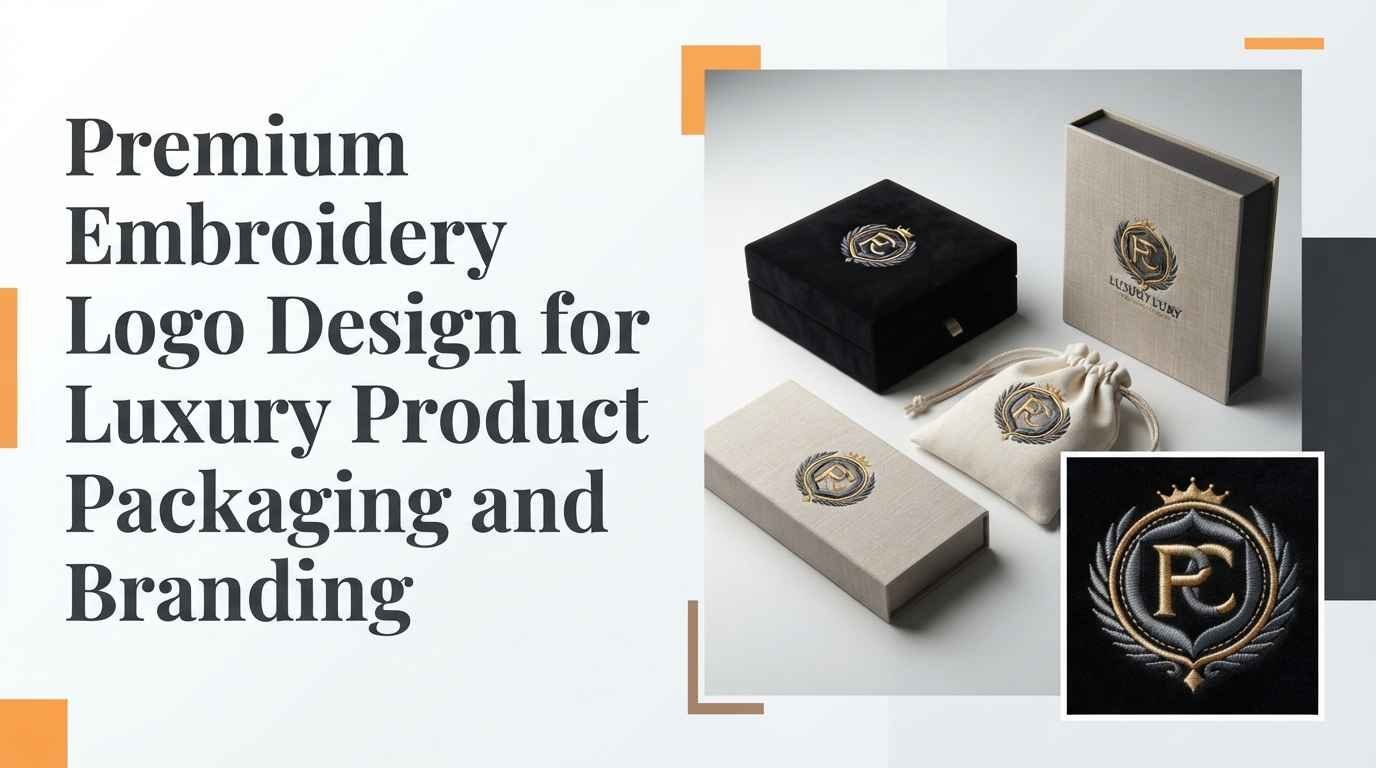
Luxury product packaging requires careful attention to visual details, material quality, and brand presentation. Businesses can use premium embroidery logo design to create attractive textile packaging that reflects their brand identity and adds a refined finish to their products. From velvet jewelry pouches to designer dust bags, embroidered logos offer a decorative approach to product branding.
Creating high-quality embroidered packaging requires accurate digitizing, suitable thread selection, balanced stitch density, and fabric-specific adjustments. These elements help manufacturers achieve consistent results while maintaining the appearance and functionality of luxury packaging.
What Is Premium Embroidery Logo Design?
Premium embroidery logo design is the process of creating and digitizing brand logos for high-quality embroidered products, accessories, and textile packaging.
The process involves converting original artwork into a machine-readable embroidery file containing instructions for stitch placement, stitch direction, density, sequencing, and color changes.
For luxury branding, digitizers must pay particular attention to lettering clarity, logo proportions, decorative details, and finishing quality.
A carefully digitized logo helps preserve the original brand identity while adapting the artwork to the physical characteristics of the packaging material.
Why Embroidery Matters in Luxury Product Packaging
Luxury packaging contributes to how customers perceive and interact with a product. Material texture, logo placement, color combinations, and decorative finishing all influence the overall presentation.
Embroidered logos provide a textured alternative to conventional printed branding on suitable textile materials.
Luxury businesses can use embroidery to:
Create a recognizable brand identity.
Add decorative texture to product packaging.
Maintain consistent branding across product collections.
Personalize gifts and limited-edition products.
Create attractive, reusable fabric packaging.
The overall result depends on the quality of the artwork, digitizing, materials, and manufacturing process.
Key Elements of Premium Embroidery Logo Design
Several technical and creative factors contribute to the quality of embroidered logos for luxury packaging.
Accurate Logo Reproduction
Luxury brand logos often contain carefully designed typography, monograms, symbols, and decorative patterns.
Digitizers must preserve the original logo proportions, spacing, and recognizable features when preparing embroidery files.
Extremely small details may require adjustments to maintain clarity on fabric. Any significant changes should receive brand approval before production.
Balanced Stitch Density
Stitch density determines how closely stitches are placed together within an embroidery design.
Excessive stitch density can create fabric puckering, unnecessary stiffness, and thread breakage. Insufficient density may result in visible gaps and uneven coverage.
Balanced stitch density helps achieve a smooth embroidered surface while maintaining the natural appearance of the packaging material.
Appropriate Stitch Selection
Different stitch types produce different visual effects in embroidered logos.
Satin stitches are suitable for lettering, monograms, and narrow decorative elements. Fill stitches provide coverage for larger areas, while running stitches can reproduce fine outlines and delicate details.
Selecting appropriate stitch types helps create clean and visually appealing embroidery.
Carefully Planned Stitch Direction
Stitch direction influences how light reflects from embroidered surfaces.
Different stitch angles can create subtle visual contrasts within a single-color logo. This technique is particularly useful for decorative monograms and minimalist branding.
Digitizers should select stitch directions that complement the artwork without causing unnecessary fabric distortion.
Effective Underlay Stitching
Underlay stitches provide a supporting foundation beneath visible embroidery.
They help stabilize the fabric, maintain design shape, and improve stitch coverage.
Appropriate underlay is particularly important when embroidering luxury materials such as velvet, satin, and textured fabrics.
Clean Thread Trimming
Loose thread ends and visible connecting threads can negatively affect packaging presentation.
Efficient stitch sequencing, suitable trim commands, and secure stitch endings help maintain clean embroidery finishing.
Manufacturers should inspect both sides of the embroidery when the reverse side is visible to customers.
Applications of Premium Embroidery Logo Design in Luxury Packaging
Embroidered branding can be incorporated into various textile-based packaging products across different luxury industries.
Luxury Jewelry Pouches
Jewelry businesses can use embroidered velvet, satin, and cotton pouches to package rings, necklaces, bracelets, and other accessories.
Small embroidered monograms and brand symbols require precise digitizing to maintain accurate proportions and clear details.
Designer Clothing Dust Bags
Fashion brands use fabric dust bags to protect handbags, shoes, clothing, and other accessories.
Embroidered logos allow businesses to maintain visible branding on packaging that customers may continue using after their purchase.
Premium Cosmetic Bags
Cosmetic brands can incorporate embroidered logos into fabric makeup bags, travel cases, and promotional gift sets.
Digitizing should consider the material thickness, available embroidery area, and construction of the packaging.
Luxury Gift Bags
Embroidered gift bags can be used for premium retail products, corporate gifts, weddings, and special occasions.
Carefully selected thread colors and logo placement help create consistent packaging across different product collections.
Perfume and Fragrance Pouches
Fragrance businesses may use embroidered fabric pouches for special collections and personalized gift packaging.
Lightweight embroidery designs can complement delicate fabrics without adding unnecessary stiffness.
Decorative Packaging Ribbons
Wide fabric ribbons can feature embroidered brand names, initials, and decorative symbols.
Because ribbons have limited embroidery space, digitizers must carefully manage lettering size, stitch density, and design complexity.
Fabric-Covered Presentation Boxes
Embroidered textile panels can be incorporated into luxury gift boxes and decorative presentation cases.
The fabric is typically embroidered before being attached to the rigid packaging structure.
This approach allows manufacturers to combine decorative embroidery with structured product packaging.
Choosing the Right Materials for Luxury Embroidery Packaging
Different packaging materials require specific embroidery digitizing techniques. Understanding fabric characteristics helps manufacturers reduce potential production problems.
| Packaging Material | Embroidery Considerations |
|---|---|
| Velvet | Suitable underlay and topping |
| Satin | Controlled density and careful hooping |
| Silk | Lightweight stitching and suitable stabilization |
| Cotton | Balanced stitch density and coverage |
| Linen | Appropriate underlay for textured surfaces |
| Canvas | Suitable needle selection and stitch lengths |
| Suede | Controlled needle penetration |
| Organza | Lightweight designs and appropriate stabilizers |
| Microfiber | Precise stitch placement and controlled density |
A logo prepared for cotton packaging may require adjustments before being embroidered on velvet or satin.
Physical test stitching helps manufacturers evaluate whether the digitized file is suitable for the selected material.
How Thread Selection Influences Luxury Embroidery Branding
Embroidery thread affects the texture, color, visual appearance, and durability of the finished logo.
Rayon Embroidery Thread
Rayon embroidery thread is known for its smooth appearance and natural-looking sheen.
It can be suitable for decorative packaging applications where visual presentation is particularly important.
Polyester Embroidery Thread
Polyester thread is commonly used in commercial embroidery because of its durability and resistance to many everyday handling and cleaning conditions.
It can be suitable for reusable gift bags, dust bags, and textile accessories.
Metallic Embroidery Thread
Metallic embroidery thread creates reflective decorative effects, making it useful for gold, silver, and other metallic branding applications.
Metallic threads may require suitable needles, adjusted tension, appropriate stitch lengths, and reduced operating speeds.
Matte Embroidery Thread
Matte thread provides a less reflective finish that can complement minimalist packaging and understated branding.
Manufacturers should choose thread finishes according to the brand’s visual identity, packaging material, and desired appearance.
How to Create Premium Embroidery Logo Designs for Luxury Packaging
A carefully planned design process helps manufacturers achieve consistent embroidery quality and reduce unnecessary production revisions.
Review the Original Artwork
Begin with clear vector artwork or high-resolution logo images.
Examine the logo proportions, typography, decorative details, and approved brand colors before digitizing.
Identify design elements that may be difficult to reproduce at the intended embroidery size.
Determine Logo Size and Placement
The embroidered logo should be appropriately sized for the packaging dimensions.
A small jewelry pouch may require a simple monogram, while a larger designer dust bag can accommodate a more detailed logo.
Consider seams, folds, drawstrings, and closures when selecting embroidery placement.
Apply Fabric-Specific Digitizing Techniques
Adjust stitch density, underlay, pull compensation, and sequencing according to the selected packaging material.
Delicate materials may require lighter stitching, while textured fabrics may need additional support to maintain clear embroidery coverage.
Select Accurate Brand Colors
Compare physical embroidery thread samples with approved brand color references.
Colors displayed on computer screens may appear different from actual embroidery threads.
Evaluating physical thread samples under suitable lighting helps manufacturers select appropriate color matches.
Verify Embroidery File Compatibility
Export the digitized logo in a file format supported by the embroidery machine.
| File Format | Common Machine Compatibility |
|---|---|
| DST | Tajima and many commercial machines |
| PES | Brother and Baby Lock |
| EXP | Melco and certain Bernina machines |
| JEF | Janome |
| VP3 | Husqvarna Viking and Pfaff |
Always confirm compatibility with the specific machine model before production.
Conduct a Physical Test Stitch-Out
Embroider a sample using the intended packaging material, thread, needle, stabilizer, and machine settings.
Inspect the sample for lettering clarity, logo proportions, stitch coverage, thread trimming, and fabric distortion.
Make necessary adjustments before approving the embroidery design for bulk manufacturing.
Minimalist vs. Detailed Embroidery Logo Designs
Luxury businesses can select different logo styles according to their branding requirements and packaging dimensions.
| Design Feature | Minimalist Logo | Detailed Logo |
|---|---|---|
| Appearance | Simple and refined | Decorative and complex |
| Stitch count | Generally lower | Generally higher |
| Production time | Often shorter | Often longer |
| Small packaging suitability | Usually more suitable | May require simplification |
| Thread colors | Typically fewer | May include multiple colors |
| Digitizing complexity | Generally lower | Requires additional planning |
| Common applications | Monograms and initials | Decorative emblems and symbols |
The appropriate design style depends on the brand identity, available embroidery area, material characteristics, and manufacturing requirements.
Common Embroidery Problems in Luxury Product Packaging
Identifying embroidery problems before bulk production helps manufacturers maintain packaging quality and reduce material waste.
| Common Problem | Possible Cause | Recommended Solution |
|---|---|---|
| Fabric puckering | Excessive stitch density | Adjust density and stabilization |
| Distorted logos | Incorrect pull compensation | Review compensation and hooping |
| Unclear lettering | Unsuitable letter size | Optimize lettering dimensions |
| Uneven coverage | Incorrect underlay | Adjust underlay and stitch spacing |
| Thread breakage | Incorrect tension or needle selection | Review machine settings |
| Visible connecting threads | Poor trim placement | Optimize sequencing and trims |
| Stiff packaging fabric | Excessive stitch layers | Reduce unnecessary stitches |
| Misaligned borders | Fabric movement | Improve stabilization |
| Inaccurate brand colors | Incorrect thread selection | Verify physical color references |
Manufacturers should evaluate the embroidery file, materials, and machine settings before making corrections.
How to Maintain Consistent Branding Across Luxury Product Collections
Luxury businesses often use the same brand logo across multiple packaging styles, including gift bags, jewelry pouches, cosmetic cases, and textile accessories.
However, an identical machine-ready embroidery file may not produce consistent results on every material.
Maintaining an editable master embroidery file allows digitizers to prepare different versions according to fabric characteristics and packaging dimensions.
Businesses should also retain approved thread color references, embroidery measurements, production settings, and physical samples.
An organized design library helps manufacturers maintain consistent branding across different product collections and repeat orders.
Quality Control for Premium Embroidered Packaging
Quality control is necessary throughout luxury packaging production. Even after a design has been approved, changes in materials or machine performance can affect embroidery results.
Manufacturers should inspect:
Logo dimensions and placement.
Thread color consistency.
Lettering clarity and design symmetry.
Stitch coverage and fabric condition.
Thread trimming and finishing quality.
Packaging functionality.
For reusable packaging, manufacturers may also evaluate embroidery durability under intended handling and cleaning conditions.
Keeping an approved reference sample available helps operators identify production variations before they affect larger orders.
Benefits of Professional Embroidery Logo Design for Luxury Brands
Improved Product Presentation
Carefully designed embroidery adds texture and decorative details to textile packaging, supporting the overall product presentation.
Consistent Brand Recognition
Accurate logo digitizing helps businesses maintain recognizable typography, symbols, and branding elements across multiple packaging products.
Greater Personalization Opportunities
Embroidered initials, customer names, and decorative monograms allow businesses to offer personalized packaging for gifts and special collections.
Reusable Packaging Solutions
Embroidered textile bags and pouches can be designed for continued use, providing practical value beyond their original packaging purpose.
Reduced Production Waste
Professional digitizing and physical sample testing help identify potential embroidery problems before bulk manufacturing.
Efficient Repeat Production
Approved embroidery files, documented machine settings, and organized thread references help manufacturers simplify future production orders.
Flexible Branding Applications
Embroidered logos can be adapted for different textile products, allowing businesses to maintain a consistent visual identity across various packaging styles.
How to Choose a Premium Embroidery Logo Design Service
Luxury packaging manufacturers should select a digitizing service that understands fine lettering, decorative embroidery, delicate materials, and commercial production requirements.
A suitable provider should offer accurate logo digitizing, fabric-specific adjustments, compatible embroidery file formats, efficient stitch sequencing, and revision support.
Manufacturers should provide complete artwork, packaging dimensions, fabric information, approved thread colors, and intended production quantities.
Clear communication between the manufacturer and digitizer helps reduce unnecessary revisions and supports consistent embroidery results.
Conclusion
Creating attractive luxury packaging requires careful attention to branding, material selection, and decorative finishing. Premium embroidery logo design helps businesses achieve accurate logo reproduction, refined textile packaging, and consistent visual presentation across different product collections.
By combining professional digitizing with suitable thread selection, fabric-specific adjustments, physical test stitching, and regular quality inspections, manufacturers can improve embroidery quality and reduce avoidable production errors. Businesses seeking professional embroidery digitizing solutions for luxury product packaging and branding can consider zdigitizing.net for their production requirements.
Frequently Asked Questions
What is premium embroidery logo design?
It is the process of creating and digitizing high-quality embroidered brand logos with attention to stitch accuracy, lettering clarity, material compatibility, and decorative finishing.
Is embroidery suitable for luxury product packaging?
Yes. Embroidery can be used on suitable textile packaging, including velvet pouches, cotton dust bags, cosmetic cases, and decorative gift bags.
What is the best thread for luxury embroidery logos?
The appropriate thread depends on the intended appearance and packaging requirements. Rayon provides a glossy finish, polyester offers durability, and metallic thread creates reflective decorative effects.
Can small brand logos be embroidered on jewelry pouches?
Yes, but small logos may require simplified details, suitable stitch types, and carefully adjusted density to maintain clarity.
How can manufacturers prevent puckering on luxury packaging fabrics?
Using balanced stitch density, appropriate stabilizers, suitable needles, and correct hooping techniques can help reduce fabric puckering.
Can embroidered logos be used on luxury gift boxes?
Yes. Fabric panels can be embroidered separately and incorporated into rigid presentation boxes during packaging assembly.
How can businesses maintain consistent embroidery branding?
Businesses should maintain approved embroidery files, physical thread references, documented production settings, and reference samples for quality inspections.
Is test stitching necessary before bulk packaging production?
Yes. Physical test stitching helps identify fabric distortion, inaccurate lettering, unsuitable stitch density, and other production problems before larger orders begin.
About The Author