


Most skid steer cutters only cut what’s directly in front of the machine. That’s fine on open ground. The trouble starts when the brush you need to clear is off to the side, up on a bank, down in a ditch, or behind a fence post you can’t drive over.
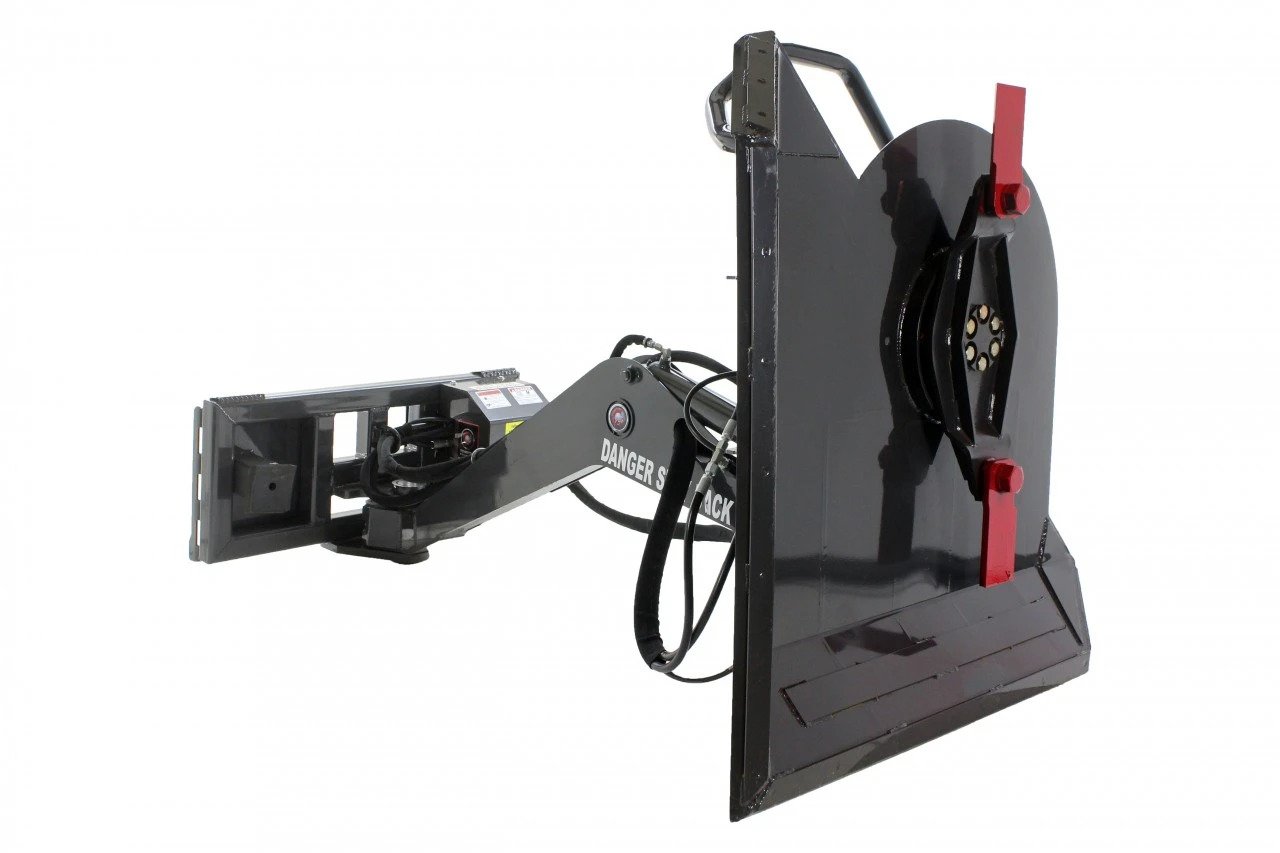
A skid steer articulating brush cutter solves that by putting a movable arm between the machine and the cutting head. Instead of repositioning the whole skid steer every few feet, you swing and tilt the head to where the vegetation actually is. Same machine, same operator, a lot less driving around.
The short version
- A fixed cutter only reaches what’s in the machine’s front path. An articulating arm extends reach to the side, up and down.
- It’s most useful on slopes, ditch banks, fence lines and around obstacles.
- It needs matched hydraulics, so check flow and pressure before buying.
- It’s not a replacement for a heavy mulcher on big trees, and it won’t make a poorly matched machine run better.
Why a Fixed Cutter Hits a Limit
A standard front-mounted brush cutter works like a mower on a loader arm. The head sits where the bucket would be, so it cuts straight ahead. If brush grows along a ditch edge, you either drive the machine to the edge and risk the slope, or you leave it uncut. Neither is great.
Skid steers also turn by skidding the tracks or tires, which tears up soft ground when you’re making lots of small adjustments. Every extra reposition is more ground disturbance, more time, and more fuel.
How the Articulating Arm Changes Reach
Side and Overhead Work
The arm lets the head pivot and extend away from the machine’s centerline. That means you can trim overhanging branches, cut along fence rows from the clear side and keep the machine on flat ground while the head works the edge. For overhead limbs, the angle adjustment matters more than raw reach, so look at how far the head tilts, not just how long the arm is.
Below-Grade and Slope Work
Drainage ditches, creek banks, culvert edges, and road shoulders are where this design really earns its keep. The machine sits on stable ground and the head reaches down the slope. You’re not trying to balance a skid steer on an incline just to get at vegetation, which is the part most operators don’t enjoy.
Where It Actually Earns Its Keep
Roadside and right-of-way maintenance is the obvious one, since a lot of the growth is on banks and beside guardrails. Farm operators use them along fence lines and field edges. Landscapers and property managers use them for overgrown lots and boundary lines. For municipal crews, the draw is usually that one operator can handle a job that might otherwise take a separate mowing pass and a hand crew.
Among skid steer land clearing attachments, it sits in a particular spot. It’s best at brush, saplings and thick growth at reach. A heavy forestry mulcher is a different tool for different work, and a bucket or grapple handles debris once it’s down.
What to Check Before You Buy
Hydraulic flow and pressure. The cutter has to match what your machine puts out. Too little flow and the head bogs down, and too much stresses seals and hoses. The manufacturer’s spec sheet should list requirements, so compare them against your skid steer’s rating and don’t guess.
Machine size and weight. An arm extended to the side shifts weight. Check your machine’s rated operating capacity and the attachment’s weight, especially if you’ll be working on uneven ground.
Cutting capacity. Brush cutters are rated for certain vegetation sizes. Ask what diameter the head is designed to handle and be realistic about what you’ll actually run into.
Blade and head construction. Rocks, wire and dirt will find your cutter eventually. Look at how the blades are mounted and how easy they are to replace.
Mounting. Make sure the quick-attach plate matches your machine, or that an adapter is available.
Common Mistakes
- Buying for the biggest job instead of the typical one, which usually means extra weight and cost you don’t use.
- Ignoring flow requirements because the mount fits.
- Cutting without walking the area first. Wire, rebar and rocks hide in brush.
- Running the arm at full extension on a slope. Reach is useful, but stability comes first.
- Skipping blade checks. Dull blades tear vegetation and make the machine work harder.
Spartan Equipment sells articulating brush cutters alongside its other land clearing and compact equipment attachments, and it’s worth checking the specific model’s flow and mounting requirements against your machine before ordering.
FAQs
What is a skid steer articulating brush cutter?
It’s a brush cutting attachment with a movable arm that lets the cutting head reach to the side, up, and down without moving the skid steer. It’s designed for vegetation the machine can’t cut by driving straight at it.
Is an articulating cutter better than a standard brush cutter?
For slopes, ditches and fence lines, usually yes, because of the reach. For open ground clearing, a standard front-mounted cutter can be simpler and cheaper.
Can it cut trees?
It handles brush and small saplings. Larger trees are generally a job for forestry-rated equipment, and the cutter’s rated capacity should guide what you attempt.
Do I need high-flow hydraulics?
It depends on the specific cutter. Some run on standard flow and others need high flow, so check the manufacturer’s requirements against your machine.
Conclusion
The real value of an articulating arm isn’t the extra reach on its own. It’s that you stop moving the machine to suit the vegetation and start moving the head instead. That means less ground disturbance, safer work near slopes and ditches, and fewer wasted passes. Match the cutter to your hydraulics and your typical jobs, don’t ask it to do a mulcher’s work, and it becomes one of the more practical tools in a land clearing lineup.
About The Author