




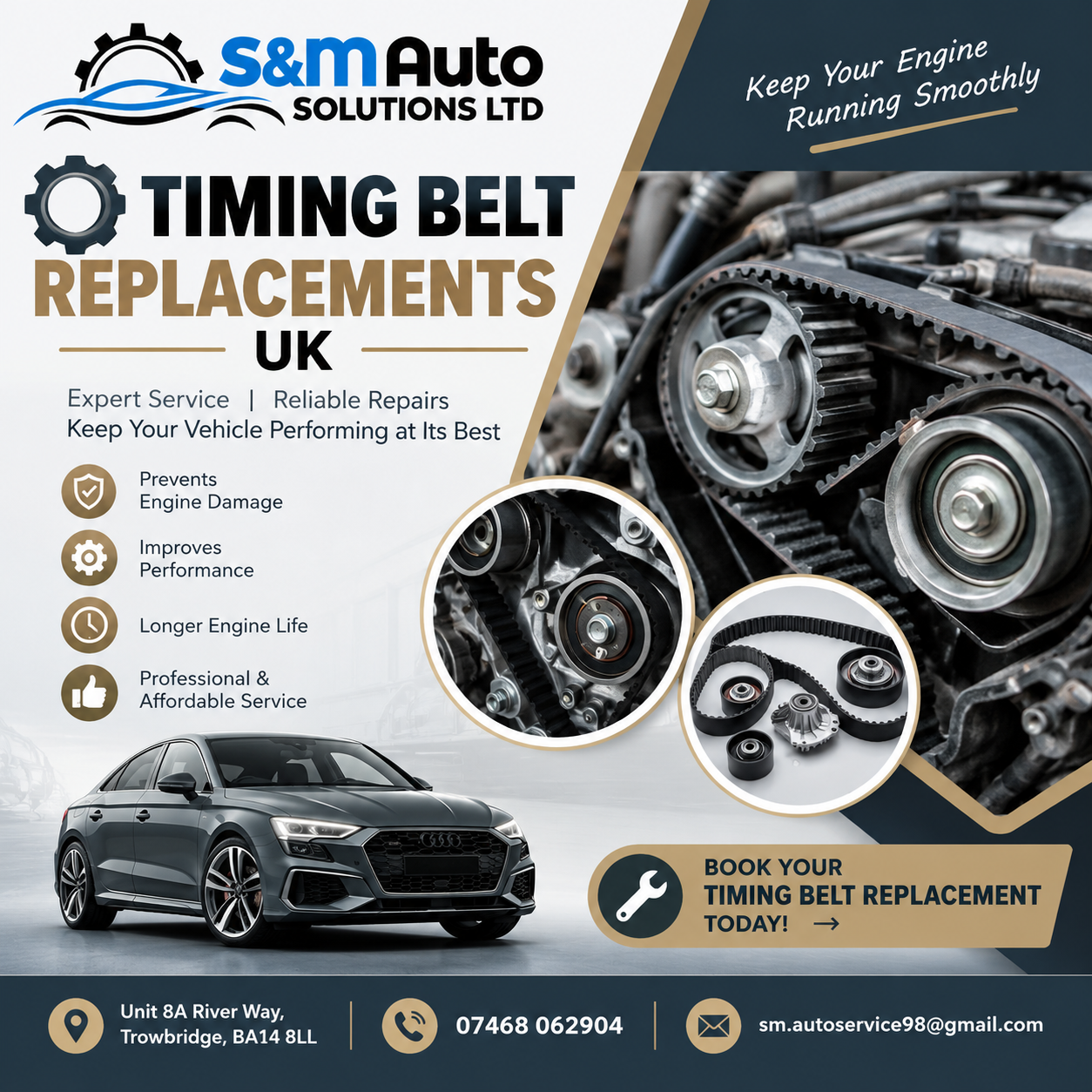
The automotive industry is experiencing significant changes as vehicle manufacturers introduce more efficient engines, advanced materials and updated maintenance technologies. While electric vehicles continue to attract attention, petrol and diesel vehicles remain an important part of everyday transport across the United Kingdom. For owners of these vehicles, preventative maintenance is essential to maintaining engine performance and avoiding unexpected mechanical problems.
One component that deserves particular attention is the timing belt. Although relatively small compared with other engine components, it performs an essential function by synchronising the movement of the crankshaft and camshaft. When this system operates correctly, engine valves open and close at precisely the right moments, allowing the engine to function efficiently.

As automotive maintenance develops between 2026 and 2027, understanding modern timing belt systems, replacement schedules and repair costs is becoming increasingly important. Drivers researching Timing Belt Replacements UK services should understand how different belt technologies work, what warning signs to recognise and why professional inspection can prevent expensive engine damage.
1. How Modern Timing Belt Technology Is Changing in 2026–2027
Timing belt technology has developed considerably over recent decades. Traditional rubber timing belts have been improved through advanced materials, reinforced fibres and manufacturing techniques designed to improve durability.
Modern engines may use different timing systems depending on their design, including:
- Conventional rubber timing belts.
- Reinforced timing belts with improved resistance to stretching.
- Wet timing belts operating inside an engine’s oil system.
- Timing chains used in certain engine configurations.
One important development is the increasing use of wet timing belt systems in selected modern engines. Unlike conventional dry belts, wet belts operate in direct contact with engine oil. This design can reduce friction and mechanical noise while supporting manufacturers’ efficiency objectives.
However, wet belts also introduce additional maintenance considerations. Their condition can be influenced by oil quality, incorrect lubricant specifications, driving conditions and servicing history.
For vehicle owners, this means that maintenance recommendations should always be based on the specific engine rather than general assumptions about timing belt lifespan.

Why Manufacturer Specifications Matter
Vehicle manufacturers establish recommended replacement intervals based on engine design, materials and operating conditions. Some vehicles require replacement after a particular mileage, while others also have a time-based replacement recommendation.
Drivers should consult their vehicle handbook or a qualified technician to confirm the correct maintenance schedule.
2. Understanding Wet Timing Belt Replacement Cost in 2026–2027
One of the most common questions among modern vehicle owners concerns wet timing belt replacement cost.
Wet belt replacement can involve more than simply removing an old belt and installing a new one. Depending on the engine design, technicians may need to remove several surrounding components to access the timing system safely.
The overall repair cost can depend on several factors:
Vehicle make and model: Different manufacturers use different engine layouts, meaning labour requirements can vary significantly.
Engine accessibility: Some timing systems are easier to reach, while others require extensive dismantling.
Replacement components: The final repair may include a new timing belt, tensioners, seals, gaskets and other associated components.
Oil system condition: Wet belt deterioration can sometimes introduce belt material into the engine lubrication system, making additional inspection and cleaning necessary.
Labour requirements: The time needed to complete the repair is influenced by engine configuration and the condition of surrounding components.

How Can Drivers Manage Replacement Expenses?
Planning preventative maintenance is generally more practical than waiting until a belt fails.
Useful steps include:
- Checking the manufacturer’s recommended replacement interval.
- Keeping records of previous servicing.
- Using the correct engine oil specification.
- Investigating unusual engine noises or warning lights.
- Requesting a detailed repair estimate before work begins.
- Asking whether associated components should be replaced at the same time.
It is important to remember that delaying a necessary replacement can create considerably greater financial risks. In interference engines, a failed timing belt may allow pistons and valves to collide, potentially resulting in extensive engine damage.
3. Choosing Professional Timing Belt Replacements Services
Selecting appropriate Timing Belt Replacements Services requires more consideration than simply comparing labour prices.
A timing belt replacement is a precision-engineering procedure. Incorrect installation, poor tension adjustment or failure to follow the manufacturer’s timing specifications can affect engine performance and reliability.
A professional workshop should follow a structured process.
Step 1: Initial Vehicle Inspection
The technician identifies the vehicle’s engine type, mileage, service history and applicable replacement requirements.
Step 2: Confirming the Timing System
Not every engine uses the same arrangement. Some require conventional timing belt replacement, while others use wet belts or timing chains.
Identifying the correct system prevents unnecessary repairs and incorrect parts selection.
Step 3: Component Inspection
The technician checks relevant components, including:
- Timing belt condition.
- Belt tensioners and idler pulleys.
- Water pump, where applicable.
- Crankshaft and camshaft seals.
- Engine oil condition in wet belt applications.

Step 4: Correct Installation
Specialist locking tools and manufacturer-specific procedures may be necessary to maintain accurate engine timing.
Step 5: Final Testing
After installation, the technician checks belt tension, engine timing, leaks and overall operation before returning the vehicle.
This systematic approach helps reduce installation-related problems and supports long-term engine reliability.
4. Common Timing Belt Problems and How to Prevent Them
Timing belt problems do not always provide obvious warning signs. In some situations, a belt can fail without giving the driver much opportunity to react.
However, certain symptoms may indicate that the engine requires professional attention.
Unusual ticking or rattling noises: These may indicate problems with tensioners, pulleys or other engine components.
Difficulty starting the engine: Incorrect timing or related mechanical problems can affect starting performance.
Engine misfires: Incorrect camshaft and crankshaft synchronisation can interfere with combustion.
Oil contamination: In wet belt engines, incorrect oil or deteriorating belt material may contribute to lubrication-system problems.
Visible belt deterioration: Cracking, fraying or unusual wear can indicate that a conventional timing belt requires attention.
Practical Prevention Strategies
Drivers can reduce the risk of premature timing belt deterioration by following a few straightforward practices:
- Use engine oil that meets the exact manufacturer specification.
- Avoid extending oil service intervals unnecessarily.
- Maintain accurate vehicle servicing records.
- Arrange inspections when purchasing a used vehicle with an uncertain maintenance history.
- Follow mileage and age-related replacement recommendations.
- Investigate unusual engine behaviour rather than ignoring it.
These measures are particularly relevant for vehicles equipped with modern wet belt systems, where lubrication quality can influence belt condition.

5. Timing Belt Replacements UK: Regional Maintenance and the Future of Automotive Servicing
Demand for reliable vehicle maintenance continues across the United Kingdom. Drivers in cities, towns and rural communities depend on properly maintained vehicles for commuting, family transport and business activities.
The growing variety of engine technologies means that independent garages must continually develop their technical knowledge and diagnostic capabilities.
Regional services are also important because vehicle owners often prefer workshops that understand their local requirements and provide accessible maintenance support.
For example, drivers researching Timing Belt Replacements Trowbridge may want to understand local workshop capabilities, replacement procedures and the importance of using suitable components for their particular engine.
S&M Auto Service provides automotive maintenance information and timing belt replacement services for drivers looking for professional assistance in Trowbridge.
More information about relevant vehicle maintenance services can be found at:

https://www.smautoservice.co.uk/timing-belt-replacement-services-trowbridge-uk/
What Can Drivers Expect from Automotive Maintenance in 2027?
Several developments are likely to remain important throughout 2027:
- Greater attention to wet belt maintenance and engine lubrication.
- More detailed electronic vehicle diagnostics.
- Improved replacement components and materials.
- Increased awareness of preventative maintenance.
- Greater emphasis on manufacturer-specific servicing procedures.
- More transparent repair estimates and maintenance records.
As vehicle technology becomes more specialised, accurate technical information and qualified workmanship will remain essential.

Conclusion: Smarter Timing Belt Maintenance for Long-Term Engine Reliability
Timing belt maintenance is an essential part of responsible vehicle ownership. Whether a vehicle uses a conventional dry belt or a modern wet belt system, following the correct replacement schedule can help prevent serious mechanical problems.
Understanding wet timing belt replacement cost, recognising early warning signs and selecting experienced Timing Belt Replacements Services can help drivers make informed maintenance decisions.
Throughout 2026 and 2027, preventative maintenance will remain a practical way to protect engine performance, manage repair expenses and improve vehicle reliability.
For UK motorists, the most important takeaway is simple: understand your engine, follow its manufacturer-recommended servicing schedule and arrange professional inspections when necessary. A relatively small maintenance task can make a significant difference to the long-term condition of a vehicle.
Contact Us : https://www.smautoservice.co.uk/contact-us/
About us : https://www.smautoservice.co.uk/about-us/
Website Link : https://www.smautoservice.co.uk/
INN-News.Net : https://www.inn-news.net/
Social Media : (Read More)
- https://www.smautoservice.co.uk/how-much-do-auto-service-advisors-make/
- https://www.smautoservice.co.uk/what-are-auto-detailing-services/
- https://www.smautoservice.co.uk/how-to-service-auto-air-conditioning/
- https://sites.google.com/view/smautoservice/home
- https://penzu.com/p/d75ed58e08fd7297
- https://smautoservice.blogspot.com/2026/11/car-diagnostic-test-uk-20262027-new.html
- https://viralsocialtrends.com/https-www-smautoservice-a-practical-guide-to-safer-motoring-in-the-uk-for-2026-2027/
- https://bhitmagazine.com/car-clutch-repair-and-replacement-in-the-uk-essential-maintenance-trends-for-2026-2027/
- https://thestarbiznews.com/wet-timing-belt-replacement-cost-understanding-uk-automotive-maintenance-trends-for-2026-2027/
- https://guestpostingforseo.com/mini-cooper-timing-chain-replacement-uk-maintenance-trends-for-2026-2027-guide/
About The Author