




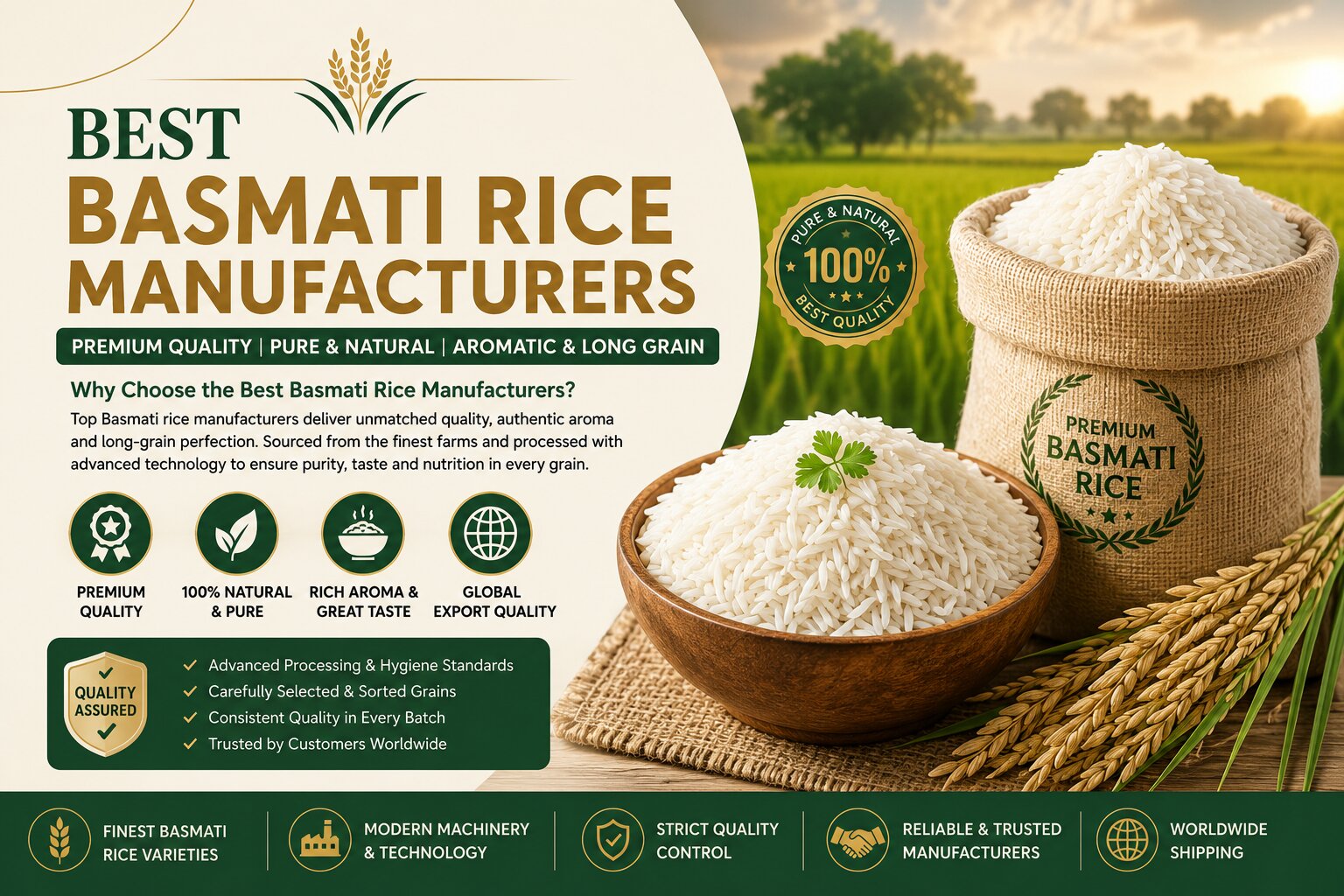
India is the world’s largest producer and exporter of basmati rice, supplying its long, aromatic grains to more than 150 countries. With so many suppliers in the market, buyers often struggle to tell an average supplier from a truly premium one. If you are an importer, distributor, retailer, or food-service business, knowing what to look for can protect your margins and your reputation.
This guide explains what separates the best basmati rice manufacturers in India from the rest, so you can source with confidence in 2026.
Why India Leads the Global Basmati Market
Basmati grows best in the Himalayan foothills and the fertile plains of Punjab, Haryana, Uttar Pradesh, Uttarakhand, and parts of Delhi, Himachal Pradesh, and Jammu & Kashmir. This region’s soil, climate, and water give basmati its signature aroma, extra-long grains, and fluffy texture. The GI (Geographical Indication) tag protects this heritage, which means genuine basmati is closely tied to its place of origin.
What Sets Premium Basmati Rice Manufacturers Apart
1. Strong Paddy Sourcing
Quality begins in the field. A reliable basmati rice manufacturer works directly with trusted farmers and buys paddy from quality-controlled mandis. Good sourcing ensures purity of variety, correct moisture levels, and minimal broken grains in the final product.
2. Proper Aging
Aging is what gives premium basmati its incredible elongation and non-sticky texture. Top exporters age their rice for 12 months or more in controlled storage, which reduces moisture and improves cooking quality. Ask your supplier about their aging process, since it directly affects how the rice cooks.
3. Modern Milling and Sorting Technology
Advanced mills use color sorters, destoners, graders, and polishers to deliver uniform grains with minimal breakage. Premium manufacturers invest in automated sorting to remove discolored, chalky, or damaged kernels, so every pack looks and cooks consistently.
4. Variety Range
Buyers have different needs, and leading suppliers offer a complete portfolio:
- 1121 Basmati: Extra-long grain, famous for exceptional elongation
- 1509 Basmati: Popular in steam form for its aroma and affordability
- Pusa Basmati: A classic, widely loved variety
- Sella, Steam, and Raw: Different processing options to suit regional preferences and cooking styles
5. Certifications and Compliance
Certifications show that a manufacturer takes safety seriously. Look for:
- FSSAI for domestic food safety compliance
- APEDA registration for export eligibility
- ISO and HACCP for quality management and hygiene
- BRC or IFS for buyers in demanding markets like the UK and EU
Also ask for lab reports covering pesticide residue limits, as many importing countries enforce strict standards.
6. Purity and Authenticity Testing
Adulteration is a real concern in the rice trade. Premium exporters use DNA testing to verify variety purity and provide test reports on request. This protects buyers from receiving mixed or inferior grain.
7. Packaging and Export Readiness
Good packaging preserves freshness during long shipments. Leading manufacturers offer PP bags, non-woven bags, jute, and retail-ready packs, along with private labeling for brands. They should also handle documentation, container loading, and shipping coordination smoothly.
Quick Checklist Before You Choose a Supplier
- Request samples and cook-test them yourself
- Verify certifications and export licenses
- Ask about aging duration and storage facilities
- Check minimum order quantities and delivery timelines
- Review customer references and export experience
- Confirm pricing transparency, including packaging and freight terms
Why Choose Shree Krishna Exports?
At Shree Krishna Exports, we are committed to delivering premium basmati rice that meets global standards. From careful paddy selection and natural aging to advanced milling and strict quality checks, every step is designed to give you consistent aroma, length, and taste in every shipment. Whether you need bulk supply, custom packaging, or private label solutions, our team works closely with you to make sourcing simple and dependable.
Final Thoughts
Choosing among the many basmati rice manufacturers in India doesn’t have to be difficult. Focus on sourcing practices, aging, technology, certifications, and export experience, and you will find a partner who delivers quality year after year.
About The Author