



Wedding jewellery is an important part of bridal styling. It can add detail to an outfit, highlight the neckline, frame the face, and bring different elements of a wedding look together. With so many designs, colours, finishes, and styles available, choosing the right pieces can sometimes feel difficult.
A practical approach is to consider the wedding outfit, function, comfort, face shape, colour palette, and how often the jewellery can be worn after the celebrations. Modern bridal styling is also moving toward versatile pieces that can be separated and styled with different outfits instead of being limited to one occasion.
Start With the Wedding Outfit
The outfit should be one of the first things to consider when selecting jewellery. Look at the neckline, embroidery, fabric, colour, and overall level of detail. A heavily embroidered lehenga may already have enough visual detail, so simpler jewellery can create better balance. On the other hand, a plain or lightly decorated outfit can support a more noticeable necklace or pair of earrings. The colour combination matters too. Warm shades such as red, maroon, orange, and mustard generally work well with gold-toned finishes. Pastel and cooler shades can be paired with white-metal finishes, pearls, or coloured stones. The goal is not to make every element identical. Instead, the jewellery and clothing should look connected without competing for attention.
Select Pieces Based on the Wedding Function
Different wedding events have different styling requirements. A bride may need several jewellery combinations rather than one heavy set for every occasion.
- Mehendi: The Mehendi function usually involves movement and activities, making lightweight jewellery a practical choice. Earrings, bracelets, bangles, or a small necklace can add colour without making the outfit uncomfortable.
- Sangeet: The Sangeet allows more freedom with statement pieces. Noticeable earrings, layered necklaces, or a distinctive bracelet can work well, particularly when the outfit has a clean neckline.
- Wedding Ceremony: The main ceremony is often associated with more traditional jewellery. A necklace paired with suitable earrings, bangles, and a headpiece can create a coordinated bridal appearance. However, wearing several heavy pieces together is not always necessary. Choosing one strong focal point and keeping the remaining accessories balanced can create a cleaner result.
- Reception: Reception styling can be more contemporary. A statement necklace or striking earrings can work with a saree, gown, or modern lehenga. Fewer but carefully selected pieces can create a polished appearance.
Consider the Neckline
The neckline can determine whether a necklace looks balanced or crowded. A choker can work well with open or wider necklines, while longer necklaces can complement outfits with deeper or more structured necklines. High-neck blouses may work better with earrings as the main accessory instead of adding a large necklace. The dupatta should also be considered. If it is heavily embroidered or placed around the neckline, a very large necklace may compete with the fabric.
Choose Earrings According to Your Hairstyle
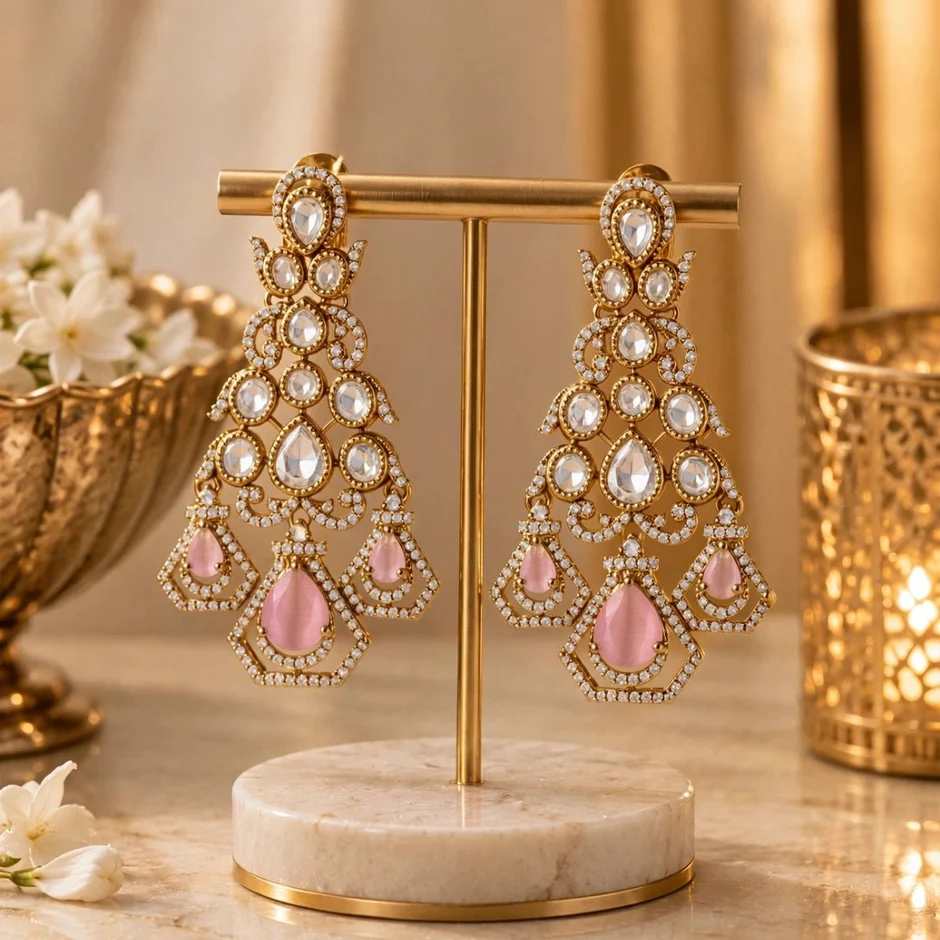
Hairstyle and earrings should be planned together. An updo leaves the ears and neckline more visible, which can make statement earrings stand out. Open hairstyles can provide a softer frame around the face. Long drops, chandeliers, studs, and traditional earrings can each create different effects depending on the hairstyle and outfit. If the earrings are large and detailed, consider keeping the necklace lighter. This allows the face to remain the main focus instead of creating too much visual weight around the upper body.
Pay Attention to Face Shape
Jewellery can be selected to complement facial proportions. Long earrings can create a lengthening effect on rounder faces, while rounded or wider designs can soften sharper facial features. Oval faces generally provide flexibility because many earring shapes can work well with this proportion. Necklace length can also influence the overall appearance. Shorter pieces draw attention toward the face and neck, while longer designs create a vertical visual line. These are styling guidelines rather than strict rules. Personal preference should always remain an important part of the final choice.
Think About Comfort
Wedding functions can last for several hours. Between ceremonies, photographs, meals, dancing, and meeting guests, uncomfortable jewellery can become difficult to manage. Check the weight of earrings before the event. Make sure necklaces sit securely and that bangles are neither too tight nor too loose. It is also useful to wear the jewellery with the complete outfit before the wedding. This gives you an opportunity to identify problems with movement, fitting, clasps, or placement. Comfort is especially important when choosing pieces that you plan to wear throughout a long ceremony.
Look for Versatile Designs
A useful jewellery collection should not necessarily be limited to one wedding outfit. Detachable and versatile designs can provide more styling options. For example, a necklace can sometimes be worn separately from its matching earrings. Statement earrings can be paired with a simple festive outfit, while a smaller necklace can work with a saree or ethnic suit. Modern jewellery styling increasingly encourages breaking up traditional matching sets and wearing individual pieces in different combinations. This can make a purchase more useful after the wedding as well.
Explore Traditional and Contemporary Styles
Indian weddings offer a wide range of jewellery traditions. Gold designs, Polki-inspired pieces, Kundan-style work, pearls, gemstones, temple-inspired motifs, and contemporary patterns can all be considered depending on the outfit. Gold remains a familiar choice for traditional wedding ceremonies, while coloured stones can introduce contrast to pastel or neutral clothing. Pearls can provide a softer appearance, whereas detailed stonework can create a stronger festive effect. Current styling also places greater emphasis on individuality rather than simply choosing the heaviest available design. Personal style, comfort, and the ability to reuse pieces are increasingly important considerations.
Consider the Long-Term Value
Wedding jewellery can be a significant purchase, so think beyond the wedding day. Ask yourself whether the necklace, earrings, bangles, or other pieces can work with future festive outfits. A design that can be separated into individual pieces may provide more styling possibilities. This approach also helps avoid buying several pieces that look almost identical. Instead, you can build a collection with different shapes, sizes, and levels of detail. The wedding accessories collection at bhavmayi can be considered when looking for jewellery options that can complement different wedding and festive outfits.
Always Do a Complete Trial
Before finalising the jewellery, wear everything together with the actual outfit. Include the blouse, lehenga or saree, dupatta, hairstyle, and footwear if possible. Take photographs from the front and side. This can help you see whether the jewellery is balanced in photographs as well as in person. Also check every clasp, hook, chain, stone setting, and fastening mechanism. Keep each item stored separately in a suitable jewellery pouch or box to reduce the chance of scratches or tangling.
FAQ’s
- How should I choose jewellery for my wedding outfit?
Start with the outfit’s neckline, colour, embroidery, and overall design. Then select jewellery that complements these features without creating too much visual detail. - Should all wedding jewellery match?
No. Jewellery does not have to match perfectly. Coordinating colours, finishes, and design elements can create a more natural and modern appearance. - Which jewellery is suitable for different wedding functions?
Lightweight pieces generally work well for active functions such as Mehendi, while more detailed designs can be used for the main ceremony. Reception styling can be adapted according to the outfit and personal preference. - How can I make wedding jewellery useful after the wedding?
Choose versatile pieces that can be worn separately. Earrings, smaller necklaces, bracelets, and rings can often be paired with festive or formal outfits after the wedding. - What should I check before buying wedding jewellery?
Consider the design, size, weight, comfort, outfit compatibility, fastening quality, and potential for future use. A complete trial with the wedding outfit can also help you make a better decision.
About The Author