





The best Indian CBSE schools in Ajman share a few things in common: verified board affiliation, exam results that hold up over several years, real support for children settling into a new country, and a multicultural mix that shows up in daily school life, not just a brochure stat.
That’s a different checklist than most parents start with.
Most guides to CBSE schools in Ajman read like a directory: founding year, address, a list of labs and playgrounds. Useful, but it doesn’t actually help you tell one “good” school from another. This guide covers what to look for instead, and why it matters.
What Actually Makes a CBSE School Good
A school’s marketing will always say “experienced faculty” and “world-class facilities.” Almost every school says that. What separates a genuinely strong Indian CBSE school from an average one is usually less visible on the homepage:
- Verified, active CBSE affiliation, not just a claim, an affiliation number you can check
- Exam results tracked over three or more years, not one strong batch
- Low staff turnover, a sign teachers are actually staying and building relationships with students
- Real inclusion and pastoral support, not a single counselor’s office that’s rarely used
- A multicultural student body reflected in actual programming, cultural weeks, twinning sessions, second-language options, not just a nationality count
None of this shows up in a five-line school profile. It shows up when you ask the right questions.
Why the CBSE Curriculum Still Matters for Expat Families
The Central Board of Secondary Education runs one of the largest and most portable school curricula in the world. For expat families in the UAE, that portability matters more than it might seem.
A CBSE curriculum school in the UAE keeps a child’s academic record recognised back in India and across most international university systems, which matters if a family relocates again, or if a student eventually applies to universities in India, the UAE, or further afield. Fewer curriculum gaps, fewer conversion headaches.
What an Indian School for Expat Families Should Actually Offer
Moving countries is disruptive for a child, even when the move is exciting. A school built for expat families should soften that, not just teach around it.
- Pastoral care built for children adjusting mid-year, not just at the start of term
- A second-language programme wide enough to match a genuinely mixed student body
- A festival and events calendar that reflects more than one community’s traditions
- Clear, responsive communication with parents who may themselves be new to the country
At The Royal Academy, this shows up in a six second-language offering and a school community made up of more than 40 nationalities, alongside a dedicated Inclusion Room for students who need additional pastoral or learning support.
Multicultural CBSE School Ajman: Why the Mix Actually Matters
A nationality count on a website is easy to publish. What’s harder, and more telling, is whether that mix translates into daily school life.
Look for evidence of actual cross-cultural programming: joint assemblies celebrating multiple national days, language weeks beyond Hindi and Arabic, and events like international twinning programmes that connect students with peers abroad. A multicultural CBSE school in Ajman should feel different to walk through, not just look different on paper.
Where Most “Top CBSE School” Guides Fall Short
Search for “best CBSE schools in Ajman” and most results follow the same format: a short paragraph per school, founding year, curriculum confirmation, a facilities list. It’s useful as a starting point, but it rarely answers the questions that actually matter for a decision this size.
- They rarely explain how to verify a school’s CBSE affiliation directly, rather than taking a website’s word for it
- They rarely show exam results across multiple years, only ever the most recent, most flattering one
- They almost never mention inclusion or SEN support in any real detail
- They treat “multicultural” as a number instead of describing what it looks like day to day
A parent choosing a school for the next 12 years deserves more than a directory entry.
Modern Facilities in Ajman’s CBSE Schools: What to Actually Check
Facilities lists are everywhere. What’s worth checking is what sits behind them:
- Are science and ICT labs used regularly across grades, or mostly for photos?
- Is there a dedicated auditorium or hall for co-curricular activity, which CBSE’s own assessment structure expects schools to support?
- Is there on-campus medical staff, and how quickly are parents contacted in an emergency?
- Are sports facilities actually used in a structured programme, or just present on a map?
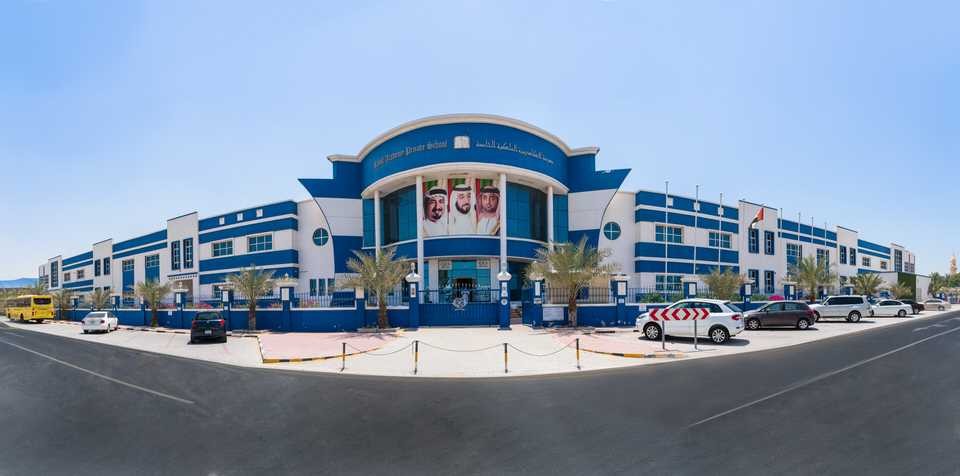
The Royal Academy’s campus, for example, includes smart classrooms, dedicated science and ICT labs, a full auditorium, on-campus medical care, and an active sports programme, all built around a curriculum that expects students to engage well beyond textbooks.
How to Actually Evaluate a CBSE School Before You Enrol
- Ask for the CBSE affiliation number and verify it independently rather than trusting the website copy
- Ask for Grade 10 and Grade 12 results across the last three years, not just the latest one
- Ask directly what inclusion or SEN support looks like, and who delivers it
- Ask how a child transferring mid-year from a different curriculum is supported academically
- Speak to current parents if possible, a school’s parent council is often a good starting point
A short campus tour rarely answers all of this. A direct conversation with admissions usually does.
FAQs
What age can a child start at an Indian CBSE school in Ajman?
Most CBSE schools in Ajman, including The Royal Academy, accept children from around age 4 into Kindergarten, continuing through to Grade 12. Exact cut-off dates vary by school and academic year, so it’s worth confirming directly with admissions.
Is the CBSE curriculum recognised outside India?
Yes. CBSE is widely recognised by universities across India, the UAE, and many international institutions, which is part of why it remains a popular choice for expat families who may relocate again or apply to universities outside the UAE.
How many nationalities typically study in Ajman’s Indian CBSE schools?
It varies by school, but well-established Indian CBSE schools in Ajman often host 30 to 40+ nationalities. The Royal Academy, for instance, has a student community spanning more than 40 nationalities.
What should I check before choosing a CBSE school for my expat child?
Beyond curriculum and facilities, check verified CBSE affiliation, multi-year exam results, real inclusion and pastoral support, and how the school handles a child joining mid-year. These details matter more long-term than a facilities list.
Final Thoughts
Choosing a CBSE school in Ajman is a decision that shapes more than just report cards. It shapes how quickly a child settles in, how supported they feel, and how well-prepared they are for whatever comes after Grade 12, wherever that ends up being.
Look past the founding year and the facilities list. Ask about affiliation, ask about results over time, ask about inclusion, and ask what a normal week actually looks like for a student. That’s the guide most listicles won’t give you.
If you’d like to see how these criteria play out on an actual campus, The Royal Academy welcomes families to book a tour and speak directly with admissions about what quality education looks like day to day.
About The Author