


My sister called it the pillow fortress. One under the bump, one between the knees, one behind her back, a rolled towel under her ribs, and still no comfortable way to lie there. She was about thirty weeks, hips aching, scrolling on her phone in the dark, and she told me she’d read three different opinions on massage in one hour. One said it was wonderful. One said never. One said ask your midwife, which is the only sensible thing anyone wrote.
So if you’ve typed pregnancy massage Oxford into a search bar at some ridiculous hour, I get it. Short version: for most healthy pregnancies a properly trained therapist is considered safe. Longer version has a few “but”s, and that’s what this is about. I’m not a clinician. Anything specific to your pregnancy goes past your midwife or GP, not past me.

It’s Not Just a Normal Massage With a Cushion
People assume that. It isn’t. A therapist who does pregnancy work changes a lot, the position, the pressure, which areas they spend time on, what oil they use. Your body is carrying more blood and fluid than usual, hormones like relaxin have loosened your ligaments, and your balance has shifted forward. Tissue just reacts differently.
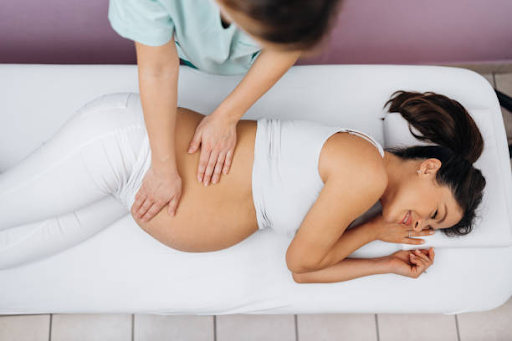
You’ll most likely lie on your side with cushions under the bump and between your knees. Some places have special pregnancy pillows or a table with a cut-out. Side-lying works perfectly well, though, and frankly it’s cosy. Pressure is usually gentler than a sports massage. Not feeble. Considered.
If someone starts digging in like you’re a rugby player in November, say so. You can stop anytime. That’s not rude, it’s your body.
Timing, Trimesters and the Back-Lying Problem
A lot of therapists wait until after the first trimester, around twelve to fourteen weeks. Early pregnancy is when miscarriage is most common anyway, and while massage doesn’t cause it, nobody wants a coincidence landing on their conscience. Plus nausea tends to settle by then, so you might actually enjoy yourself. Some therapists treat earlier, carefully. Some won’t. Ask what their policy is.
Later on, lying flat on your back for a long stretch can press on a large blood vessel and leave you dizzy or faint, so good therapists use side-lying or a propped, semi-reclined position instead. There’s no official schedule. One woman books monthly through the second trimester, another goes every two weeks near the end, another only when her back flares up. Whatever fits your body and your bank balance.
The Section to Read Twice
Some situations mean get the okay from your midwife or doctor first. High blood pressure, pre-eclampsia, unexplained bleeding, placenta praevia, a history of early labour, twins or more, poorly controlled gestational diabetes, or anything your care team has marked as high risk. If they’ve said “keep an eye on this,” tell them you’re thinking about massage and ask.
Clots are the other worry. Pregnancy raises the risk of deep vein thrombosis, so firm pressure on the calves is best avoided. One leg that’s painful, red, warm or swollen is not a wait-and-see problem. Get it checked that day. Same goes for a severe headache that won’t shift, vision changes, sudden puffiness in the face or hands, fluid leaking, regular tightenings, or the baby moving less than usual. Ring your maternity unit. Don’t book a treatment. And tell your therapist everything, even the bits that seem unrelated. They’d rather know.
When the Ache Isn’t Really Muscle
Here’s where I’d slow down. A lot of pregnancy pain gets called “tight muscles” when it’s something else. Pelvic girdle pain, sciatica, sore ribs, joints complaining as your posture changes. Massage can take the edge off, but it often won’t touch the cause. If the pain is sharp, tied to certain movements, makes rolling over in bed miserable, or keeps getting worse, get it properly assessed.
That’s where somewhere like Oxford Osteopaths could be worth a call. Osteopaths use hands-on techniques, adapted for pregnancy, to look at how your joints, muscles and posture are working together, and many see pregnant patients regularly. Check whoever you pick is registered with the General Osteopathic Council and has pregnancy experience. Ask what they’d do, what they wouldn’t, and when they’d send you back to your midwife. A specific answer is a good sign. A cheery “we’ll sort you out!” isn’t.
Finding Someone You Can Trust
Massage isn’t tightly regulated in the UK, which puts the homework on you. Look for training in pregnancy massage specifically, not a one-day add-on to a general qualification. Check they’ve got insurance. Some are registered with the CNHC or belong to professional bodies, which is voluntary but a reasonable sign.
Reviews help, if you read them properly. Do women say they felt safe? Did the therapist ask questions before touching anyone? Ring first. A good one asks your due date, your history, whether your midwife knows you’re coming. If you hear “just pop in whenever,” that’s a bit of a flag. Go with your gut too. You should feel fine saying stop, softer, I need the loo again. Every pregnant woman needs the loo again. It’s practically a law of nature.
What the Appointment Looks Like
It starts with a chat. Your pregnancy, medical history, where it hurts, what you’d like out of it. Feels like a form, matters a lot. Then you get settled on the couch, towels and cushions everywhere, and the therapist works on what you’ve agreed. Often back, shoulders, hips, legs, maybe a bit of foot work. Some therapists skip certain points around the ankles, evidence there is thin, but cautious is cautious.
Thirty to sixty minutes, usually. Warm hands, quiet music, nice smell, all lovely, and it still shouldn’t hurt. Afterwards drink water and go easy. A bit woozy or sleepy is normal. Mild achiness the next day isn’t unusual. Sharp or worsening pain, bleeding, leaking fluid, a headache that won’t go, less movement from the baby, ring your maternity unit straight away.
One Massage Isn’t a Plan
It helps for a day or two. Then your body goes back to carrying a growing human. If discomfort sticks around, think wider. Walking or swimming, good pillows in bed, a maternity support belt if somebody recommends one, comfortable shoes, breaks from sitting. Your midwife can refer you for NHS physiotherapy if pelvic girdle pain is getting in the way of daily life, and it’s worth pushing for that.
Money matters too, and no guilt about it. Ask about shorter sessions or packages. A few places offer help through workplace wellbeing schemes. Some women book a handful in the second trimester and a couple more near the end. And once the baby’s here, don’t forget yourself. Plenty of therapists offer postnatal sessions after your midwife or GP clears you. After weeks of carrying, feeding and hunching over something tiny, your shoulders will have opinions. Oxford Osteopaths and similar practices may also be worth asking about if something still hurts months after birth.
Conclusion
So, is pregnancy massage Oxford women ask about safe? For most healthy pregnancies, with a trained therapist and your midwife’s okay where it’s needed, yes. Wait until after the first trimester if your therapist prefers, tell them everything, and speak up the second something feels wrong. If your pain seems more about joints than muscle, or just won’t shift, see a registered professional instead of hoping a rub will fix it. Pregnancy is a lot already. You’re allowed a bit of comfort and some straight answers. So ask the awkward questions, take your time, and don’t let a forum at 2am make the decision for you.
About The Author