




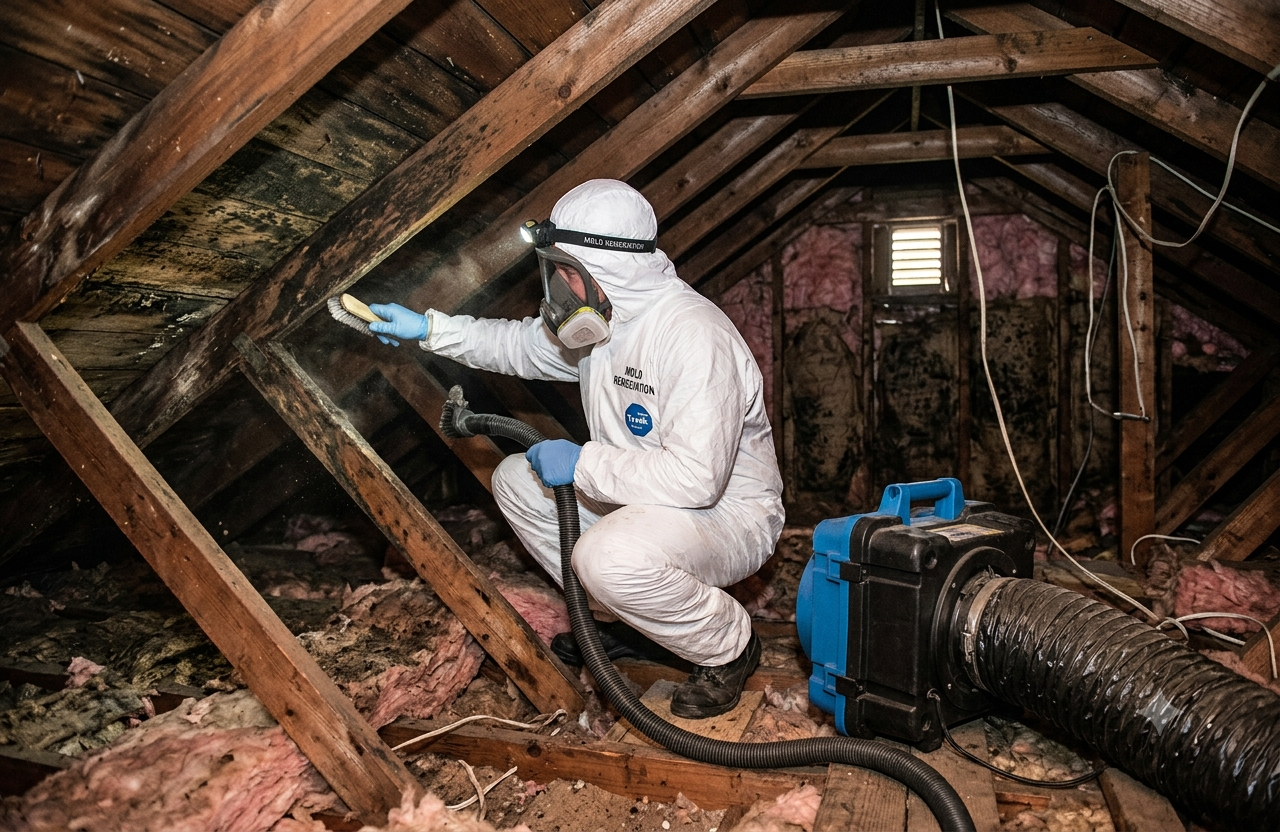
Mold in an attic is more than an unpleasant sight. It can indicate excess moisture, poor ventilation, roof leaks, or condensation problems that may continue damaging your home if left untreated. Because attics are often dark, warm, and poorly inspected areas, mold can develop unnoticed for months or even years.
Attic mold removal is the process of identifying the source of moisture, safely removing mold growth, cleaning affected materials, and taking preventive measures to reduce the chance of recurrence. Simply wiping visible mold away may provide temporary results, but it does not solve the underlying moisture problem.
For homeowners, understanding why attic mold develops and how professional removal works can help protect the structure of the house, improve indoor environmental quality, and prevent costly repairs.
What Causes Mold to Grow in an Attic?
Mold requires moisture, an organic food source, and suitable temperatures to grow. Attics can provide all three conditions when moisture control is inadequate.
Poor Attic Ventilation
Proper ventilation allows warm, humid air to escape from the attic. When ventilation is insufficient, moisture can become trapped. Over time, this can create condensation on roof sheathing, insulation, and other surfaces.
Roof Leaks
Damaged shingles, deteriorated flashing, blocked drainage systems, or other roofing problems can allow water to enter the attic. Even a small leak can create enough moisture for mold to develop.
Bathroom and Kitchen Exhaust Fans
Exhaust fans should normally vent outdoors. If a bathroom or kitchen fan releases humid air directly into the attic, moisture can accumulate and increase the risk of mold growth.
Condensation
During colder weather, warm indoor air can enter a poorly insulated attic and meet cold roof surfaces. This temperature difference can produce condensation, creating an environment where mold can thrive.
What Are the Signs of Attic Mold?
Attic mold is not always immediately visible. Homeowners should watch for several warning signs.
Common indicators include:
- Black, green, brown, or gray spots on wood
- Musty or earthy odors
- Discolored roof sheathing
- Damp or compressed insulation
- Excessive attic humidity
- Water stains on wood or insulation
- Peeling or damaged materials
- Recurring moisture or condensation
For example, a homeowner may notice a musty smell near an upper floor without seeing mold inside the living space. An attic inspection could reveal mold growing underneath the roof deck because of long-term condensation.
Why Should Attic Mold Be Removed Quickly?
Ignoring mold can allow the affected area to become larger and more difficult to address. Mold can also indicate a continuing moisture problem that may damage building materials.
Protecting the Structure
Persistent moisture can contribute to deterioration of wood components. If moisture continues for an extended period, repairs may become more complicated and expensive.
Improving Indoor Environmental Quality
Air movement between the attic and living areas can potentially carry mold particles or odors into other parts of the home. Addressing attic mold can therefore be an important part of maintaining a healthier indoor environment.
Preventing Recurring Problems
Professional removal should focus on both the visible mold and the conditions that allowed it to grow. If a roof leak or ventilation issue remains unresolved, mold may return after cleaning.
How Does Professional Attic Mold Removal Work?
A professional approach generally begins with an assessment rather than immediately removing visible mold.
Step 1: Inspect the Attic
The affected area is examined to determine the extent of mold growth and identify possible moisture sources. Professionals may inspect roof sheathing, insulation, ventilation openings, and other areas where moisture can accumulate.
Step 2: Identify the Moisture Source
Finding the cause is essential. This may involve checking for roof leaks, condensation, inadequate ventilation, plumbing issues, or improperly vented exhaust fans.
Step 3: Contain the Affected Area
Depending on the size and location of the problem, appropriate containment measures may be used to reduce the spread of mold particles during removal.
Step 4: Remove or Clean Affected Materials
Materials that can be effectively cleaned may be treated using suitable remediation methods. Heavily contaminated or damaged porous materials may require removal and replacement.
Step 5: Address Moisture and Ventilation Problems
Repairs should be completed before or alongside mold remediation. Improving ventilation, correcting leaks, and controlling indoor humidity can help prevent future growth.
Step 6: Verify the Results
After remediation, the attic should be checked to confirm that the visible mold problem has been addressed and that moisture conditions have improved.
Can Homeowners Handle Attic Mold Removal?
Small, isolated areas of mold may sometimes be manageable with appropriate precautions. However, attic mold can be difficult to assess because it may cover larger areas than initially visible.
Professional assistance can be especially valuable when:
- Mold covers a large area
- The source of moisture is unknown
- Insulation is heavily affected
- There has been significant water damage
- Mold keeps returning after cleaning
- The attic has poor accessibility
- Building materials appear damaged
Attempting to clean extensive mold without addressing the underlying cause may result in recurring growth and unnecessary expense.
How Can You Prevent Attic Mold From Returning?
Prevention is an important part of successful attic mold removal. Once the existing problem has been addressed, homeowners should take steps to control moisture.
Improve Ventilation
Make sure attic ventilation is appropriate for the home’s design. Vents should not be blocked by insulation or other materials.
Repair Roof Problems
Inspect the roof regularly for damaged shingles, flashing problems, or other areas where water could enter.
Check Exhaust Fans
Bathroom and kitchen exhaust fans should discharge to the exterior rather than into the attic.
Maintain Proper Insulation
Adequate insulation can help reduce temperature differences that contribute to condensation. It should also be installed correctly to avoid blocking intended ventilation pathways.
Monitor Moisture
Keeping indoor humidity at reasonable levels and watching for condensation can help reduce moisture-related problems throughout the home.
What Should You Look for in an Attic Mold Removal Professional?
Choosing an experienced professional can make the remediation process more effective. Look for a service provider that offers thorough inspection, explains the source of the moisture problem, and provides a clear plan for remediation.
A reliable professional should distinguish between simply cleaning visible mold and addressing the conditions that caused it. Ask about the inspection process, affected materials, moisture control, and recommendations for preventing recurrence.
It is also useful to request a written explanation of the work that will be performed. This can help homeowners understand which materials will be cleaned, which may need replacement, and what repairs are recommended.
Why Is Professional Attic Mold Removal a Long Term Solution?
Effective attic mold removal is not simply about making mold disappear from visible surfaces. A long-term solution requires understanding why mold developed in the first place.
Consider an attic where mold appears because warm, humid air from the home is entering the space and condensing on cold roof sheathing. Cleaning the mold without improving ventilation or addressing air leakage may only provide a temporary result. Once similar conditions return, mold can grow again.
A comprehensive approach combines inspection, moisture control, appropriate cleaning or removal, and preventive measures. This helps homeowners address both the immediate problem and the conditions responsible for it.
Conclusion
Attic mold can develop quietly, but its presence should not be ignored. Roof leaks, condensation, poor ventilation, and excessive moisture can all contribute to mold growth and potentially damage attic materials over time.
Effective attic mold removal begins by identifying the source of moisture and assessing the extent of the problem. Professional remediation may include inspection, containment, cleaning or removal of affected materials, moisture control, and preventive improvements.
Homeowners can reduce the risk of recurring mold by maintaining the roof, improving attic ventilation, checking exhaust fans, maintaining appropriate insulation, and monitoring moisture. Taking action early can help protect the home and prevent a small attic problem from becoming a much larger repair project.
About The Author