


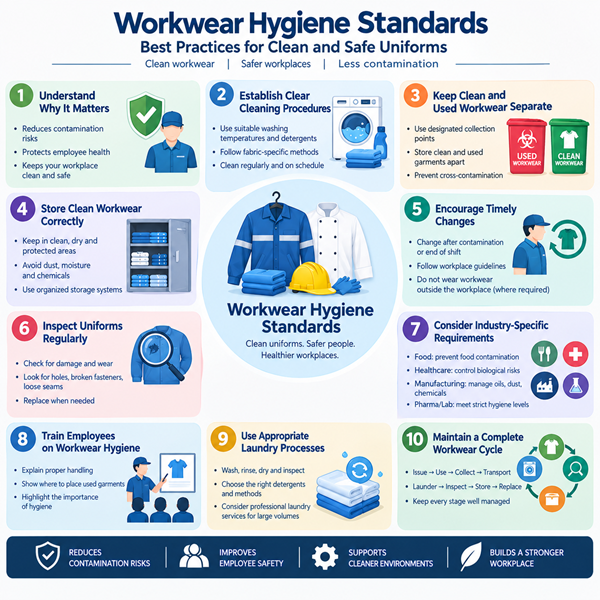
Workwear is an important part of many professional environments. Uniforms help employees look presentable, identify different roles, and, in some industries, provide protection against workplace hazards. However, simply providing employees with uniforms is not enough. Workwear must also be cleaned, handled, stored, and maintained correctly to support a hygienic working environment.
Following appropriate workwear hygiene standards can help businesses reduce contamination risks and keep uniforms suitable for everyday use. From commercial kitchens and healthcare facilities to manufacturing plants and service businesses, good workwear practices can contribute to cleaner and safer workplaces.
Why Workwear Hygiene Matters
During a normal working day, uniforms can come into contact with dust, dirt, oils, food particles, chemicals, moisture, and microorganisms. The level of exposure depends on the type of work being performed.
A garment used in an office may experience relatively little contamination, while clothing worn by a food handler, healthcare worker, or industrial employee may encounter considerably greater risks.
When contaminated clothing is not cleaned or handled properly, it can potentially transfer unwanted substances to other surfaces. Employees may also carry contaminants into different workplace areas or outside the workplace.
A consistent approach to workwear hygiene helps control these risks and creates clear expectations for employees and managers.
Establish Clear Cleaning Procedures
One of the most important aspects of workwear hygiene is regular and appropriate laundering. Cleaning requirements should reflect the type of workwear and the environment where it is used.
Garments exposed to food, chemicals, oils, biological materials, or heavy dirt may require more controlled cleaning procedures than standard uniforms.
Businesses should establish clear guidelines covering when garments need to be cleaned, how used workwear should be collected, and how clean garments should be returned to employees.
Washing should also be carried out using appropriate processes for the fabric and type of contamination. Using unsuitable temperatures, detergents, or drying methods can affect both cleanliness and garment condition.
Keep Clean and Used Workwear Separate
Separating clean and used uniforms is a basic but essential hygiene practice.
Used workwear can carry dirt, microorganisms, chemical residues, and other contaminants. Placing these garments next to freshly cleaned clothing creates an opportunity for contamination to spread.
Businesses can establish designated collection areas for used garments and separate storage areas for clean workwear. Clearly labelled containers can make the process easier for employees to follow.
This separation should continue throughout the workwear cycle, including collection, transportation, laundering, storage, and distribution.
Store Clean Workwear Correctly
Proper storage is another important part of workwear hygiene standards. Clean garments should be protected from dust, moisture, chemicals, and contact with used clothing.
Storage areas should be clean, dry, and organized. Uniforms should not simply be left on floors, machinery, or other surfaces where they can become contaminated.
Where employees receive individual uniforms, businesses can also use organized distribution systems to minimize unnecessary handling. This helps maintain garment cleanliness between laundering and use.
Good storage practices are particularly important in workplaces where contamination control is a major concern.
Encourage Employees to Change Workwear When Necessary
Employees should understand when a uniform needs to be replaced or sent for cleaning. Wearing the same garment for extended periods despite visible dirt, spills, or contamination can undermine workplace hygiene efforts.
Businesses can provide straightforward guidance about changing workwear after contamination incidents, at the end of shifts, or according to the requirements of the particular workplace.
Employees should also understand whether workwear can be worn outside the workplace. In some environments, restricting the movement of work garments between work and personal areas may help reduce the potential spread of contaminants.
Inspect Uniforms Regularly
Cleaning alone cannot keep workwear effective indefinitely. Garments naturally experience wear and tear over time.
Regular inspections can identify problems such as holes, damaged seams, broken fasteners, worn reflective strips, or fabric deterioration. Damaged workwear may be more difficult to clean effectively and may no longer provide the intended level of protection.
A simple inspection process allows businesses to identify garments that need repair or replacement before they become a larger issue.
For protective workwear, inspection can be especially important because garment condition may directly affect its protective function.
Consider Industry-Specific Requirements
Not every workplace requires the same approach to workwear hygiene.
Food preparation and processing environments often place strong emphasis on preventing contamination of food products. Healthcare environments may require procedures that address exposure to biological materials. Manufacturing facilities may need to manage exposure to oils, dust, grease, and industrial substances.
Laboratories and pharmaceutical facilities can have particularly controlled environments where clothing requirements form part of broader contamination-control procedures.
Therefore, businesses should consider their specific activities and risks when developing workwear hygiene standards rather than applying exactly the same procedures to every workplace.
Train Employees on Workwear Hygiene
Even well-designed hygiene procedures are only effective when employees understand and follow them.
Training should explain basic workwear requirements, including how uniforms should be worn, where used garments should be placed, and how clean workwear should be stored.
Employees should also understand why these procedures matter. When workers know that proper garment handling can help reduce contamination, they may be more likely to follow workplace requirements consistently.
Short training sessions, written instructions, signs, and periodic reminders can reinforce good practices without making procedures unnecessarily complicated.
Use Appropriate Laundry Processes
The laundry process should be suitable for the garments being cleaned. Different fabrics and types of contamination may require different approaches.
A suitable laundering process can include appropriate washing, rinsing, drying, inspection, and folding before garments are returned for use.
For organizations handling large volumes of uniforms, professional laundry services may provide structured systems for collecting, cleaning, inspecting, and distributing workwear.
Regardless of whether laundering takes place internally or through an external provider, the process should be consistent and appropriate for the workplace.
Maintain a Complete Workwear Cycle
Effective workwear management involves more than washing uniforms. Businesses should consider the complete journey of a garment.
This includes issuing workwear to employees, using it correctly, collecting used garments, transporting them safely, laundering them, inspecting their condition, storing clean garments, and replacing items when necessary.
Looking at the entire cycle can help businesses identify gaps in their current procedures.
For example, a company may have an effective laundry process but poor storage practices. Another workplace may have clean storage facilities but no clear system for collecting contaminated garments.
Addressing every stage creates a more consistent approach to hygiene.
Building Better Workwear Hygiene Practices
Maintaining clean and safe uniforms does not have to involve complicated procedures. The most effective systems are often based on clear responsibilities, consistent routines, appropriate laundering, proper storage, regular inspections, and employee awareness.
Businesses should review their existing practices regularly and make adjustments when workplace conditions or operational requirements change.
Ultimately, workwear hygiene standards provide a practical framework for managing workplace clothing from initial use through cleaning, storage, inspection, and replacement. When these practices are applied consistently, organizations can help reduce contamination risks, protect garment quality, and support a cleaner working environment.
Clean workwear is therefore more than an issue of appearance. In many workplaces, it is an important part of maintaining effective hygiene practices and creating a professional, controlled environment for employees and customers alike.
About The Author