


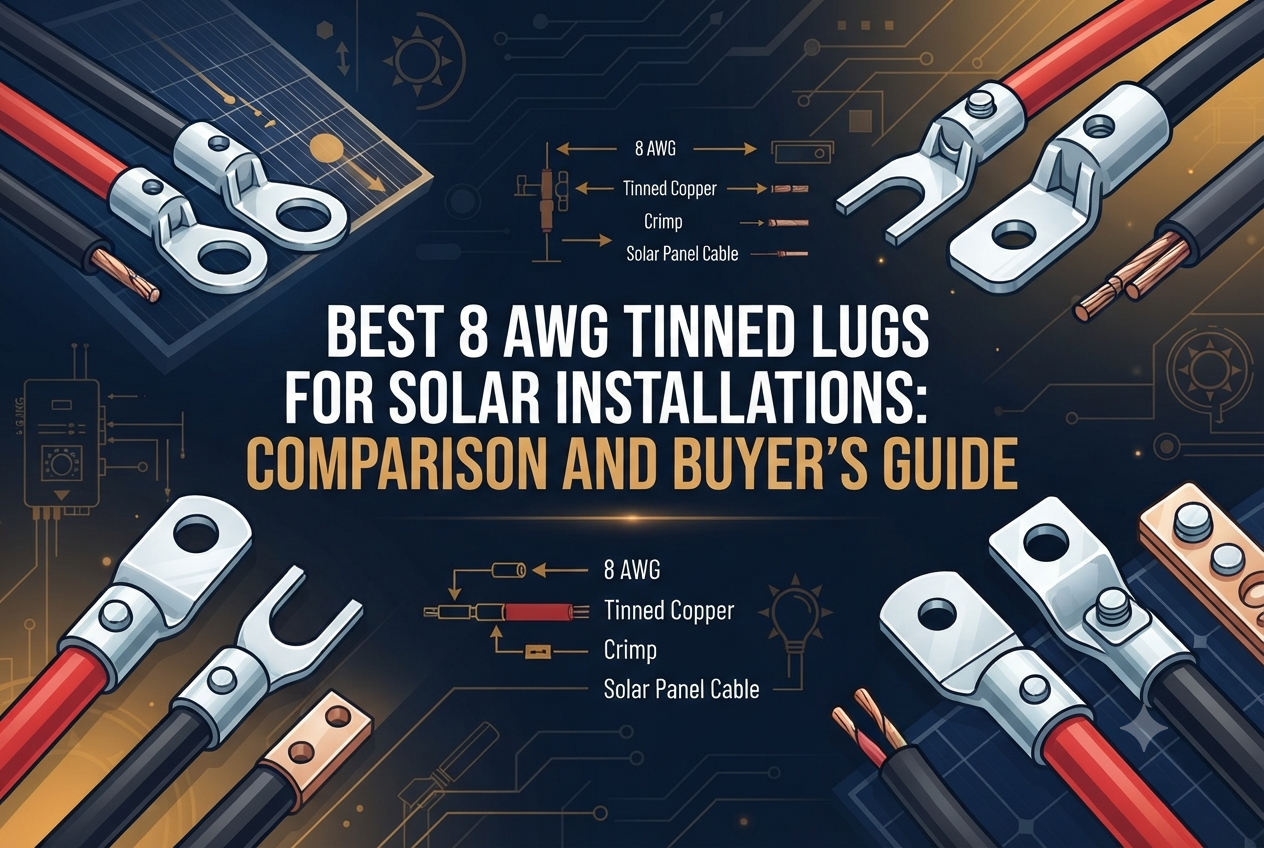
Solar wiring doesn’t usually fail because someone picked the wrong colour of cable. It is often the small connection at the end that causes trouble later. An exposed terminal gets damp, a crimp isn’t quite right, or a lug starts corroding after months outside. For solar setups where the wiring will see heat, humidity and changing weather, an 8 awg tinned lug can be a practical choice. But not every lug sold for 8 AWG cable is the same, and a few details are worth checking before buying.
First, Get the Cable Size Right
8 AWG is a fairly common cable size for smaller solar, battery and DC applications. It is used where the current demand is higher than what smaller-gauge wiring can comfortably handle, without stepping all the way up to the much heavier cables used in large battery banks.
The cable gauge, however, is only one part of the equation.
Cable length matters. So does the expected current, the installation method and the acceptable voltage drop. A short run between a battery and nearby equipment is a very different job from a long cable run across a vehicle, RV or off-grid installation.
So before looking at lugs, make sure 8 AWG is actually the cable size your system calls for.
Once that is settled, the terminal becomes much easier to choose.
Why Tinned Copper?
Bare copper has a lot going for it. It conducts well, is easy to work with and has been used in electrical wiring for a very long time.
Solar installations aren’t always kind to exposed copper, though.
A cable might run through a dry indoor cabinet, but the terminal itself could be sitting somewhere much less protected. Roof-mounted equipment deals with rain, condensation, dust and strong temperature swings. Ground-mounted systems have their own collection of moisture and dirt to contend with.
Tin plating adds a protective layer over the copper.
That doesn’t turn a terminal into a corrosion-proof component. It simply gives the exposed copper another layer of protection, which can be useful when the connection has to spend years dealing with outdoor conditions.
For solar work, that is a pretty reasonable trade-off.
Not Every 8 AWG Lug Is Built the Same
Two lugs can both be labelled for 8 AWG cable and still be quite different.
Look at the barrel first.
The cable should fit properly inside it without having to force the conductor in or leaving a large amount of empty space around it. A loose fit can make getting a good crimp more difficult.
Then look at the terminal pad and stud hole.
A battery terminal, busbar or grounding point might use a 1/4-inch, 5/16-inch, 3/8-inch or another stud size. The lug needs to match that hardware. Getting the cable gauge right but the stud hole wrong doesn’t get you very far.
This is one of those measurements that takes less than a minute to check and can save a frustrating return later.
What Makes a Good Lug for Solar?
For a solar installation, I’d look at four things before getting distracted by packaging or claims on the product page.
Material:
Tinned copper is useful where moisture and corrosion are concerns.
Cable fit:
The barrel should be designed for the actual cable gauge being used.
Stud size:
The hole needs to match the hardware at the other end.
Construction:
A solid terminal with a properly formed barrel and sufficient material around the stud hole is preferable to something that feels flimsy in your hand.
There is another detail that gets overlooked: the lug needs to suit the way you intend to install it. A terminal used inside a battery enclosure has different exposure than one sitting underneath a solar panel in an outdoor array.
8 AWG Lugs for Solar Panels vs Battery Connections
The phrase “solar lug” can be misleading because solar systems have several different connection points.
A panel installation might use grounding hardware specifically designed to attach a conductor to an aluminum mounting rail. That is a different job from terminating an 8 AWG battery cable.
Battery and inverter connections typically involve a cable lug attached to a stud, terminal or busbar. The physical requirements are different.
Don’t choose a lug just because it appears in a solar category.
Look at what you’re actually connecting.
If the cable is running from a battery to an inverter, for example, the lug needs to match the battery or busbar hardware. If the cable is being terminated at another piece of equipment, check that connection instead.
The name of the product category matters less than the actual connection you’re making.
Bare Copper or Tinned?
This is probably the comparison most buyers are trying to make.
Bare copper is perfectly useful in many installations. If a terminal is inside a dry enclosure and protected from the elements, there may be little reason to pay extra for plating.
Move that same connection outdoors and the calculation changes.
A rooftop solar system spends years dealing with weather. Even when the main equipment is protected, terminal connections can still encounter condensation and humidity. Tinning gives the copper surface additional protection in those conditions.
That doesn’t mean every solar connection automatically needs a tinned terminal.
It means the installation environment should have a say in the decision.
The Crimp Can Make or Break the Connection
A good terminal cannot rescue a bad crimp.
The conductor needs to be fully inserted into the barrel before crimping. The correct crimping tool should be used for the terminal and cable. Once the crimp is complete, the cable should not pull out or rotate freely inside the lug.
This sounds basic, but rushed cable work is where many otherwise good components get let down.
For larger solar and battery systems, follow the lug manufacturer’s recommended crimp method and tooling.
Heat Shrink Is Worth Considering
The crimp is not the only place worth protecting.
The point where the cable enters the lug can become a pathway for moisture, particularly when the cable is installed outdoors or somewhere that sees condensation.
Adhesive-lined heat shrink can help seal that area and provide some mechanical support around the cable entry. It also gives the finished cable a cleaner appearance.
It isn’t a replacement for proper crimping. Think of it as another layer of protection around a connection that has already been made correctly.
For outdoor solar work, that extra bit of protection is usually easier to add during installation than later.
A Quick Comparison Before You Buy
| Feature | Bare Copper Lug | Tinned Copper Lug |
| Electrical conductivity | Excellent | Excellent |
| Corrosion protection | Basic | Better suited to damp environments |
| Indoor battery enclosure | Suitable | Suitable |
| Outdoor solar use | Depends on protection | Well suited |
| Marine/coastal conditions | Requires more care | Better choice for exposure |
| Cost | Usually lower | Usually higher |
| Long-term outdoor use | Depends heavily on installation | Added protection can be worthwhile |
The table doesn’t mean one option is automatically right for every solar system. Installation conditions still matter.
If the terminal is protected from moisture, bare copper may do the job. If it is going to spend years exposed to humidity and outdoor conditions, paying more for a plated terminal may make sense.
What About Stud Size?
Don’t leave this until checkout.
An 8 AWG cable doesn’t tell you the size of the hole needed in the lug. That depends on what the lug is being attached to.
Measure the stud or bolt before ordering. If you’re replacing an existing terminal, measuring the old one is usually the quickest route.
Also consider the space around the connection. A lug may technically fit the stud but still be awkward to install if the cable has to make a sharp bend immediately afterward.
That matters with solar and battery cables because heavier wire doesn’t always appreciate being forced into position.
Where an 8 AWG Tinned Lug Makes Sense
There is no magic application list where these terminals suddenly become necessary.
They make sense when you have an 8 AWG cable and want a protected copper termination for an application where moisture or corrosion is a concern.
That could be a solar battery connection, an RV power system, an off-grid setup, an inverter installation or another DC application.
The important part is matching the terminal to the cable and the connection point rather than buying based on the word “solar” alone.
A Better Way to Choose
If you’re comparing several options, don’t start with the cheapest price.
Start with the connection.
Check the cable gauge. Measure the stud. Look at where the lug will be installed. Decide whether the connection will be exposed to moisture. Then look at the lug material and construction.
For outdoor installations, those few checks tell you much more than a product title does.
And if you’re working with 8 AWG cable in a solar or battery system, an 8 gauge tinned lug gives you a protected copper termination without jumping to unnecessarily heavy hardware. Match it properly to the cable and stud, make the crimp correctly, protect the cable entry and you have a connection that is ready for the less glamorous part of solar ownership: sitting outside and doing its job year after year.
FAQs
Are tinned copper lugs better for outdoor solar installations?
They can be a good choice for outdoor installations because the tin coating provides additional protection to the copper surface. This can be useful where terminals are exposed to humidity, condensation and changing weather.
Can I use an 8 AWG lug on any 8 AWG cable?
Not necessarily. The lug barrel needs to be suitable for the particular cable construction, and the stud hole must match the hardware where the terminal will be installed.
What size stud fits an 8 AWG lug?
There isn’t one universal stud size. 8 AWG terminals are available with different hole sizes, so check the battery terminal, busbar or equipment connection before ordering.
Do I need heat shrink on a solar cable lug?
It can be useful, especially when the connection is exposed to moisture. Adhesive-lined heat shrink can help protect the cable entry and provide additional strain relief, but it does not replace a properly made crimp.
Can bare copper lugs be used for solar wiring?
Yes. Bare copper can work well in protected and relatively dry installations. For connections exposed to outdoor moisture or corrosive conditions, tinned copper provides an additional layer of protection.
How do I know if my 8 AWG lug is properly crimped?
The conductor should be fully seated inside the barrel, and the finished crimp should hold the cable firmly without movement or loose strands. Use the crimping method and tooling recommended for the specific terminal.
Are these lugs suitable for battery-to-inverter connections?
They can be, provided the lug is correctly sized for the cable and the inverter and battery connection points. Always check the equipment manufacturer’s requirements before selecting the terminal.
About The Author