




Why Winter Is the Highest-Risk Season for Empty Rentals
Winter creates a specific set of risks for vacation rentals that empty out between bookings. Cold weather puts continuous stress on heating systems, plumbing, and building envelopes that warmer seasons do not produce. A heating system failure in summer is annoying. The same failure in winter can be catastrophic, leading to frozen pipes that burst, water damage that spreads through floors and walls, and repair bills that reach into the tens of thousands of dollars. Hosts who own properties in cold climates face this risk every year, and the properties most exposed are those that sit empty for days or weeks between guests during the slow winter season.
The unsettling reality is that the most damaging winter incidents are usually preventable with the right monitoring. A heating system that gradually fails sends signals before it stops completely. A property dropping into a dangerous temperature range can be saved by quick intervention. A frozen pipe at the early stage can be addressed before it bursts. The window between early warning and catastrophic failure is often hours rather than minutes, which is exactly the timeframe that smart sensors with real-time alerts handle well. Hosts without continuous monitoring tend to discover problems only after damage has already occurred, often when a neighbor calls about water flowing into adjacent units.
What Causes Most Winter Disasters in Vacation Rentals
Most winter disasters in vacation rentals trace to a small set of root causes. Heating system failures are the most common starting point, whether from equipment age, fuel supply problems, or thermostat malfunctions. Power outages during winter storms cause the same effect even when equipment is working properly. Insufficient insulation in specific areas like exterior walls, attics, or basements creates cold spots where pipes freeze even when overall heating remains adequate. Guests inadvertently turning off or significantly lowering heat before departure leave properties to face cold weather without sufficient protection.
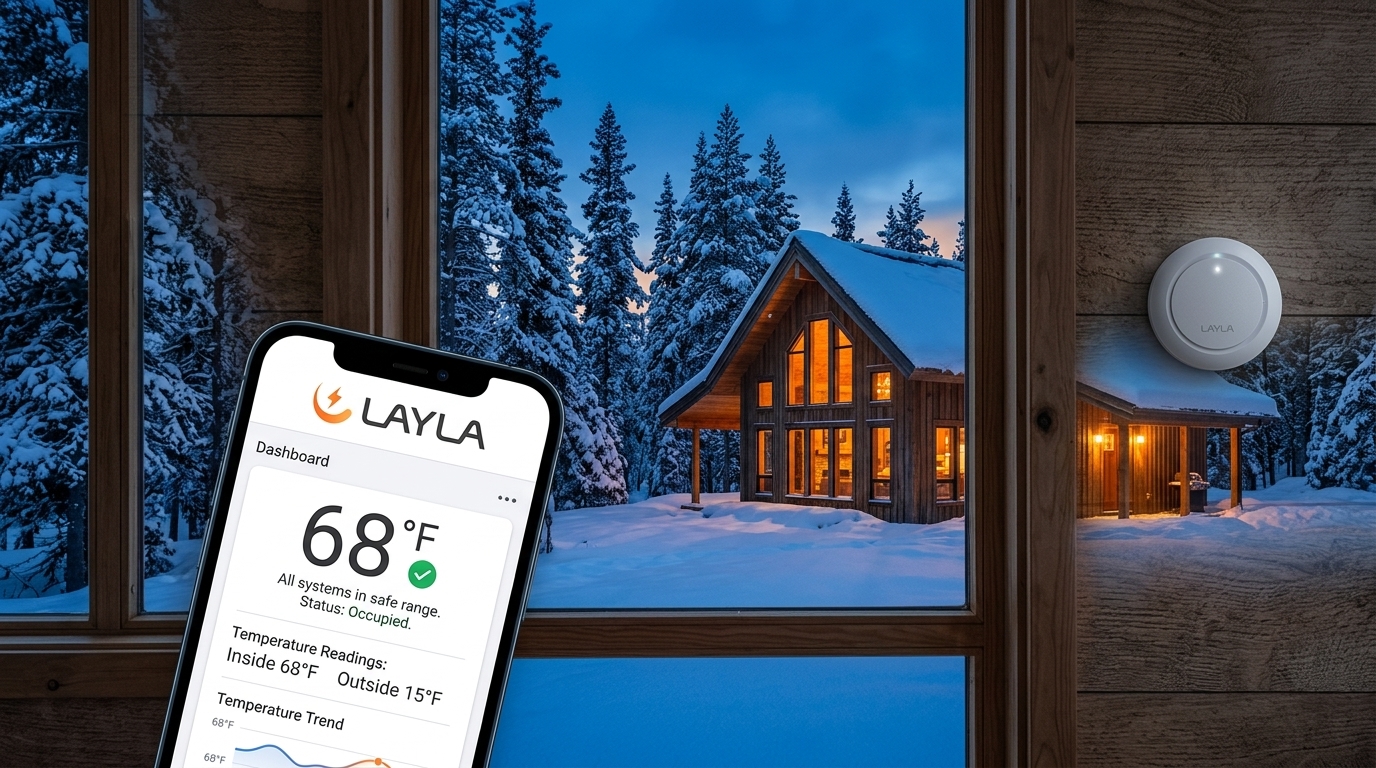
Each of these root causes produces a similar progression. Indoor temperatures drop below safe ranges, usually between 4°C and 10°C depending on local conditions. Plumbing in cold spots reaches freezing. Water expands as it freezes, putting pressure on pipes that eventually burst at weak points. Burst pipes flow water into walls, floors, and ceilings until the leak is discovered or until the water supply is shut off. The damage by that point is severe. Continuous temperature monitoring catches this entire chain at the very beginning, when intervention costs almost nothing. The Layla smart sensor provides exactly this kind of early temperature warning that gives hosts time to respond.
Setting Temperature Thresholds for Winter Protection
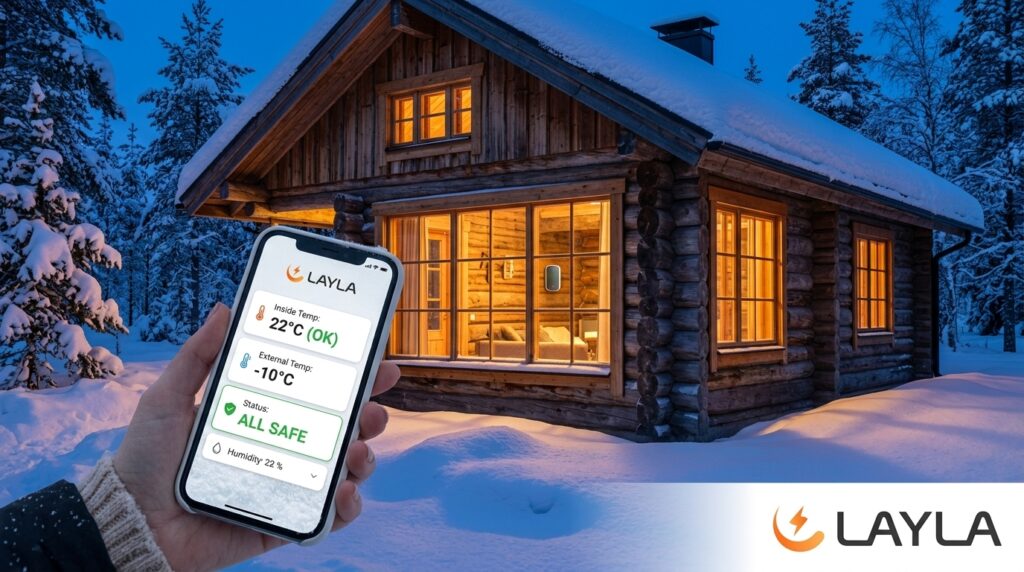
Smart sensors allow hosts to set specific temperature thresholds that trigger immediate alerts when the property drops below safe levels. The right threshold varies by location and property type, but most hosts in cold climates set their winter low alert at around 10°C as a first warning and a second alert at around 6°C as an urgent warning. The first warning gives the host time to investigate and respond before conditions become critical. The urgent warning indicates that immediate action is required to prevent damage.
Setting these thresholds correctly matters more than hosts often realize. Thresholds set too high produce false alarms during normal between-guest cooling that hosts are intentionally allowing. Thresholds set too low fail to give meaningful warning before damage. Thresholds tuned appropriately to the specific property catch real problems while avoiding alert fatigue. Most modern sensor apps make this configuration straightforward, and the time spent thinking through appropriate thresholds for winter protection pays off whenever the season produces challenging conditions.
HVAC Automation as a Winter Safety Layer
Smart HVAC automation through occupancy-based eco mode adds an important winter safety layer beyond simple temperature monitoring. When guests depart and the property becomes vacant, eco mode maintains a safe minimum temperature rather than dropping all the way to whatever guests might have left. The maintained temperature is high enough to protect against freezing while low enough to save meaningful energy compared to keeping the property at full guest-comfort settings.
This automation works particularly well in winter because it eliminates the most common cause of preventable freezing: guests leaving with the heat dramatically lowered or off entirely. Without automation, hosts must remember to check thermostat settings between guests and adjust them manually, which is unreliable across busy hosting schedules. With automation, the system handles the transition automatically and consistently. The combination of smart HVAC control and continuous temperature monitoring produces a winter protection layer that is far more reliable than manual processes alone.
Preparing Properties for Winter at Season Start
Winter protection starts before the season begins rather than during a crisis. Smart hosts use the late autumn weeks to verify that their monitoring systems are working correctly, that alert thresholds are configured for winter conditions, that emergency response contacts are current, and that the property itself is prepared for cold weather. Pipe insulation, weatherstripping, attic insulation, and HVAC servicing all reduce the underlying risk that monitoring is meant to catch.
A useful pre-winter checklist includes confirming that all sensors are operating and connected to WiFi, testing alert delivery to verify that notifications actually reach the host’s phone, reviewing alert thresholds and adjusting for winter conditions, identifying who will respond if the host is unavailable during a winter incident, and confirming local emergency contractors who can respond to plumbing or heating emergencies. This preparation work takes a few hours in autumn and prevents the most damaging winter scenarios. Hosts using Layla’s privacy-first monitoring can verify all sensor categories through the Layla Eco app to ensure complete winter readiness.
Power Outage Considerations
Winter storms often cause power outages that affect both heating systems and the smart sensors meant to monitor them. Hosts in regions with frequent storms should think carefully about how their setup handles power loss. Sensors with battery backup continue monitoring during outages and alert hosts about power loss itself, which is often a leading indicator of broader problems. WiFi connectivity is the harder challenge, since most home networks fail during outages even when sensors have battery power.
Some hosts add cellular backup to their network setup so monitoring continues during local outages. Others rely on neighbor relationships to physically check the property during extended outages. Still others use emergency response contractors who include power-outage property checks in their service offerings. The right approach depends on the property location, the frequency of outages, and the host’s risk tolerance. Whatever the approach, having a deliberate plan for power-outage scenarios is part of mature winter preparation rather than something to figure out during the first storm.
The Cost Savings From Winter Disaster Prevention
The financial case for winter property monitoring becomes stark when hosts compare prevention costs to disaster costs. A burst pipe in a winter rental typically produces between five thousand and fifty thousand dollars in damage depending on severity, with significant additional costs from lost revenue while the property is being repaired. A single major winter incident often costs more than ten years of continuous monitoring, before considering the operational savings the same monitoring delivers in non-winter scenarios.
Insurance only partially mitigates this exposure because deductibles can be substantial, claim history affects future premiums, and some categories of damage face coverage limits or exclusions. Properties with documented continuous monitoring sometimes qualify for premium discounts and may have stronger claim positions when incidents do occur. The financial logic favors prevention through monitoring overwhelmingly compared to relying on response after damage has occurred. Winter is the season where this logic becomes most obvious, but the underlying principle applies year-round to any property facing significant environmental risks.
Frequently Asked Questions
Q1: What temperature threshold should I set for winter monitoring?
A: A two-tier approach with a first warning around 10°C and an urgent alert around 6°C works well for most cold-climate properties.
Q2: Can smart sensors prevent frozen pipes entirely?
A: Sensors do not physically prevent freezing, but they detect the conditions early enough for hosts to intervene before pipes actually freeze and burst.
Q3: What happens to monitoring during a power outage?
A: Sensors with battery backup continue local monitoring, but most rely on home WiFi which typically fails during outages. Cellular backup helps in storm-prone regions.
Q4: Does Layla automate HVAC for winter protection?
A: Yes. Eco Mode maintains safe minimum temperatures when properties are unoccupied, preventing dangerous drops while saving energy.
Q5: How early should I prepare my monitoring for winter?
A: Late autumn is ideal. Verify sensors are working, adjust thresholds for cold conditions, and confirm emergency response contacts before the first major cold snap.
About The Author